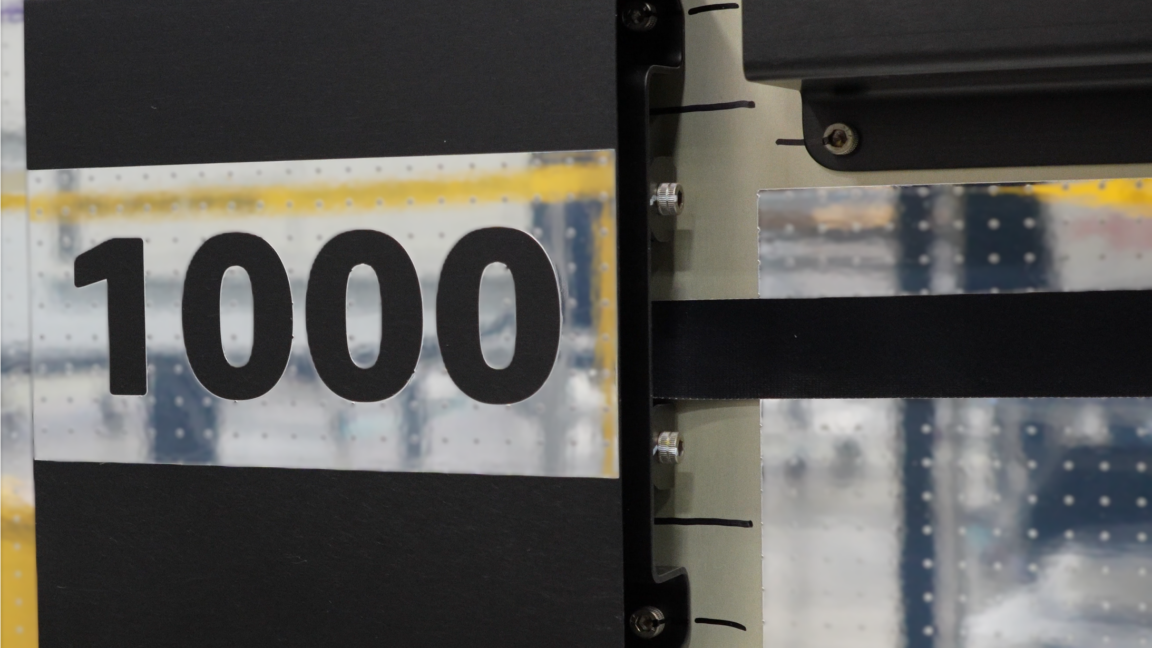
Amazon builds 1,000th satellite, will launch space internet service by end of year
The world’s largest retailer wants to sell you something else—Internet from space.
Amazon has been developing a constellation of satellites to deliver broadband Internet from low-Earth orbit for the better part of a decade, and the company is just about ready to pull back the curtain. It is entering a market that SpaceX, with its Starlink Internet, has dominated for the last half-decade. Amazon’s debut into satellite Internet is being closely watched, not just by some consumers, but by businesses ranging from airlines to shipping companies to governments. Broadband Internet from orbit has proven broadly useful for a lot of purposes, from video games to commerce to warfighting.
But until now, most people had to buy it from Elon Musk and SpaceX. OneWeb has only offered limited services, leaving Amazon as the only real competitor to deliver high-speed Internet globally. Moreover, at the head of the company’s broadband efforts is Rajeev Badyal, who led Starlink during its early years, but whom Musk fired eight years ago for moving too cautiously on Starlink.
In a wide-ranging interview this week with Badyal and two other senior Amazon officials developing the constellation—Paul Palcisco, director of production; and Chris Weber, vice president of business—Ars was able to learn that the Amazon Leo project is nearing several critical milestones. At its Kirkland, Washington-based factory, the company recently manufactured its 1,000th satellite, will soon make its debut on the Vulcan rocket, and is just weeks away from offering commercial service for the first time.
We discussed the challenges that Amazon had to overcome to become the world’s second-largest satellite manufacturer (behind SpaceX), and reach the point where it can build a handful of satellites every day. Badyal also confirmed that the Vulcan rocket’s upcoming return-to-flight mission will carry Amazon Leo satellites and that another Vulcan rocket standing right next to it is also being prepared to launch this year with more Amazon satellites.
And finally, and perhaps most consequentially, Amazon is close to offering its service commercially. The company has been busy signing contracts—Delta Airlines’ agreement to use Amazon over Starlink on its planes has upset SpaceX founder Elon Musk, to put it mildly—and consumers are about to get an alternative to the industry-leading space broadband service. Are Amazon and its founder, Jeff Bezos, ready to compete?
The following interview has been lightly edited for clarity.
Ars: How did you overcome production hell to reach a point where you’re building satellites at scale?
Rajeev Badyal: Building a couple of satellites is pretty straightforward, but building at scale is just exponentially harder. Our job one was to design a satellite that is mass-producible. So you have to take manufacturing into account from day one. But in the real world it never turns out that way, because design engineers, the first thing they want to do is solve for making sure it works. Then they think about manufacturability as the next step. But we pushed really hard for a culture where we could do both, get a design that works and it’s manufacturable. Even in doing so, when you actually get to the real product, and you put it through its paces, you find a lot of gaps. You find gaps in quality. You find gaps in reliability. You find issues with parts.
You have to work on every single detail of what needs to be done. I mean, it was brutal. Teams worked hand-in-hand to continuously improve processes, to continuously improve designs, to continuously improve our training. Imagine when you open a factory and you introduce people to a brand-new design, a set of technicians who are coming online, who are skilled but are not skilled in satellites. How you train them, how you bring them up to speed, how you find defects in real time. There’s a massive amount of work that went into this. I would say the team, the manufacturing operations and the dev teams together, did unbelievably fantastic work last year. It took us six months to make our first 27 satellites. Now we can easily make 27 a week. That’s how far we have come. But it is relentless focus on engineering, improving processes, and just getting better and better at what we do. It just takes an enormous amount of effort to get that done.
Ars: How did you go about setting up the factory?
Paul Palcisco: We built the factory as we were designing the satellites. So we didn’t have a product yet. We had to work closely with our engineering partners to understand what they were designing, so that we knew what those processes needed to look like. And so we took an empty 170,000-square-foot building in December 2022, and we turned it over the next 15 months into a satellite factory, and we built the first qualification satellite there, right? And we learned so much through that process of what we needed to fix. Because I’ll tell you, as soon as we opened the doors in that factory, we needed to change it.
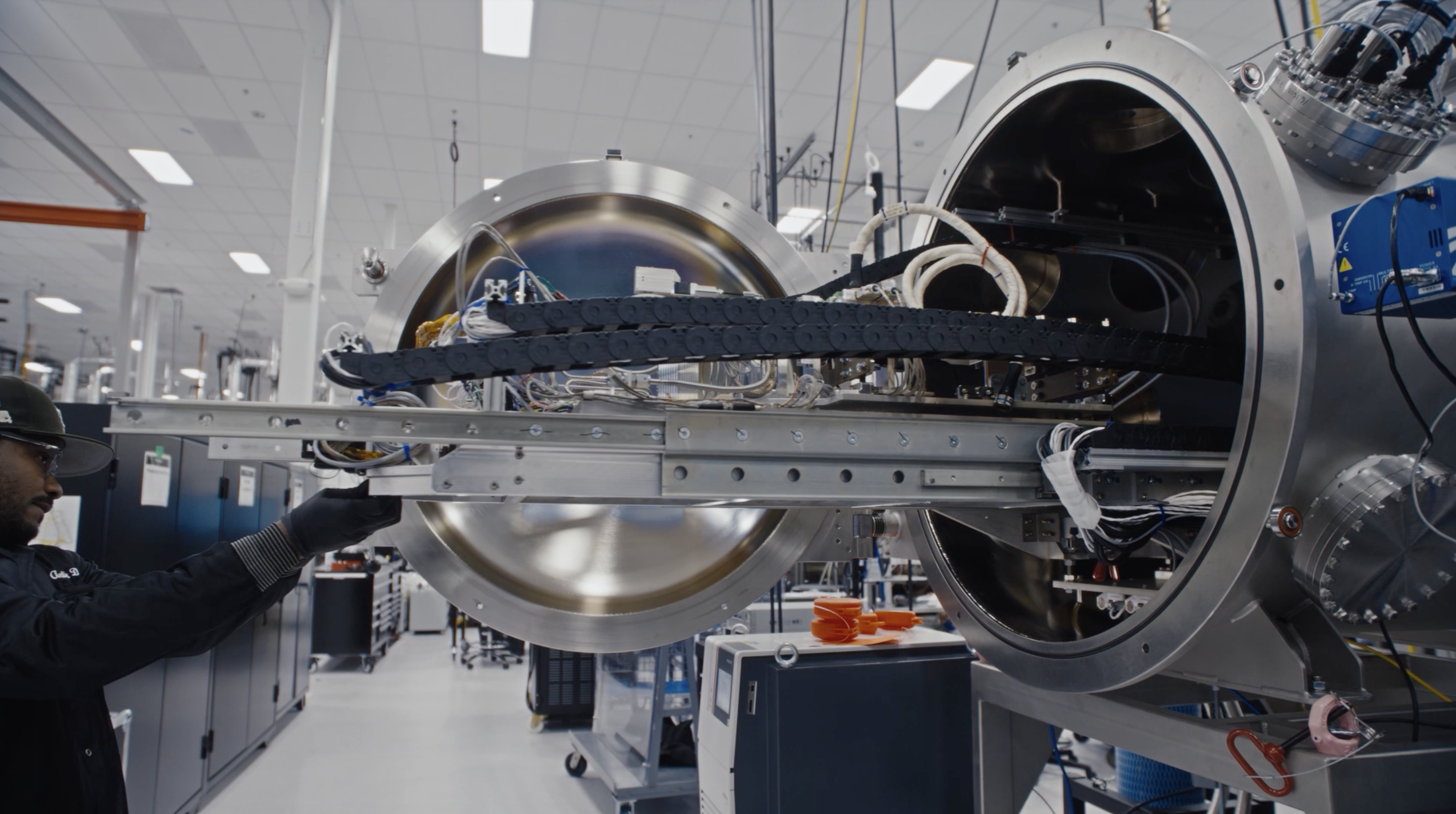
It takes Amazon a few weeks to build and test a satellite in its Kirkland, Washington-based factory.
Credit: Amazon Leo
It takes Amazon a few weeks to build and test a satellite in its Kirkland, Washington-based factory. Credit: Amazon Leo
Ars: How much of your satellite manufacturing is vertically integrated?
Palcisco: We looked very carefully at vertical integration, where it makes the most sense for us. There’s certain components where there are external sources that have decades of experience doing those parts, and it didn’t make sense for us to try to replicate all of that experience. Where we focus internally is where we add the most value, which essentially is ‘what are our highest value IP products?’ We want to keep those in-house because nobody else is building those, and then we work up from there in terms of building and testing the final products in our factory.
Ars: Can you give me an example of a high IP product or component?
Palcisco: A great example is our propulsion system, right? Our propulsion system is designed and built entirely in-house.
Ars: Over the last several years, as you’re scaling up production, what has been the biggest surprise or the biggest technical challenge that you’ve had to overcome?
Palcisco: I think our biggest technical challenge has been testing. If you go back to traditional space testing, it’s extremely rigorous. It falls back into a lot of NASA standards that were written several decades ago. SMC-S-016 is a great example of that, and that’s where we started, right? Because we wanted to have the highest-quality product. But then the challenge comes back to scale. Those testing procedures take days and weeks, and so what we’ve done over the last two years is blend those testing procedures with higher-volume testing procedures out of things like consumer electronics, where we can actually maintain or even increase the strength of screen of that test, so it’s a more robust test. But now we do it in much shorter amounts of time. So the testing that used to take us days and weeks we can now do in hours and ensure the same quality, so that when a satellite leaves our factory we know it’s good.
Ars: How long does it take to manufacture a satellite, starting at the first station in the factory, to getting through testing and packing it for shipping?
Palcisco: It’s on the order of magnitude of several weeks. I’ll say this, as we learn and as we incorporate changes into a satellite, we can do that within one to two weeks. We actually now pace the factory based on the modeling of our launch cadence, and how much of a finished goods buffer we want in front of that launch cadence. Our real mission is to make sure we never have a rocket where we don’t already have satellites ready for it. So as our launch partners increase their cadences, we want to be able to respond immediately with satellites that are already ready to go for them.
Ars: I want to get to launch in a moment. But first, Rajeev, this is a crazy industry in that there’s so much capital needed up front, and all this production and technical work before you get any data back from space. I guess you have to start with a lot of faith that this is all going to work out in the end?
Badyal: It’s faith in having a team around you that is world-class. When you have a team around you like we do, you have a lot of confidence that hey, we can solve it. We started off with a clean sheet of paper and came up with this design constellation. We sized everything in the first three months, like capacity, capability. We set our architecture within the first three months. Then we started developing all the hardware. As you do these things, the biggest concern you always have is, hey, is this architecture going to work? And is it going to be able to deliver the performance, the capacity, and the capability that you, that we, envisioned back in 2018?
It wasn’t till early this year that you could confirm that all the decisions that we made in our silicon design, in our antenna design, in our customer terminal design, in our gateway design, they will all come together and meet the performance needs. Right now, I’m actually watching Formula One on my phone. This is Leo running on my phone, and the antennas on the rooftop of this building, and the indoor unit is right behind the wall where I’m sitting. So it’s a demonstration of how well the network is already working today, and it meets all the performance requirements. But that took a long time to get to this point. And there are times when you doubt yourself. And that moment is pretty special when it does work.
Ars: Paul mentioned the launch market and not wanting to have rockets waiting around for satellites. Obviously, it seems like it’s a little bit the other way around. Can one of you talk about the challenges you’ve faced in the launch industry, and a little bit about the frustration you’ve experienced as a result of that?
Badyal: From day one we decided to go with a diverse set of partners to supply us with rockets. We started off with ULA, Blue Origin, Arianespace, and SpaceX. We signed deals with all four of them. We knew there was risk, but we had to get heavy lift vehicles. Because we had the diversity available to us, we are where we are today. Without that kind of plan, we probably would be in a far worse situation. Despite the delays Vulcan has had, despite the delays Blue Origin has had due to anomalies, there is no partner that isn’t working around the clock right now as we speak to get us launched as quickly as possible. It can be frustrating at times because things move, but at the same time, if this was easy, everybody else would be doing it, as you know.
Ars: It looks like Vulcan is coming back online soon.
Badyal: I can say we’re weeks away from launching on Vulcan. Things are on track. We’ll follow that with an Arianespace launch and at least one more Vulcan this year. I can also tell you, the infrastructure that we put and built with ULA now allows us to process two rockets simultaneously. So right now, there are two vehicle integration facilities, and both have a Vulcan rocket that is vertical and getting ready for our missions. So lots of progress there. I think once we get through this nozzle issue with Vulcan, which has been fixed, we expect a much more regular cadence with Vulcan. From time to time it can be frustrating, but I will say we see significant progress from everyone.
Ars: You have about 400 satellites in orbit now. Is that enough to launch your initial service to customers?
Badyal: We have enough already. And the next set of flights, they’re just additive to expanding our coverage, and adding more resiliency to the network as time goes on.
Ars: Can you talk about sort of your plans to roll out service? I know you talked about doing so before the end of the year, and it’s already early October.
Chris Weber: We have 396 satellites in orbit. We’re still doing work to raise them into final position, and then you know there’s a lot of work on the ground to do. But the plan is to launch initial service in 2026.
Ars: What do you see as your competitive advantage with Starlink? How do you envision providing a compelling service, and competing with Starlink?
Weber: On the business and government side, I’d say three distinct things. Performance is one, just our ability in terms of speeds, being able to deliver a gigabit on the downlink and 400 megabits on the uplink. By comparison, Starlink’s probably somewhere around 350 on the downlink, and somewhere around 40-ish on the uplink. So we have a 3x performance advantage on the downlink, and somewhere between eight and 10x on the uplink. There are use cases where contracts we have signed with customers—I won’t get into the names because we haven’t announced them—but they’ve purely made the decision on our performance, and there’s some distinct ones around uplink that they simply couldn’t get it done other than with Leo.
The second thing is security. Two things there: we have advanced encryption across the network, so we use AES-256 encryption, and then the second thing is we allow customers on top of their service plans to add a private networking option, which allows you to go from antenna to satellite into ground gateway, either into your own private data center or into AWS data center without ever touching the Internet. That really resonates. And then the third one, I would say, is enterprise-grade capabilities. Whether you look at that in the way we do professional installations, service-level agreements in terms of committing to information rates on the downlink and uplink, or customer support. So you take sort of the robust enterprise-capable service that AWS built, and you would think equivalent on the Leo side. And so we feel really good on differentiation.
Ars: What about for regular consumers?
Weber: On the consumer side, I’d frame it in three areas. One is value, so I would think about that as price, performance, and other differentiators that we put in there. We’re going to take the Amazonian way and have by far the best value. Second thing would be ease of use, and I think there’s some really creative things we’re doing in terms of how customers acquire the service, get it installed, set it up, et cetera. That, I think, will be some real pleasers or pleasant surprises. And then I would say better together, and I won’t get into the details on this, but I would just say there are lots of assets within Amazon that we can pair with Leo to bring new value to consumers. So you could think about anything from Prime to Prime Video, eero routers and extenders, Fire TV, Ring, etc. And so there are lots of opportunities for us to bring new value to consumers in those three things.
Ars: A critic might say they’ve been hearing about Amazon Leo or Project Kuiper for a long time, and it doesn’t feel like we’re ever going to see this. What do you think the perception of Amazon Leo will be 12 months from now?
Weber: There’s someone already in the market. But more importantly, when we put the Amazon brand on that service, it means something. So we have a very high bar, and we know we not only have to launch a great service, it has to be differentiated across the customers we serve. And I think people will see that when we launch, and then as we get more and more coverage with satellites, we’ll expand the capability to portability, mobility, and then continue to bring new value to customers, whether it’s the consumer, business, and government.
Ars: Your first-generation constellation is going to have 3,232 satellites. What are your expansion plans beyond that?
Badyal: We start off with 3,232 satellites, and we expect to delight the customers with the speeds and the performance, the security, all things that Chris was talking about, including coverage. The first generation will do great at it, but as with any other constellation or service that you provide network, you continuously have to improve. You continuously have to add more capability, and we do have plans long-term to absolutely do a Gen 2. We have filed it with the FCC. We’re already in design phase of Gen 2 as we speak today. Obviously, we can’t share the details of what we’re doing there. But you can expect for us to continue to delight the customers, to continue to make sure that our enterprise, government, as well as consumer customers see a step up in whatever we bring next to the table.
Eric Berger is the senior space editor at Ars Technica, covering everything from astronomy to private space to NASA policy, and author of two books: Liftoff, about the rise of SpaceX; and Reentry, on the development of the Falcon 9 rocket and Dragon. A certified meteorologist, Eric lives in Houston.
KioskNews shows a cleaned-up reading view extracted from the publisher’s page — the original always lives on their site, not ours.