The 10 Greatest Historical Fantasy Books of All Time, Ranked

Luc Haasbroek is a writer and videographer from Durban, South Africa. He has been writing professionally about pop culture for eight years. Luc's areas of interest are broad: he's just as passionate about psychology and history as he is about movies and TV. He's especially drawn to the places where these topics overlap.
Luc is also an avid producer of video essays and looks forward to expanding his writing career. When not writing, he can be found hiking, playing Dungeons & Dragons, hanging out with his cats, and doing deep dives on whatever topic happens to have captured his interest that week.
Sign in to your Collider account
Historical fantasy adds a magical or speculative element to real-world eras of the past. In this subgenre, dragons can fight in the Napoleonic Wars, vampires can haunt the Mississippi River, and Arctic expeditions can encounter something considerably more frightening than hunger and ice.
The best historical fantasy stories don't simply drop monsters and spell-casting into an old-fashioned setting, however. Ideally, their fantastical elements interact with the politics and beliefs of the period, sometimes providing new ways of looking at the past. Below are the best entries into the historical fantasy realm, ranked based on their quality and greater contributions to the genre.
10 'Gods of Jade and Shadow' (2019)

“Some people are born under a lucky star, while others have their misfortune telegraphed by the position of the planets.” Gods of Jade and Shadow brings Mayan mythology into Jazz Age Mexico. The main character is Casiopea Tun, a young woman stuck cleaning her wealthy grandfather's house while dreaming of escaping her small town. When she opens a mysterious wooden chest, she accidentally frees Hun-Kamé, the Mayan god of death, and finds herself accompanying him on a journey across Mexico as he attempts to reclaim his stolen throne.
Author Silvia Moreno-García, the mind behind the equally impressive Mexican Gothic, hits all the right notes here. The setting adds hugely to the book's appeal. Casiopea's adventure unfolds against a country undergoing enormous cultural change, where automobiles, fashionable clothes, flappers, jazz clubs, and glittering modern cities coexist with traditions and stories stretching back centuries, particularly the lore around the grim, shape-shifting underworld of Xibalba, making the supernatural elements all the more striking.
9 'The Golem and the Jinni' (2013)

“People are no more predictable than the weather.” In this one, two creatures from very different mythologies both find themselves trying to understand humanity. Chava is a golem created to become the wife of a man emigrating to America, only for her master to die during the voyage. Ahmad, meanwhile, is a jinni who has spent centuries trapped inside a copper flask before being accidentally released in New York. Their paths cross in the city in 1899, where both attempt to conceal what they really are.
Chava and Ahmad make for a compellingly mismatched pair: one was created to obey other people's desires, while the other values freedom almost above everything else. Author Helene Wecker uses their intertwined tales to spin a touching, layered story about the immigrant experience. After all, New York at the turn of the century was a place of energy and possibility, but also one of displacement and culture shock.
8 'The Bear and the Nightingale' (2017)

“Wild birds die in cages.” The Bear and the Nightingale is set in medieval Russia, where young Vasya Petrovna grows up listening to stories about household spirits and creatures lurking in the wintry woods around her home. However, unlike most people around her, Vasya can actually see these beings. As old beliefs increasingly come into conflict with Christianity, however, the protective traditions surrounding her family's home begin to disappear, and something dangerous awakens in the wilderness.
In other words, while the book works well as a straightforward fantasy, it also has a lot to say about social upheaval, the march of progress, religious clashes, the fading of traditions, and the disruption of an entire worldview. Themes aside, Vasya is simply a great protagonist: wild and unruly and deeply connected to the natural world, growing from a rebellious child into a fierce protector.
7 'Babel: An Arcane History' (2022)

“An act of translation is always an act of betrayal.” This one won a bevy of awards, including the Nebula and the Locus, and rightly so. It's a compelling alternative-reality story with ingenious magic systems. In it, our hero Robin Swift is taken from Canton as a child and brought to England, where he is prepared to study at Oxford University's prestigious Royal Institute of Translation, commonly called Babel. There, scholars use enchanted silver bars and the subtle differences in meaning between languages to cast spells.
However, the politics of this magic have a dark side: the story takes place in a fantastical version of the Victorian era, and these powers are used to help sustain Britain's imperial dominance. Robin's internal conflict thus forms the heart of the book. He deeply loves Oxford’s cozy libraries, safety, and academic prestige, but must grapple with the realization that the institution he serves is actively destroying his homeland.
6 'The Terror' (2007)

“Are we not men?” This creepy banger was written by Dan Simmons, author of the sci-fi classic Hyperion, and was adapted into a solid TV show starring Jared Harris and Tobias Menzies. It reimagines the doomed 1845 expedition of HMS Erebus and HMS Terror, which set out to find the Northwest Passage before becoming trapped in Arctic ice. Francis Crozier, John Franklin, and many other figures are drawn from history, but Simmons introduces an additional problem for the stranded crews: something enormous is hunting them across the frozen landscape.
The supernatural threat is scary for sure, yet some of the novel's most frightening scenes require no fantasy whatsoever. Temperatures plunge, food supplies deteriorate, disease spreads, and the ships remain locked helplessly in the ice. Indeed, Simmons lavishes attention on these practical details of 19th-century polar exploration, giving the book an almost documentary feel, very much adding to the tension.
5 'Fevre Dream' (1982)

“I never wanted to be a vampire.” Long before becoming a mainstream sensation with the Game of Thrones books, George R.R. Martin penned this punchy, brilliant vampire novel. Set primarily along the Mississippi River in 1857, Fevre Dream follows struggling steamboat captain Abner Marsh, who receives an unusually generous business proposition from the mysterious Joshua York. Together, they build the magnificent Fevre Dream, but Marsh gradually realizes that his secretive partner is hiding something extraordinary: York is a vampire.
Martin's winning idea here is to combine vampire tropes with the culture of 19th-century steamboats, and the two fit together surprisingly well. The result is essentially "Bram Stoker meets Mark Twain." Here, the Mississippi is a dark, atmospheric highway populated by magnificent vessels and deadly predators. However, this historical setting isn't romanticized either, particularly when confronting slavery and the brutal inequalities of the antebellum South.
Collider Exclusive · 8 Questions · 2 Minutes What Fantasy World Do You Belong To? Middle-earth · Grand Line · The Continent · Camp Half-Blood
Pick your magic, your crew, where you want to wake up and who you would rather be fighting, and we will tell you which world you actually belong in. Four are open to you: an ancient kingdom living through its last good age, an endless sea full of pirates, a continent that pays people to kill monsters, and a summer camp where the Greek gods are extremely real and mostly a nuisance.
💍Middle-earth(Rings of Power)
👒Grand Line(One Piece)
🐺The Continent(The Witcher)
🔱Camp Half-Blood(Percy Jackson)
01
What kind of power do you want? Every one of these worlds runs on a completely different sort of magic.
02
Who is travelling with you? Nobody gets through any of these stories entirely on their own.
03
Where do you want to wake up tomorrow? The best fantasy is usually just somewhere you would genuinely like to live.
04
How are you making a living out there? Even in fantasy somebody has to pay for the horse.
05
There is something in the woods. What do you do about it? All four of these worlds keep something unpleasant out there in the dark.
06
Who is the villain of your story? The enemy tells you far more about a world than the hero ever does.
07
What do you actually believe in out there? Every world hands its heroes one rule and asks them to hold onto it.
08
A thousand years from now, how are you remembered? Eight questions in, this is the one that decides your world.
The Map Is Drawn Your World Is…
Four worlds and four completely different ideas of what a good life looks like. This is where you belong, what it would ask of you, and what you would get back in return.
Middle-earth
You belong somewhere old enough that the mountains have names and somebody can still tell you who gave them. Middle-earth is for people who think the right thing is worth doing even when it will not be finished in their lifetime.
- This is the only world on the list where doing good is understood as a very long defeat, fought anyway, by people who will never see how it ends.
- You are drawn to grandeur, to white cities and deep forges and the sense that almost everything you touch is older than your entire family line.
- The Rings of Power is set in the last good age before it all goes wrong, which gives every quiet scene in it a slightly unbearable weight.
- You would take the hard road, and you would take it on foot.
The Grand Line
You want the sea, a crew, and absolutely nobody telling you where you are allowed to go. The Grand Line is the world for people whose main ambition in life is finding out what is over there.
- One Piece has run for decades on one very simple engine, which is a group of people who each want something impossible and have decided to go and get it together.
- You collect people. Your ideal crew is a set of misfits who were each written off somewhere else before you turned up and offered them a better idea.
- The world is enormous and deliberately ridiculous, and the emotional gut punches land harder because of that rather than in spite of it.
- You would set sail knowing the map runs out, which is more or less the entire point of it.
The Continent
You would rather be feared and useful than liked and useless. The Continent is a world where the monsters are the straightforward part of the job and the people are where it all gets complicated.
- Witchers get paid to do what nobody else will and resented for existing at all, which is a trade most people would refuse and you would probably accept.
- You have no real illusions about which side is the good one, largely because on the Continent that question tends to have a disappointing answer.
- The best of these stories are not about the fighting. They are about somebody with a rigid code being repeatedly cornered into caring about people.
- You would take the coin, finish the job properly, and be out of town before the story got told wrong.
Camp Half-Blood
You want the myths to be real and loose in the actual world, and you want to find out at about thirteen that you were never anywhere near as ordinary as everybody kept telling you.
- Percy Jackson takes the oldest stories we have and drops them into car parks and diners, which makes the gods considerably funnier and a great deal worse.
- You would be the kid every school gave up on, who turns out to have been built for something nobody thought to test for.
- The series is genuinely about friendship rather than destiny, and it says so out loud every time a prophecy tries to get in the way.
- Camp Half-Blood is the real fantasy here: a place where the thing that made you difficult everywhere else is the thing that makes you belong.
4 'Outlander' (1991)
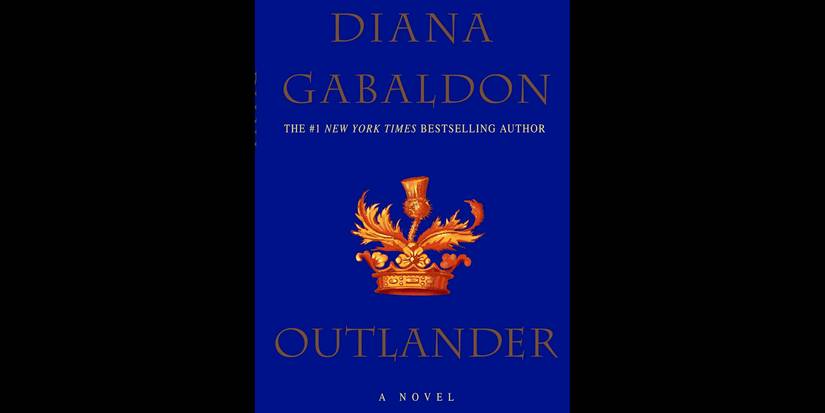
“People disappear all the time.” Time travel serves as the bridge between history and fantasy in this mega-bestseller. Outlander centers on Claire Randall, a former combat nurse vacationing in Scotland with her husband shortly after World War II. After visiting a mysterious circle of standing stones, she suddenly finds herself transported back to 1743. Stranded in a dangerous and unfamiliar Scotland, she becomes increasingly entangled in the political conflicts of the period while growing closer to Highland warrior Jamie Fraser.
The setting is rendered in impressive detail, reflecting meticulous research, and the protagonist's modern perspective gives Outlander much of its distinctive energy. Scientific knowledge becomes a double-edged sword: Claire's experienced enough to survive situations that might overwhelm another visitor from the 20th century, particularly when her medical background becomes useful. At the same time, however, if she performs too much "medical magic," she risks being accused of witchcraft.
3 'His Majesty's Dragon' (2006)

“Can you imagine, a dragon demanding to be educated?” Here, Naomi Novik rewrites history by adding dragons to the Napoleonic Wars. His Majesty's Dragon tells the story of British naval captain William Laurence, who captures a French ship carrying an extremely valuable dragon egg. When the creature unexpectedly hatches and bonds with him, Laurence names him Temeraire and reluctantly joins the Aerial Corps. The connection between the two of them is the centerpiece of the story.
Along the way, Novik gives us a striking alternate version of Regency Britain, subtly critiquing the era's class divides and rigid, stuffy social etiquette. Most of all, though, she treats the presence of dragons with delightful seriousness. Rather than being mystical and magical, aerial combat is just another carefully organized branch of the military bureaucracy. Different breeds have particular strengths in battle and crews operate from harnesses strapped to their enormous bodies.
2 'The Sword in the Stone' (1938)

“The best thing for being sad is to learn something.” King Arthur's story has rarely been more charming than it is in The Sword in the Stone, one of the great classics of Arthurian fiction. In it, author T. H. White reimagines the future king as a boy called Wart, who grows up largely unaware of his destiny under the guidance of Merlyn. Rather than simply teaching his pupil through books and lectures, the wizard transforms Wart into different animals, allowing him to slowly learn lessons about power and humanity.
Wart's adventures expose him to different forms of hierarchy, violence, cooperation, and authority before he has any idea that he will eventually become king. That approach gives the familiar moment involving the sword in the stone considerably greater meaning when it finally arrives. In other words, beneath the humor and whimsy, The Sword in the Stone is seriously interested in what might make someone truly worthy of power.
1 'Jonathan Strange & Mr Norrell' (2004)
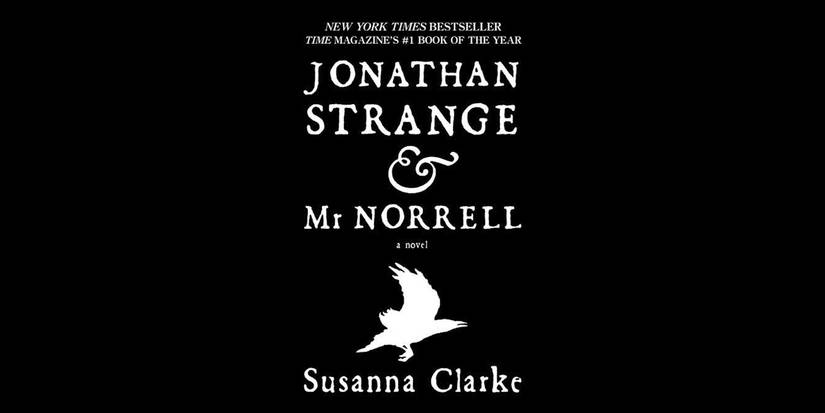
“Can a magician kill a man by magic?” Jonathan Strange & Mr Norrell gives us an alternate version of England in the early 19th century, where magic once existed, then vanished, and now seems to have returned, though only two men can wield it. They are the introverted, cautious academic Gilbert Norrell and the younger, more daring (some would say reckless) Jonathan Strange. Their radically different ideas about what English magic should become push them toward inevitable conflict.
The characters are three-dimensional and compelling, but it's the worldbuilding and speculative history that really make this book stand out. Footnotes recount imaginary magical scholarship and centuries of nonexistent history, while real figures and events sit naturally beside prophecies, fairy roads, supernatural kingdoms, and the mysterious legacy of the Raven King. To top it all off, author Susanna Clarke writes all this in gorgeous prose modeled on the work of Jane Austen and Charles Dickens.
KioskNews shows a cleaned-up reading view extracted from the publisher’s page — the original always lives on their site, not ours.