Apec CEOs seek common AI safeguards as adoption accelerates: Deloitte
As Beijing pushes for artificial intelligence cooperation with Washington ahead of this week’s Apec summit in Shenzhen, Deloitte’s Asia-Pacific CEO Robert Hillard is urging regional governments to agree on common AI rules and cybersecurity guard rails to boost trade.
The call for cross-border alignment comes as China seeks to make AI collaboration with the United States a major agenda item at the gathering, after President Xi Jinping and US President Donald Trump agreed to launch a bilateral AI dialogue during their meeting in Washington in September.
With more than 70 per cent of global trade originating, ending or taking place within the Asia-Pacific region, cross-border coordination was vital as AI reshaped industries, Hillard said in an interview with the South China Morning Post on Monday.
“AI, and indeed digital technology more generally, is only effective in enhancing trade when there’s collaboration across borders, and that requires common standards,” Hillard said, adding that regional economies needed to agree on “at least some commonality of regulation”.
His remarks coincided with the release of Deloitte’s latest report on AI leadership in Apec economies on Monday. Based on a survey of 1,278 CEOs and other executives across 18 Apec economies and India, the study found that around half of respondents viewed cybersecurity, risk and resilience frameworks as the top priority for regional cooperation.
About 44 per cent also called for greater collaborative investment in regional digital infrastructure, according to the report.

“One of the things that we hope is that CEOs play a lead role in working with governments across the region to make sure that [AI] evolves in an appropriate way that meets everyone’s needs,” Hillard said.
More than 100 major global enterprises and over a dozen national leaders are expected to attend the Asia-Pacific Economic Cooperation CEO Summit in Shenzhen on Tuesday and Wednesday, immediately preceding the main leaders’ meeting on Wednesday and Thursday.
Speaking in an interview on Monday, Deloitte China CEO Dora Liu said other Apec economies could learn from Shenzhen’s approach by bringing innovation and production closer together, treating institutional reform as being just as important as technology, and integrating AI with real-world industrial capabilities.
Across the wider region, more than half of executives surveyed ranked AI as their top priority, ahead of revenue and profit growth.
Chinese firms are leading that adoption curve. Around 78 per cent of enterprises in China had deployed AI across multiple functions or embedded it in their core workflows, outpacing the 71 per cent average across surveyed economies, the report showed.
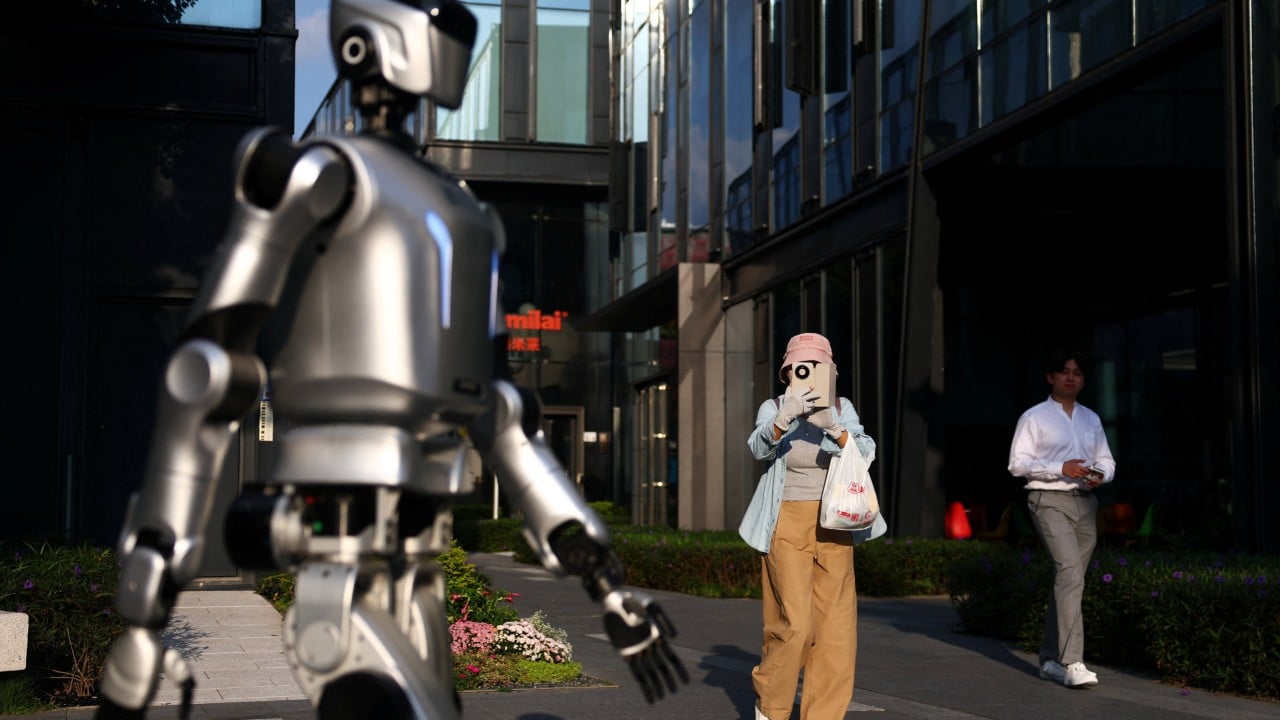
Hillard said Chinese companies were moving faster than their regional peers, with physical AI emerging as a leading driver of value as the technology became more deeply integrated into the country’s vast manufacturing sector.
KioskNews shows a cleaned-up reading view extracted from the publisher’s page — the original always lives on their site, not ours.