Muruku, ‘budu’ and a house full of friends: Deepavali the Kelantan way
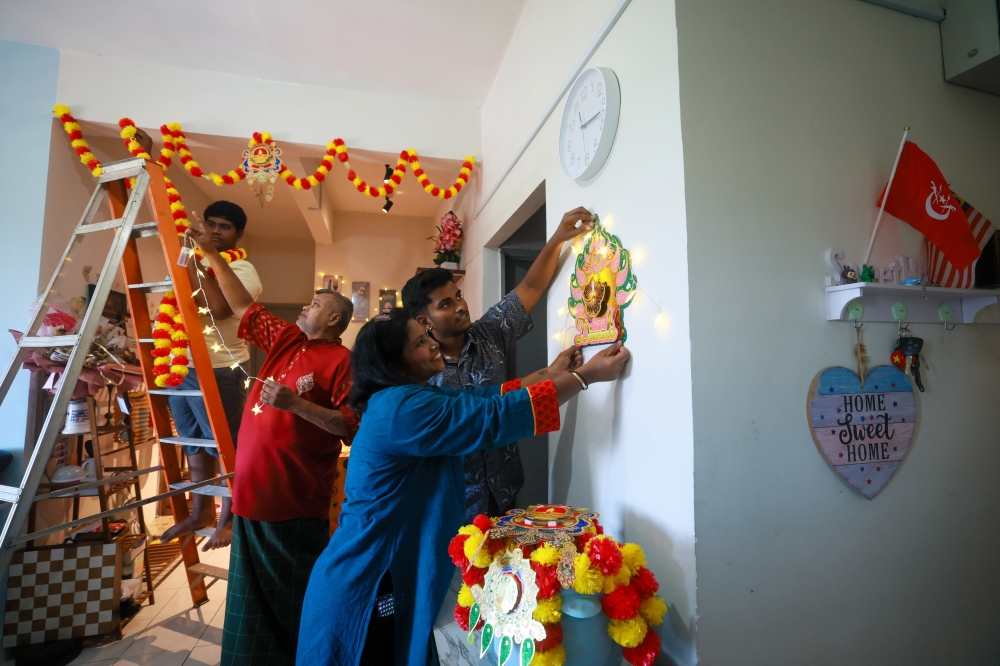

G. Thanaletchumi decorating her home for Deepavali. — Bernama pic
First Published: Saturday, 07 Nov 2026 7:00 AM MYT
KOTA BHARU, Nov 7 — Speaking fluently in a thick Kelantan dialect, enjoying ulam budu and serving traditional Indian cuisine to guests of various races are unique aspects of G. Thanaletchumi’s life, reflecting the distinct identity of the state’s Indian community.
Affectionately known as ‘Mek Kelate Mek Manis’, the 48-year-old ensures that despite local culture being deeply ingrained in her everyday life, her family heritage and Indian traditions remain preserved, especially during Deepavali.
Thanaletchumi said communicating in the Kelantan dialect has become second nature when speaking with her family and the local community. Tamil is still used, especially when interacting with the elderly.
“If you hear us speaking without seeing our faces, you might think we are Malay because of our thick Kelantan dialect.
“Using the Kelantan dialect does not mean we forget our mother tongue. We can still speak Tamil, but the Kelantan dialect has become part of our identity as the Indian community in this state,” said the mother of two.
The local cultural influence is also evident in her family’s culinary preferences. Ulam budu is a firm favourite, along with curry dishes her husband and child enjoy.
On Deepavali preparations, she said planning usually begins two months in advance to buy clothes, decorate the house, and source ingredients, followed by a thorough house cleaning two weeks before the festival and making traditional delicacies like murukku, nei urundai (ghee balls), and athirasam (Kuih Peneram) a week later.
Muruku is a must-have treat, while thosai served with mutton or chicken curry is a breakfast favourite that guests eagerly await, especially her Malay friends.
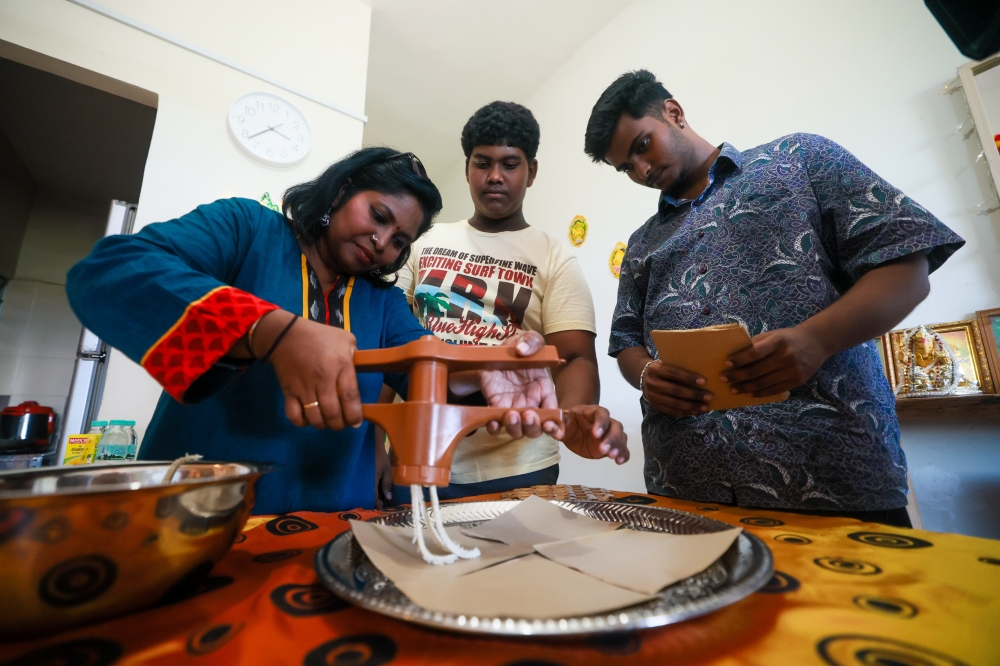
Thanaletchumi making muruku with her children. — Bernama pic
Thanaletchumi said non-Indian guests typically visit on the first day of the festival, while relatives and Indian friends drop by on subsequent days.
“Some even ask a week in advance about the menu because they want to come over. To me, that is the true joy of Deepavali, sharing food, love, and happiness with people of different races,” she told Bernama recently.
She said the overwhelming influx of guests kept the family on their toes, prompting their Malay neighbours to step in to help prepare food.
“It was so lively back then. We had so many guests that we could barely cope. Malay neighbours came to help when they saw the crowd. That is the memory I cherish most because we got to experience the warmth of Deepavali together with the local community,” she said.
Her husband, M. S. Murugaih, 51, said Indian traditions must be passed down to the younger generation by exposing children to family customs and practices from an early age.
He said such efforts are crucial to ensure these cultural traditions are not forgotten but continue to be practised even after the older generation has passed on.
Their son, M. Sai Siddhart, 19, said what he looks forward to most every Deepavali is gathering with family, relatives, and friends during the open house.
Having grown up as the only Indian student among nearly 800 students at his secondary school, he said mingling with Malay friends from a young age made him comfortable living in a multiracial society.
Siddhart hopes the spirit of unity will continue to be strengthened not only during Deepavali but across all major festivals in the country, including Hari Raya Aidilfitri and Chinese New Year. — Bernama
KioskNews shows a cleaned-up reading view extracted from the publisher’s page — the original always lives on their site, not ours.