Road safety no licence for arbitrary highway demolitions: Supreme Court
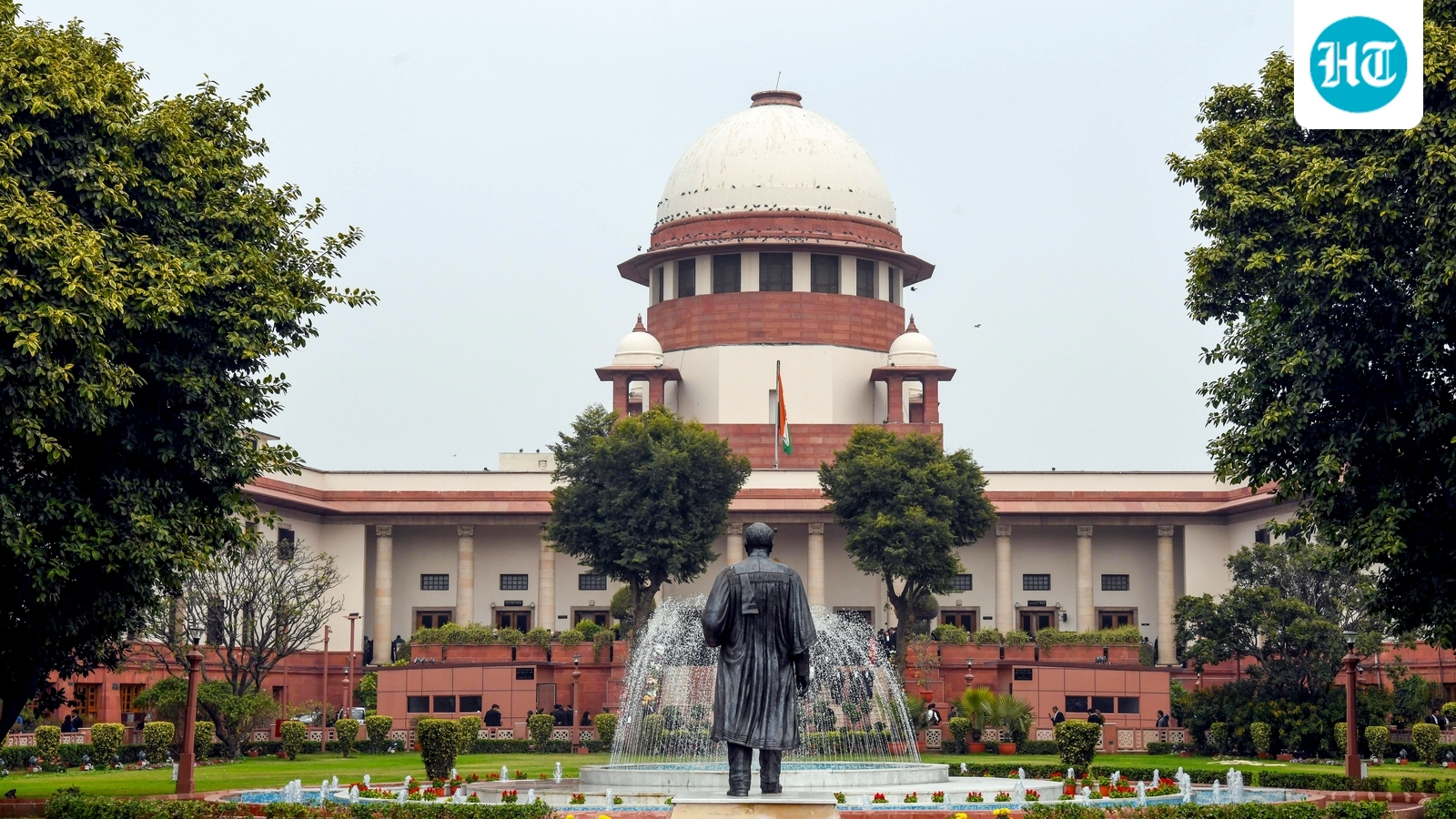
The Supreme Court has held that its April order directing the removal of unauthorised structures along national highways cannot serve as a blanket justification for demolitions, making it clear that the jurisdictional high courts must independently examine the legality of individual properties and their alleged encroachment on highway land.
In an order on Wednesday, a bench of justices Vikram Nath and Aparesh Kumar Singh said the April 13 directions, issued in the larger interest of road safety, did not conclusively determine the rights of individuals or establish that particular structures constituted unauthorised encroachments.
The order comes as relief to several property owners facing demolition.
The court directed the affected property owners to approach their respective high courts to challenge the proposed demolitions, while ordering that existing interim protection would continue until the disposal of those proceedings. It further restrained the National Highways Authority of India (NHAI) and other authorities from demolishing disputed structures or taking any coercive action pursuant to the impugned notices in cases where no such protection had earlier been granted.
"We clarify that the directions dated April 13, 2026 shall not be treated as having conclusively determined the rights of the parties or the legality of the disputed structures," the bench said.
The clarification comes after several property owners, particularly in Gujarat, approached the Supreme Court, apprehending the demolition of structures they claimed stood on privately owned land and had not been acquired or compensated for by the authorities. They disputed the demarcation of the right-of-way (ROW) undertaken by NHAI and questioned the legality of notices proposing the removal of their properties.
The court acknowledged that while the removal of unauthorised encroachments from national highways was essential for public safety, the authorities could not presume that every structure they identified as an encroachment was necessarily unauthorised.
"The distinction between a general direction to remove encroachments and the determination of whether a particular property constitutes an encroachment is of considerable significance. The former cannot, by itself, be treated as a conclusive adjudication of the latter," it said.
The April 13 order directed highway authorities to identify and remove unauthorised structures within the right-of-way of national highways, including dhabas, eateries and other commercial establishments. It also mandated that district administrations constitute highway safety task forces and enforce the removal of existing and new unauthorised structures within 60 days, in accordance with the Control of National Highways (Land and Traffic) Act, 2002.
However, the bench underlined that these directions did not authorise authorities to bypass the statutory procedure governing removal of alleged encroachments under the 2002 law. It said the provision contemplated the issuance of a notice identifying the highway land in question, an opportunity for the affected person to make a representation, and consideration of the explanation before coercive action could be taken.
While the law did provide for removal without prior notice in specified circumstances under subsections (7) and (8) of Section 26, the bench said the availability of such powers had to be examined against the statutory conditions governing their exercise. The April directions, it added, could not independently justify dispensing with the requirements of the law.
"A mere assertion of ownership or lawful occupation cannot, by itself, prevent the authorities from exercising their statutory powers to remove unauthorised encroachments. Equally, the mere assertion by the authorities that a particular structure falls within the Right of Way cannot be treated as a substitute for the determination required under law, where the very basis of such assertion is disputed," it said.
The applicants had relied on registered sale deeds, revenue records, acquisition documents and permissions granted by competent authorities to contest the proposed demolitions. Some also alleged that the measurements and demarcation carried out by NHAI were incorrect, while seeking acquisition and compensation wherever their land was required for highway widening or other public purposes.
NHAI, on its part, maintained that the action was being undertaken in compliance with the Supreme Court'sCourt'sdirections and that notices had been issued under the 2002 Act. It also contended that the measurements established that the disputed structures fell within the right-of-way, and that disputes over ownership and boundaries involved factual questions requiring adjudication by the competent forum.
The bench said such disputes would be better examined by the jurisdictional high courts, which could scrutinise revenue records, acquisition proceedings, survey reports and other relevant material, and determine whether the authorities had followed the procedure prescribed by law. It made clear that it had expressed no opinion on the merits of the property owners' claims or on the correctness of the action initiated by NHAI. All questions concerning ownership, demarcation of the right-of-way, acquisition of land, and statutory compliance would remain open for independent consideration.
The interim protection, however, was strictly confined to the structures that were the subject matter of the applications and would neither create any equity in favour of the applicants nor authorise any fresh construction or encroachment.
The court said its April 13 directions would otherwise continue to operate in their entirety, preserving the larger road-safety exercise while ensuring that action against alleged encroachments remained subject to the law.
KioskNews shows a cleaned-up reading view extracted from the publisher’s page — the original always lives on their site, not ours.