US Navy chief urges US lawmakers to strengthen shipbuilding capacity to close gap on China
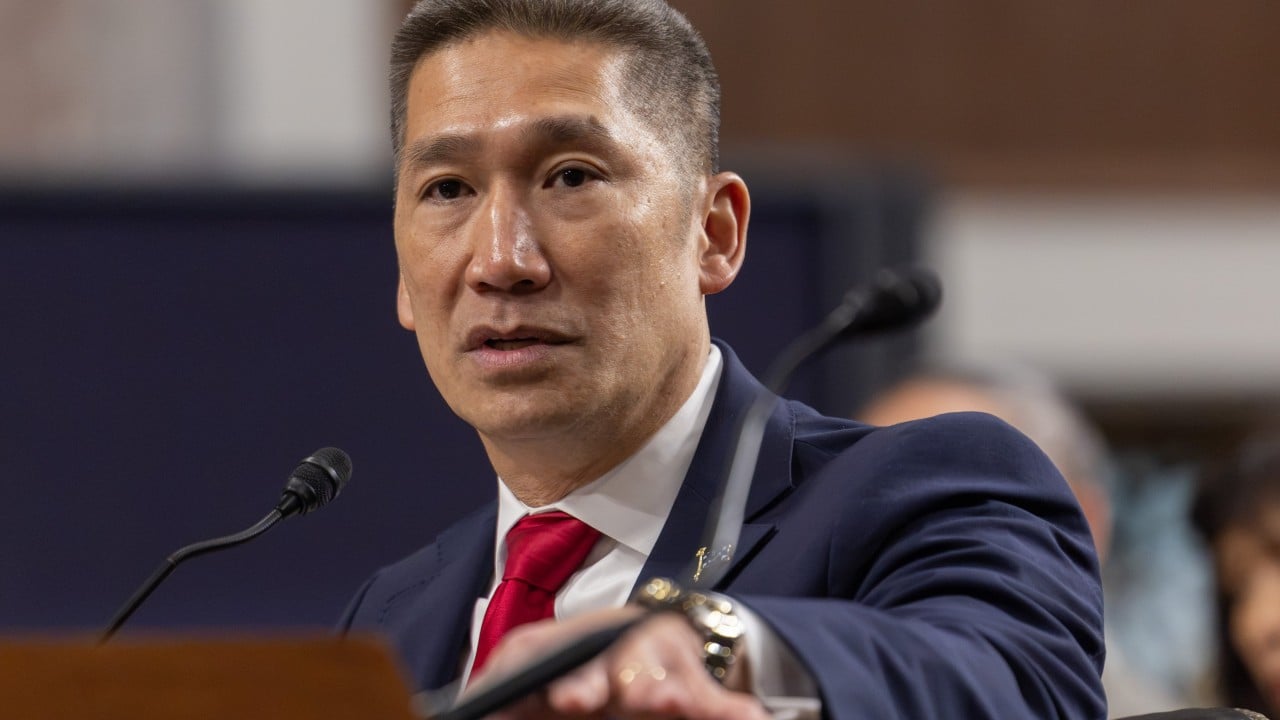
Acting US Navy Secretary Hung Cao told senators on Tuesday that shipbuilders from allies such as South Korea and Japan could help the United States rebuild its shipyards and narrow China’s lead, as lawmakers pressed him to keep warship construction on American soil.
Cao made his remarks in an opening statement at a Senate Committee on Armed Services hearing to confirm his nomination to become the new Secretary of the Navy.
The Navy veteran of three decades said the US is in an era of “transformational change” and faces a “1939 moment”, invoking US industrial mobilisation following the outbreak of World War II in Europe. He said the US must strengthen Navy shipbuilding capacity through “predictable federal funding and sustained investment in skilled maritime workforce”.
During the hearings, Democratic Senator from Hawaii Mazie Hirono questioned US Navy readiness in the Indo-Pacific region, saying naval assets in the region have been diverted to the Middle East because of the war and as China’s military becomes more “active”. Cao responded that the war in Iran was putting strain on US Navy resources, but said the force has also “set China back on their heels”.
“They have more ships and aircraft, but what they don’t have is our enlisted community,” said Cao, referring to the “combined forces” of the US Navy, Army, Air Force, Marine Corps and cyber forces working together.
01:29
China’s first 076 ‘drone carrier’ amphibious assault ship begins sea trials
Cao said the Donald Trump administration’s recent push to partner with allied nations with shipbuilding capacity, such as South Korea and Japan, is not just about Navy warships but also all the ships the US needs as a “maritime nation”.
Citing that his service has fewer than 300 warships that he can use and there are only around 150 flagged US merchant ships, Cao said that Washington needs to look at “new entrants” to bring the ability to build more ships in the US and close the gap with China, which he said had 11,000 merchant ships and a 400-ship navy.
He added that these ships, in partnership with allies, will be “built in the United States with American workers and with American standards”.
“When you look at Korea, for example, they’re building 230 seagoing vessels this year alone; we’re only building less than 20 in our country, and this is a country that’s 99 times smaller than the United States,” said Cao.
“And we should be able to accelerate and move faster. And I don’t know how else we can energise the workforce. If we are allowing new entrants to bring over their technology and the way they build things more efficiently, we will build 540,000 jobs in the United States.”
Congress unsure of plans for shipbuilding cooperation with US allies
Cao’s remarks follow recent pushback from the US Congress against the Trump administration’s plans for shipbuilding cooperation with its allies, citing legal hurdles and potentially sending the wrong signals to already depleted US shipyards, which suffer from a lack of infrastructure and workforce.
SCMP Plus is a new premium news platform that gives you an
all-inclusive edge to stay ahead on China news.
To access our exclusive content you’ll need to subscribe.
Already a subscriber?
LOG IN
In August, Trump signed a National Security Presidential Memorandum allowing foreign shipbuilders investing in the US to construct up to two US Navy vessels in their home countries.
The move followed South Korea’s pledge to spend US$150 billion to revitalise US shipyards. South Korean shipbuilding giant Hanwha Ocean is making a US$350 million investment to modernise infrastructure at the Hanwha Philly Shipyard in Philadelphia, which it acquired in 2024 and won initial US Navy contracts, including a US$269 million deal for a medium landing ship.
However, this shipbuilding cooperation has recently faced legal and congressional hurdles. Senator Angus King, an independent member of Senate Committee on Armed Services from Maine, pushed for an amendment of the National Defence Authorisation Act (NDAA) to prohibit Navy destroyers and frigates from being built in foreign shipyards, aiming to protect domestic shipbuilding and sensitive military technology.
The House version of the NDAA also prohibits using any funds to contract for or procure battle force or combat ships in a foreign shipyard, completely barring overseas construction for the combat fleet.
00:57
World’s largest container ship leaves dry dock in Shanghai
The Jones Act, passed in 1920, requires all goods shipped between US ports to be transported on ships built in the United States. The Byrnes-Tollefson Amendment, in place since 1965, further requires that US Navy and coastguard ships and their major components be built in the US.
During the hearing, King said the Pentagon’s budget request “abandoned” the destroyer programme, adding only one new destroyer, and that the idea of revitalising shipbuilding is “inconsistent” with the budget, where he had to add an additional ship in the amendment.
King demanded that the incoming Secretary of the Navy give a “demand signal” to American shipbuilding, supporting investment and rebuilding the US shipbuilding industrial base and committing not to build warships abroad.
Cao responded that his service is working to move “faster” on shipbuilding capacity, such as by reducing redundant inspections, and that he would put “100 destroyers” in the budget request if the US shipbuilding industry were capable.
He also noted that South Korean Chungnam-class frigates take only 15 months from keel laying to launch, highlighting the need to look at others that can bring these shipbuilding technologies to the US.
“These companies are already in the United States, right? Hanwha is up in Philly. They’re looking at other shipyards around the country to build here with American hands to enhance our ships because we need a high-low mix from frigate to destroyer and then to battleship as well,” said Cao.
US Navy to respond to potential offloading of ‘illegal’ diesel oil
Richard Blumenthal, a Democratic Armed Services Committee member from Connecticut, asked how the Navy would respond to the potential offloading of “illegal” diesel oil from the Russian Baltic port of Primorsk, carried by the Malta-flagged tanker Agioi Fanendes near a naval port in Virginia.
Cao said that the US Navy would “abide by the law to the fullest extent”, but he added that he was not aware of the situation.
After Trump announced an agreement with Russian President Vladimir Putin to supply over 300,000 tons of diesel to the US and global markets in October, tankers carrying Russian oil have tried to dock at US ports but failed.
While the Trump administration issued a temporary sanctions waiver for the Russian diesel deal, the Ending Importation of Russian Oil Act of 2022 remains active statutory law, leaving US ports, storage operators and banks vulnerable to potential criminal, legal or congressional investigations.
None of the initial tankers bound for the US has successfully offloaded cargo. The Agioi Fanendes, which is loaded with 40,000 metric tonnes of diesel from Russia, has been drifting and waiting for orders off the US East Coast after turning away from its initial New York destination, while other tankers have been diverted to Egypt and Brazil.
“If confirmed, I will ensure that we abide by every single letter of the law,” said Cao.
KioskNews shows a cleaned-up reading view extracted from the publisher’s page — the original always lives on their site, not ours.