Pedestrian bridge shaped like nipa palm leaf transported by sea to Ho Chi Minh City center
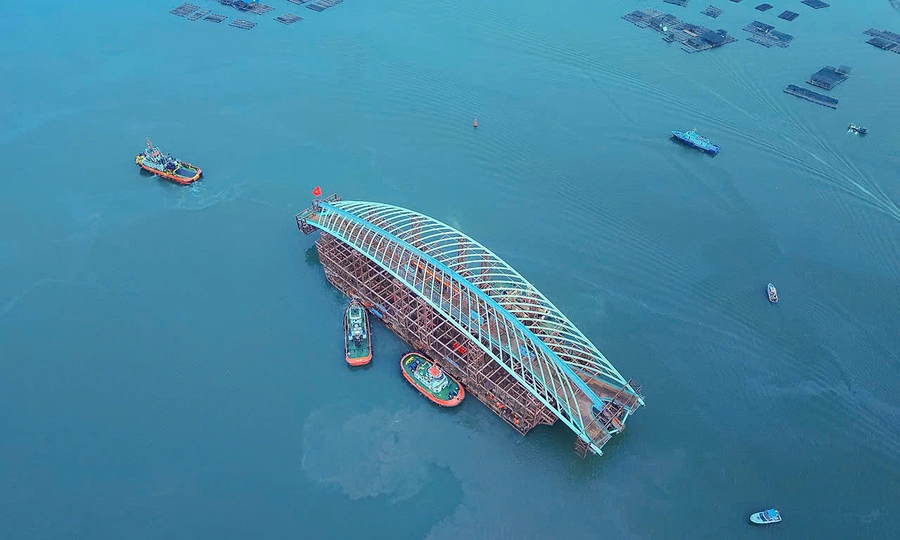
A barge carrying a nipa palm leaf-shaped pedestrian bridge and its supporting framework, weighing a combined 3,400 tons, began a 124-km sea journey on Sunday morning from Vung Tau toward the center of Ho Chi Minh City for final assembly.

At 5:20 a.m., a convoy of tugboats started moving of the steel arch structure from the temporary port at Dai Dung Company in the Dong Xuyen Industrial Zone. The convoy heads toward Bach Dang Wharf, where the pedestrian bridge spanning the Saigon River is currently under construction.
The transport route takes the convoy along the Dinh River, out to the open sea, through the Soai Rap estuary, and finally up the shipping channel into the Saigon River to reach the construction site.
The transit distance spans around 124 km and is expected to take nearly two days to complete. The first leg of the journey covers about 80 km to Can Gio, where the convoy will pause and anchor overnight before continuing to the city center on Monday morning.


The transport convoy consists of a primary tugboat, two alongside tugboats packing 5,000 horsepower each, and a 2,400-horsepower standby tugboat. The three main ships are equipped with 360-degree rotating Azimuth thrusters, allowing for maneuvering of the barge and its steel cargo.
Upon arrival, it will be positioned to connect with the bridge parts already constructed on both banks of the Saigon River.
The barge leaving the port.
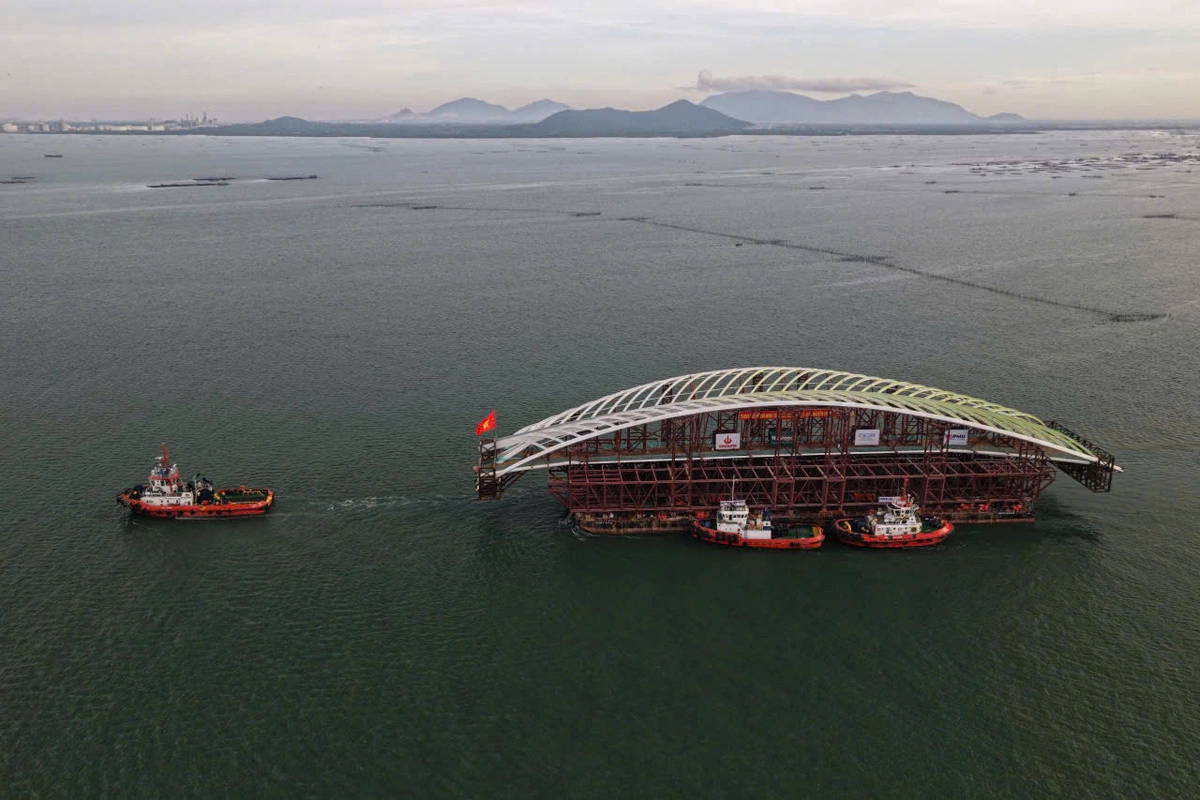

Engineers on the ship and barge worked together to tow the vessel.

Engineers on the ship and barge worked together to tow the vessel.
Engineers on the ship and barge worked together to tow the vessel.

Authorities are actively monitoring the operation and regulating maritime traffic along the route, requiring all other vehicles to maintain a minimum safe distance of 5 km from the transport convoy.

The convoy successfully reached the Vung Tau estuary by 6:30 a.m. amid calm waters and gentle waves. After over an hour, it had covered about 4 km.

The convoy successfully reached the Vung Tau estuary by 6:30 a.m. amid calm waters and gentle waves. After over an hour, it had covered about 4 km.
The convoy successfully reached the Vung Tau estuary by 6:30 a.m. amid calm waters and gentle waves. After over an hour, it had covered about 4 km.
KioskNews shows a cleaned-up reading view extracted from the publisher’s page — the original always lives on their site, not ours.