Farm workers are falling sick in a Kenyan horticultural town. Were they poisoned by pesticides?
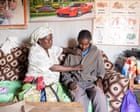
When Reuben Muriki fainted while doing a chore in the compound of his home near the horticultural town of Timau in central Kenya several years ago, it marked the start of a series of increasingly serious health episodes.
His joints became swollen, his skin became discoloured and he found breathing difficult. He was in and out of hospital, and was forced to quit his work as a pesticide sprayer at a flower farm. Doctors treated him for suspected tuberculosis in vain.
“He would often fall and completely lose consciousness,” his mother, Margaret Mwanjaro, said in their living room in Mukuri village.
Now 30, Muriki is unable to walk on his own. He speaks incoherently and quickly forgets things.
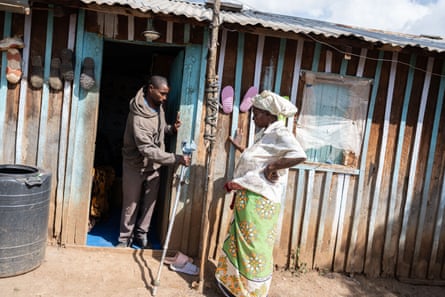
Mwanjaro, on whom Muriki relies for round-the-clock care, believes her son’s condition is a result of poisoning from the pesticides that he used to spray on the flower farm.
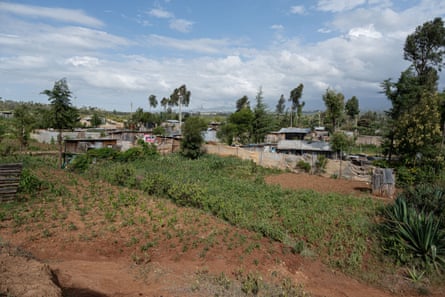
Timau, a small town of about 10,000 people, has for decades hosted horticultural companies that employ thousands of workers from the area. Many have fallen sick over the years, some dying young. Their relatives say pesticides are to blame.
Muriki is now one of 87 people seeking to join a court petition case against the Kenyan government and agrochemical companies challenging the sale of highly hazardous pesticides (HHPs).
Pesticide use has risen to record levels in Kenya, as farmers seek higher yields and improved food quality for local and export markets. In recent years, concerns have grown about the use of chemicals that pose severe risks, including some that are banned in the EU. Two UN agencies – the Food and Agriculture Organization and the World Health Organization – have said HHPs present particularly high levels of acute or chronic hazards to health or the environment.
The petition accuses five agrochemical companies – Monsanto, Syngenta, Bayer, BASF and Nairobi-based Twiga Chemical Industries – of selling pesticides containing lethal active ingredients in Kenya.
It was filed in 2022 by the nonprofit African Centre for Corrective and Preventive Action and environmental and human rights lawyer Kelvin Kubai. Last November, the court allowed the petitioners to publish an advert inviting people allegedly affected by 11 pesticide ingredients to join the case to make it a class-action lawsuit. The court is expected to decide whether to enjoin them early next year.
“These are people our government has neglected, (and that) these companies and producers have neglected right at the point of sale,” said Kubai, who hails from Timau. “The Kenyan farmer – just like the American farmer, just like the European farmer – deserves to be protected.”

Those who responded had histories of symptoms associated with pesticide exposure, including skin, stomach and chest problems, dizziness and Parkinson’s disease, a condition that causes nerve cells in the brain to become damaged over time.
Scientists hired by the petitioners tested the 87 court case applicants for paraquat, a highly toxic chemical that has been used as a herbicide and has been associated with Parkinson’s disease, and glyphosate, a cancer-linked weed killer. Kubai said that in all 87 people, they found levels of both chemicals above permissible levels.
In Muriki’s case, the scientists found nearly 200 times the reference limit for paraquat and 48 times the reference limit for glyphosate in his urine sample.
“We were not able to find any other cause of the conditions [affecting Muriki], except his paraquat and glyphosate levels,” said Prof Zakayo Thaimuta, a pathologist who worked with the petitioners. Thaimuta noted that all 87 people had presented with at least three major medical conditions. The most common were Parkinson’s disease, throat inflammation and pulmonary fibrosis, a lung disease.
Research has pointed to a huge presence and use of HHPs in Kenya. A report released in April by Greenpeace found that nearly half (48) of the 141 active pesticide ingredients registered in the country last year were classified as HHPs.
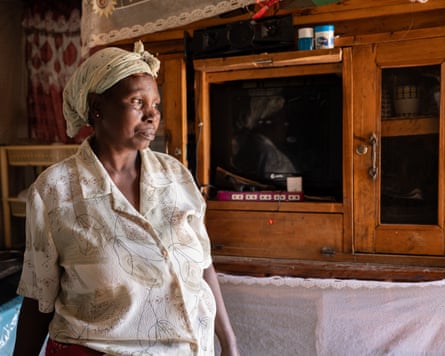
Like her son, Mwanjaro also worked at a horticultural farm, performing tasks such as weeding and picking roses and other flowers in greenhouses for five years until 2017. She also developed health complications.
She described starting work early in the morning without wearing personal protective equipment, just a few hours after sprayers had applied chemicals on the flowers. “You’d feel the fumes getting into your throat,” she said.
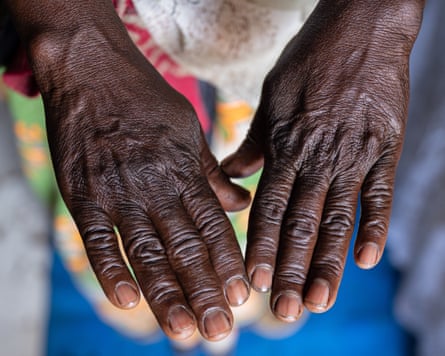
Four years after she began working at a farm, she quit her job after developing blisters on her body and noticing that she was becoming weaker. Today, her other health conditions include worn nails, inflamed skin and constant coughing.
Responding to a request for comment, Bayer, which acquired Monsanto in 2016, said all its products were safe for humans and the environment if applied according to label instructions, and that it applied consistent safety standards worldwide.
A Syngenta spokesperson said all its products sold in Kenya followed the country’s regulatory standards and that it stood fully behind their safety and effectiveness when used according to labelled instructions.
The Pest Control Products Board, which regulates the importation, exportation, manufacture and use of pest control products in Kenya, declined to comment because the matter was in court. BASF and Twiga Chemical Industries did not respond to questions sent to them.
Acres upon acres of lush horticultural farms stretch as far as the eye can see around Timau. The farms, which mainly target the export market, have been an economic lifeline for generations of residents.
But in the town itself and its surrounding settlements, stories abound of farm workers falling seriously ill.
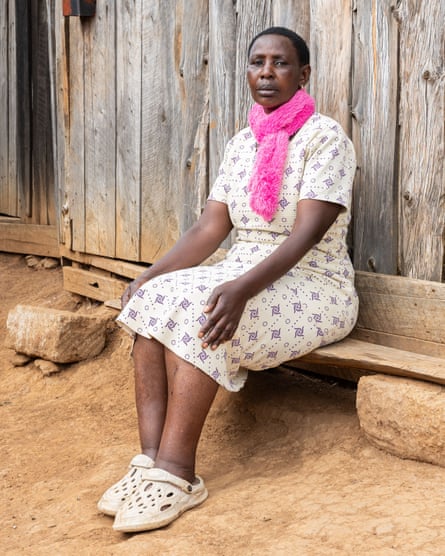
Alice Kagwiria lives in Mukuri’s neighbouring village of Riverside Kieni. One morning in 2013 she was on her way to a bus stop to report for work at a horticulture farm when she felt a sharp pain in her neck and back – as if something heavy had landed on her, she said. Shortly after, her hand went numb.
For 11 years, she said, she had worked without gloves in greenhouses for eight hours a day, five days a week, picking green peas and runner beans that colleagues had sprayed with pesticides.
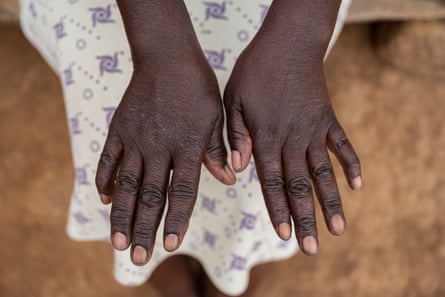
With her hand impaired, the company assigned her “light duty” for a few months. The following year she was let go. Kagwiria, who now walks with a limp, pulled down a sock to show skin rashes that have emerged in the intervening years. She also has eye and stomach problems.
“Anybody considering a job at a horticulture farm should think twice,” she said outside her house. “You’re better off working somewhere that won’t cause you health problems.”
The impact is felt beyond Timau, in the wider Meru county, from where the horticultural industry attracts labour.
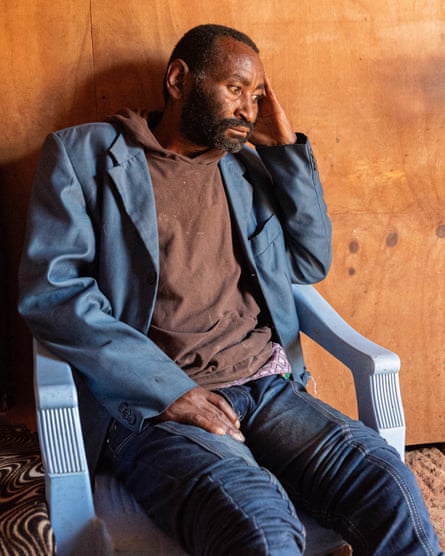
Stephen Muriungi lives in Ndunyu Barikui village, about 25 miles from Timau, and worked as a sprayer on a flower farm in the town for two-and-a-half years. In 2018 he started getting severe headaches that lasted hours. In time his legs weakened and he became unable to walk.
He recalled how, wearing an apron and gloves, he would use a sprayer to pump pesticides stored in a rucksack for hours at a time, the fumes often becoming unbearable.
“Those chemicals were very strong,” the 47-year-old said. “Even after removing clothes, your whole body would smell of chemicals.”
Today he is heavily incapacitated – he moves slowly, has stiff muscles and poor balance and struggles to hold spoons and cups because his hands shake – and relies on his family’s support as caregivers.
The sale and use of HHPs in Kenya has caused intense debate. Campaigners and health experts have called for bans and the use of safer alternatives.
Kubai said there was an “extreme urgency” to address the issue, and lamented that Kenya’s healthcare system lacked the capacity to provide comprehensive care for those affected. “We do not have the luxury of a healthcare system that can wholly rely on curative measures. We can only excel through preventive measures, and that means that our farmers ought to be protected,” he said.
Millicent Kanario, a food safety researcher, said some HHPs took years to break down and be eliminated from the environment, posing a high risk to biodiversity in addition to human health.
Kanairo, who co-authored a paper on agrochemical use in potato farming in central Kenya, said pesticide use is becoming “explosive” in the country and called for user education and strict government regulation. “Where we are headed to as a country, it’s quite dangerous,” she said.

One day this May, the cancer centre at Meru Teaching and Referral hospital was a hive of activity, with some patients waiting on seats to be attended by medics, and others lying on recliners while receiving chemotherapy.
Dr Stephen Chege, the clinical and radiation oncologist who heads the centre, said that in recent years it had received an increasing number of referrals from other hospitals of farmers and horticulture farm workers from the county. Among those referred, he has noticed increasing diagnoses of blood cancers and gastrointestinal cancers.
“The numbers are definitely going up,” he said. “So, the question we ask ourselves is: ‘Is it because of exposure?’”

A study carried out in Peru, whose findings were released in April, found a “robust spatial association” between environmental exposure to pesticides and increased incidence risks for cancer.
Campaigners on pesticides often draw attention to a quirk of the pesticide industry in Kenya: the presence of ingredients that are banned in the EU.
The April Greenpeace report found that nearly half (47%) of the registered pesticide active ingredients in Kenya were banned in the EU because of health and environmental risks.
Data obtained by Unearthed and Public Eye found that in 2024, EU companies sent export notifications – a requirement for companies in the region planning to export a banned pesticide – to the European Chemicals Agency to export 474 tonnes of pesticides to Kenya. This was despite the EU Commission’s commitment in 2020 to end the practice.
France and Belgium have implemented bans on exporting pesticides prohibited for use in the EU.
Eustace Gacanja, chief executive of the Kenya Organic Agriculture Network, which promotes organic agriculture, said the export to Kenya of products produced and banned in the EU was indicative of a “double standard” approach. “Of course, it means Kenya has weaker legislation, weaker laws,” he said. “But then, is it right that if it’s bad for the Europeans, it’s good for the Africans?”
Olof Björnsson, programme officer at Swedwatch, which promotes responsible business practices and together with KOAN conducted research on the exports, said: “Europe has a failed export and pesticide policy, and the Kenyan farmer is paying the cost for that failed policy.”
Harun Warui, project lead of the Route to Food Initiative, which has studied HHP use in Kenya, said PCPB needed to shift from risk-based regulation, which considers the likelihood of a pesticide to cause harm based on exposure levels, to hazard-based regulation, which the EU uses and which focuses on a pesticide’s intrinsic potential to cause harm.
“These are highly hazardous pesticides that should not be sold because of their impact on the environment and health,” he said.
Citing the risk-based and hazard-based systems, Bayer said the authorisation of pesticides in some African countries but not in the EU “does not say anything about its safety”, but instead reflected different regulatory approaches.
It said the assessments of many regulatory agencies around the world reflected the specific agronomic and climatic conditions in each country and the local needs of farmers.
The Syngenta spokesperson said that, when exporting products from Europe, the company respected the importing country’s sovereignty and direction and met all the international regulatory requirements.
The use of HHPs and exports of banned pesticides from the EU to Kenya have had a blowback effect. Horticulture produced in Kenya for export to Europe has faced more interceptions in recent years because some of it has been found to contain active ingredients that are restricted or banned in Europe, or chemicals that exceed limits. Kenya’s earnings from vegetable exports dropped by 68% from 2023 to 2025, largely attributed to EU pesticide regulations.
In Timau, families blighted by health complications are also having to deal with the consequences of economic inactivity.
“I can’t do much work,” said Mwanjaro, who is struggling to take care of herself and her son. “I can’t stand the pain.” She pointed to an empty pack of neurological medications on a table. “For five days now, I’ve lacked money to buy these for him.”
KioskNews shows a cleaned-up reading view extracted from the publisher’s page — the original always lives on their site, not ours.