At least 20 species could be new to science after NUS-OceanX deep-sea expedition
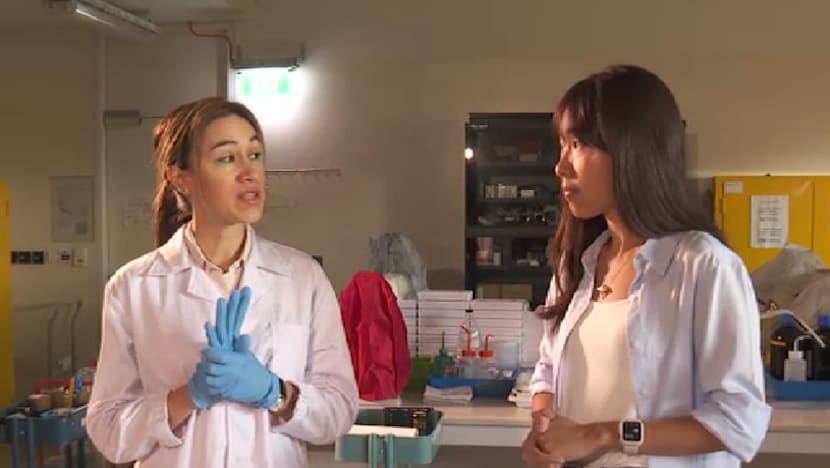
More than 6,000 sq km of the Indian Ocean’s deep sea was newly mapped during the expedition, which also brought back over 2,000 specimens for researchers to study.

Dr Allison Miller (left) showing CNA's Caitlin Ng (right) sea cucumbers brought back from the expedition. (Image: CNA)
New: You can now listen to articles.

This audio is generated by an AI tool.

17 Sep 2026 12:21PM
SINGAPORE: At least 20 species found during an expedition into a little-explored part of the Indian Ocean could be new to science, with researchers saying there may be more discoveries to come.
The 24-day expedition, co-led by the National University of Singapore (NUS) and nonprofit ocean exploration initiative OceanX, was conducted in October last year. It mapped a total of 6,050 sq km of the deep sea and brought back over 2,000 specimens.
An estimated 100 to 200 species were documented, many of which have yet to be fully described.
The advanced research vessel OceanXplorer explored the Monsoon Rise, a largely unexplored seamount chain in the eastern Indian Ocean.
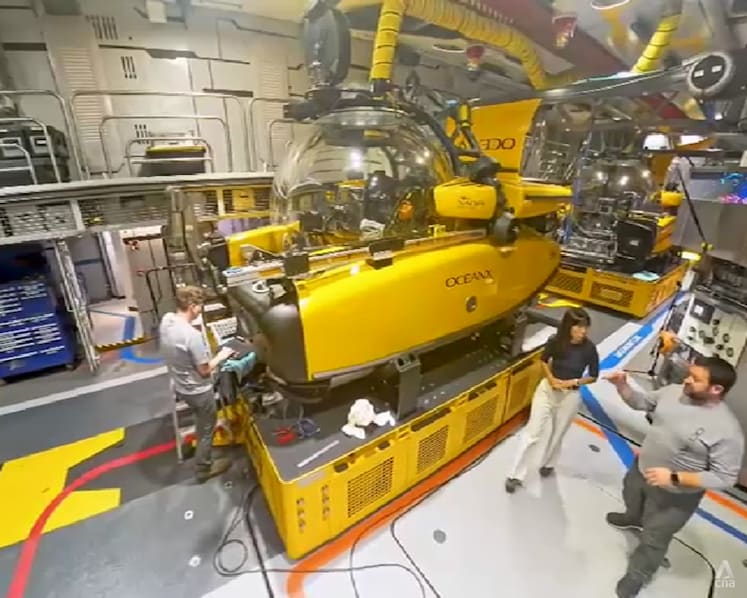
THOUSANDS OF METRES BENEATH THE SURFACE
The OceanXplorer is equipped with laboratories, sonar systems, manned submersibles and remotely operated vehicles (ROVs).
The manned submersibles provide a rare front-row seat to the deep sea, allowing scientists to observe marine life, study fragile habitats and see how ocean ecosystems are changing.
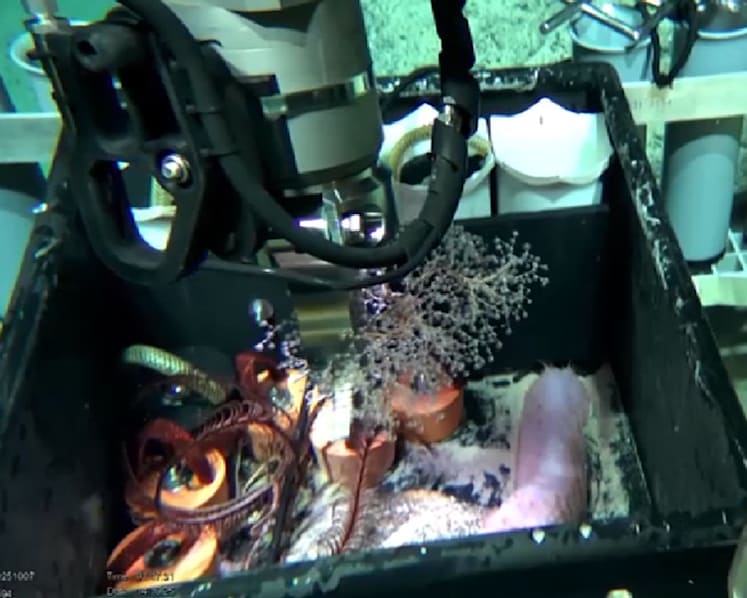
One of the team’s main tools was Chimera, an ROV capable of descending more than 6,000m.
Chimera carries cameras, sensors and sampling equipment, allowing scientists to collect samples from the Monsoon Rise’s seamounts.
ROV pilot Ewan Bason described the Chimera as a “Swiss Army knife” because of the wide range of sampling and scientific equipment it carries.
“We try and keep as much gear on board the ROV as possible,” Mr Bason said. “It can do many things once it gets underwater.”
Thousands of metres below the surface, researchers observed corals and other cnidarians clinging to underwater mountain slopes, as well as crustaceans moving across the seabed.

Some animals could not immediately be identified. Selected specimens were carefully collected, brought onboard the vessel, then photographed and preserved for further study.
But what scientists were able to explore represents only a fraction of the vast area below.
"We only explored a small segment of the seamounts,” said Dr Jose Christopher E Mendoza, deputy chief scientist of the expedition and senior curator of crustacea and other marine arthropoda at the Lee Kong Chian Natural History Museum.
The summit area of one of the seamounts is about the size of Singapore, he added.
“The height of the seamount, even though the summit does not reach the surface of the sea, is on average about 3,000m. These are very big mountains."
WHAT THEY FOUND
Among the specimens brought back were 20 sea cucumbers.
But only four could be confidently identified to species level, said Dr Allison Miller, a research fellow with NUS’ Reef Ecology Lab.
Another 10 are believed to be unidentified species that had also been encountered on previous research cruises.
The remaining six specimens could represent animals never previously observed.
“Six specimens we think are the first ones that anyone's ever seen, and we've seen alive, which is really neat,” said Dr Miller.
Determining exactly what they are will require further comparison and analysis.
But identifying the animals is about more than simply putting names to unusual-looking creatures.
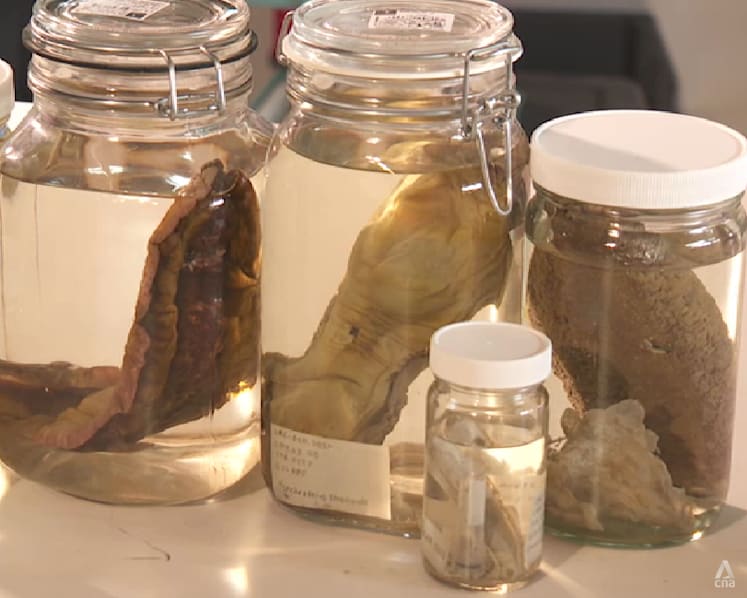
Sea cucumbers can help scientists understand the conditions on the seabed and how the deep-sea ecosystem functions.
“A lot of people know them as the shallow water blobs that don't do much in the ocean, but they're really actually very important bioturbators and nutrient recyclers,” said Dr Miller.
“I call them the little vacuums of the ocean.”
Researchers are also examining crustaceans, fish, sponges and anemones collected during the expedition.
Each of these creatures provides yet another clue to the biodiversity of the Monsoon Rise.
FINDING SPECIES WITHOUT SEEING THEM
Physical specimens can only reveal part of what lives thousands of metres beneath the surface.
Researchers are also analysing environmental DNA to detect organisms they may have never seen or collected.
Animals constantly shed traces of genetic material into their surroundings. By analysing water or sediment samples, researchers can detect those traces and build a broader picture of the ecosystem.
Preliminary results have already detected organisms absent from the expedition's physical samples.
For some groups, the genetic evidence points to more species than the specimens alone revealed.
"I really hope that this can be a baseline data for the biodiversity in these particular places,” said Dr Dita Cahyani from the biology department at Indonesia's Universitas Diponegoro.
“If another expedition comes and they see more species, that would be great. But if they see the depletion of some of the species, that might be something that we have to be worried about,” she said.
That baseline gives scientists a way to measure future changes and could also help shape how these waters are used.
Dr Mendoza said during the expedition, they observed abundant numbers of a particular deep-sea crab at one section of the seamount they were studying.
He also noted fishing trawlers operating near the area.
“If we know what organisms are found in these areas, areas that could potentially be used by us, exploited by us right for our own benefit, we would be better able to manage them, use them sustainably,” he said.
The expedition brought together researchers from Singapore and across the region, with teams studying different parts of the deep-sea ecosystem.
Their work continues in laboratories, where specimens, genetic samples and other data are still being analysed.
Having explored only a fraction of the Monsoon Rise, researchers say the findings so far may represent just a glimpse of what remains to be discovered in its depths.
KioskNews shows a cleaned-up reading view extracted from the publisher’s page — the original always lives on their site, not ours.