Here's how to know if your TV is too big for any room
Gladiathor/Getty Images
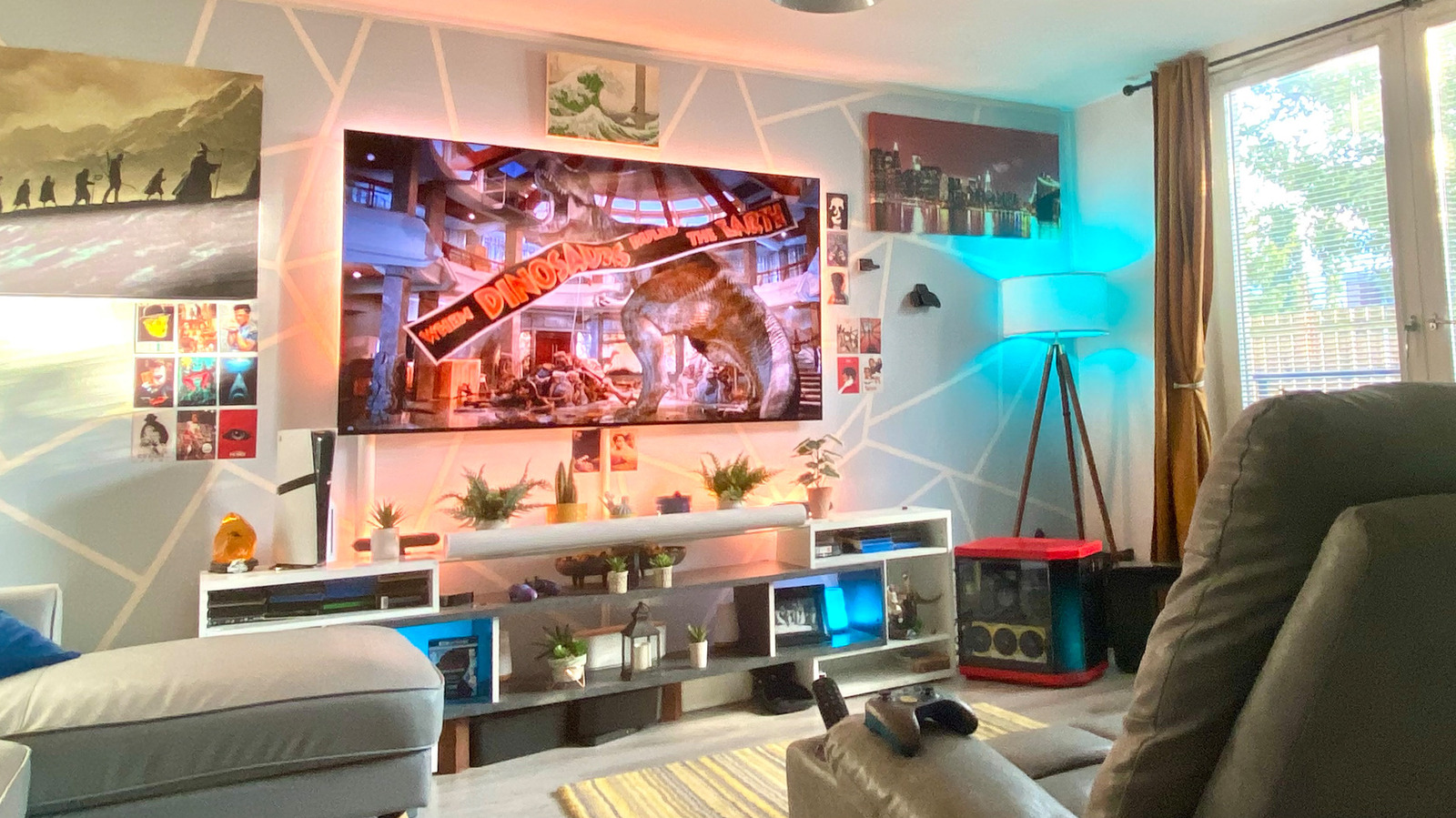
How far should you sit from your TV? It's a good question with a very specific answer from a trusted AV source. In an age of affordable huge screens, a big question is whether OLED TVs are still worth the premium in 2026. Settling on an optimal viewing distance for your next binge session is important. There are definitely instances where bigger isn't better. Below, we'll guide you through what TV size suits your living conditions, why sitting too close can negatively affect your eye sight, before getting into the nitty gritty of the ideal view distance.
What size TV should I get?
Dave Meikleham for Engadget
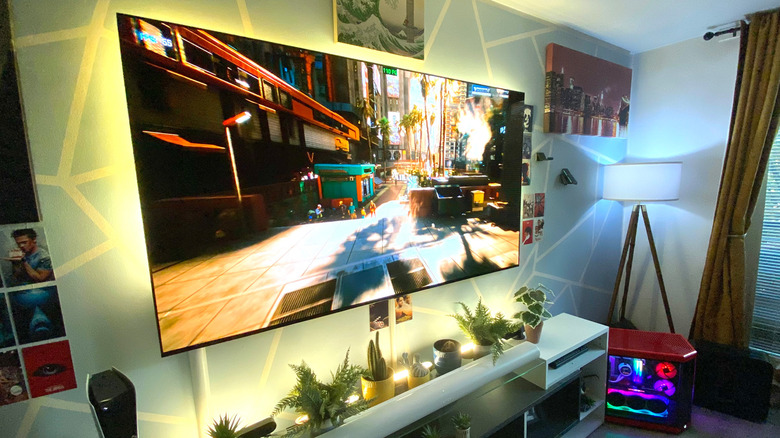
There's no real right or wrong answer here. But generally, you should consider the size of the room before landing on your ideal screen size. If you're stuck in a cramped apartment, a 55-inch set is likely be the largest panel you can comfortably fit into a confined space. However, if you're living it up like a Bond villain in a huge house, you may well want an 85-inch TV (or bigger).
Knowing what the 30-degree rule for TVs is will help. In short, this means a screen should fill 30 degrees of your field of view from your sitting position. For 55-inch televisions, this logic would have you sit around 7.5 feet away from the screen. At this distance, you're going to get an immersive experience where you don't have to overly crank your neck or squint your eyes.
There's also the 40-degree rule to consider. Aimed at delivering a cinema-like experience, having 40 degrees of your horizontal field of view filled should prove fairly epic on a big TV. 65-inch TVs have become increasingly popular in the US, and with that size of screen, this rule places you just 6.5 feet away from your television. At that distance, we're probably in the realms of obsessive movie nerds, rather than a family huddling on the sofa. But hey, we'll never distance shame you.
How far should I sit from my TV?
Dave Meikleham for Engadget
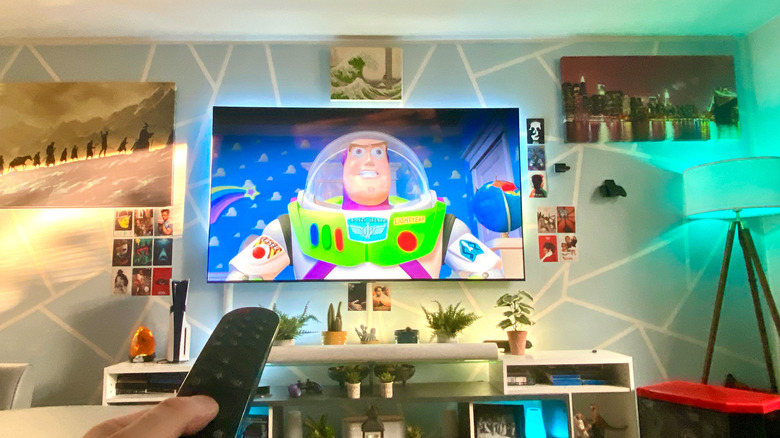
This is more scientific than you think, yet there's an easy way how to find the best 4K TV for your space. The Society of Motion Picture and Television Engineers (SMPTE) believe you should sit roughly 1.6 times away from the diagonal size of your TV. RTings have reported on the society's findings, and though viewing distances aren't an exact science, there are rough parameters for an optimal viewing experience.
Focusing on the most commonly bought screen sizes, the SMPTE found the following. For 65-inch panels, sit 8.8 feet away. For 75-inch sets, sit over 10 feet, and for 85-inch screens, an ideal viewing distance of just over 11.5 feet.
Why should you be mindful of how close you sit to your TV? Eye strain. Prolonged viewing at an uncomfortably close angle can dry your eyes out, though it's unlikely to lead to long-term issues. It's also a case of field of view. Your eyes will be consistently side-to-side switching as you struggle to make out the whole picture.
Ultimately, this is going to boil down to whatever distance you feel comfortable with. The restrictions or placement of furniture in a room are going to play a big part in how far you sit from a TV. While it's all well and good relying on the 30 degree rule, personal preference and whether you're short sighted or not will decide the distance you prefer.
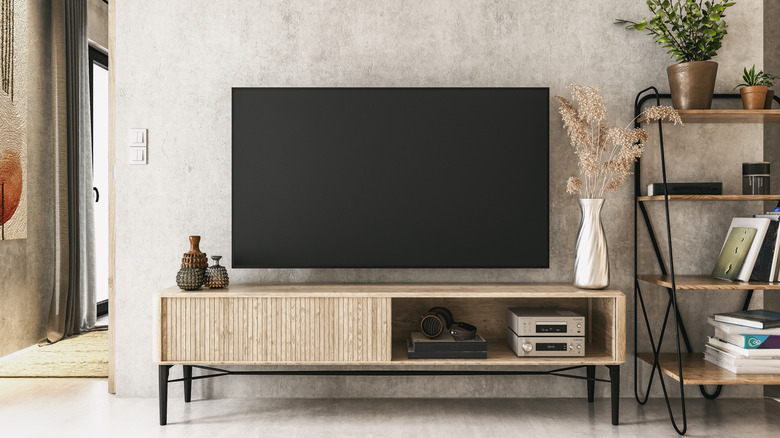
Why are TVs getting so big?
Gladiathor/Getty Images
Big is better. That's why. Ultimately, many folks want the most immersive viewing experience possible in the 4K era. Ultra HD displays have around 8.29 million pixels, and all that detail is easier to appreciate on a 65-inch screen than a 42-inch one.
Cost is also a major reason why huge TVs are now in so many people's homes. Manufacturing efficiency has improved over the years, with companies passing the savings to consumers. Hop onto Amazon, and you can easily find 65-inch 4K screens selling for less than $600. You no longer need to break the bank to afford a seriously big television.
We've come a long way since the days of obnoxiously thick CRT TVs, too. Modern flat screens no longer ruin the look of a room as many models have increasingly slim bezels that make them attractive pieces of furniture. Large TVs have never been more alluring or affordable, and it's easy to see why so many of us opt for big screens. Just look at the stats. 55-inch and 66-inch TVs are the highest-selling sizes in North America. The age of tiny 14-inch living room sets is long over.
Is it okay if my TV is bigger than my stand?
Yuganov Konstantin/Shutterstock
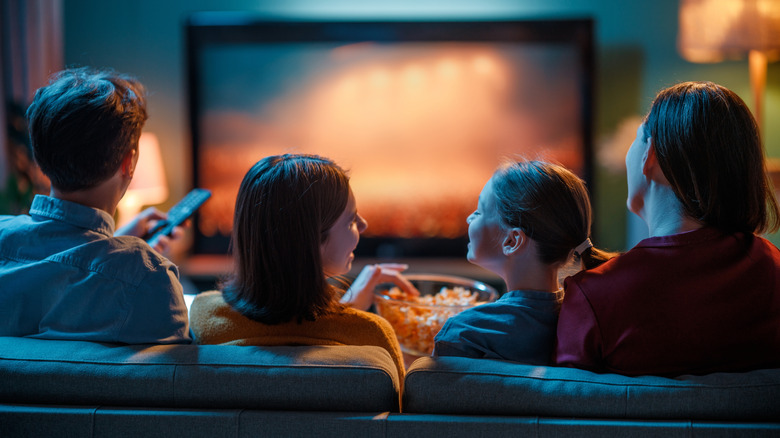
In most instances, this scenario is totally fine. As long as the TV completely fits on your stand, the screen overhang over your entertainment cabinet shouldn't be an issue. Though it might look a tad unsightly, provided your stand is stable, your TV shouldn't be in any immediate danger.
Of course, you have to be sensible. A TV that hangs over the edge of a cabinet is easier to knock over, so be a little more careful when you're to your television. If you're buying a new stand, make sure you read the weight requirements. A quick online search of your TV's size and model number will tell you how much heft you're dealing with. In other words, don't try to plonk a 77-inch TV down on a cabinet that was designed for 42-inch screens.
KioskNews shows a cleaned-up reading view extracted from the publisher’s page — the original always lives on their site, not ours.