Trump’s zero-tariff claim aimed at pleasing Americans, Suphajee says
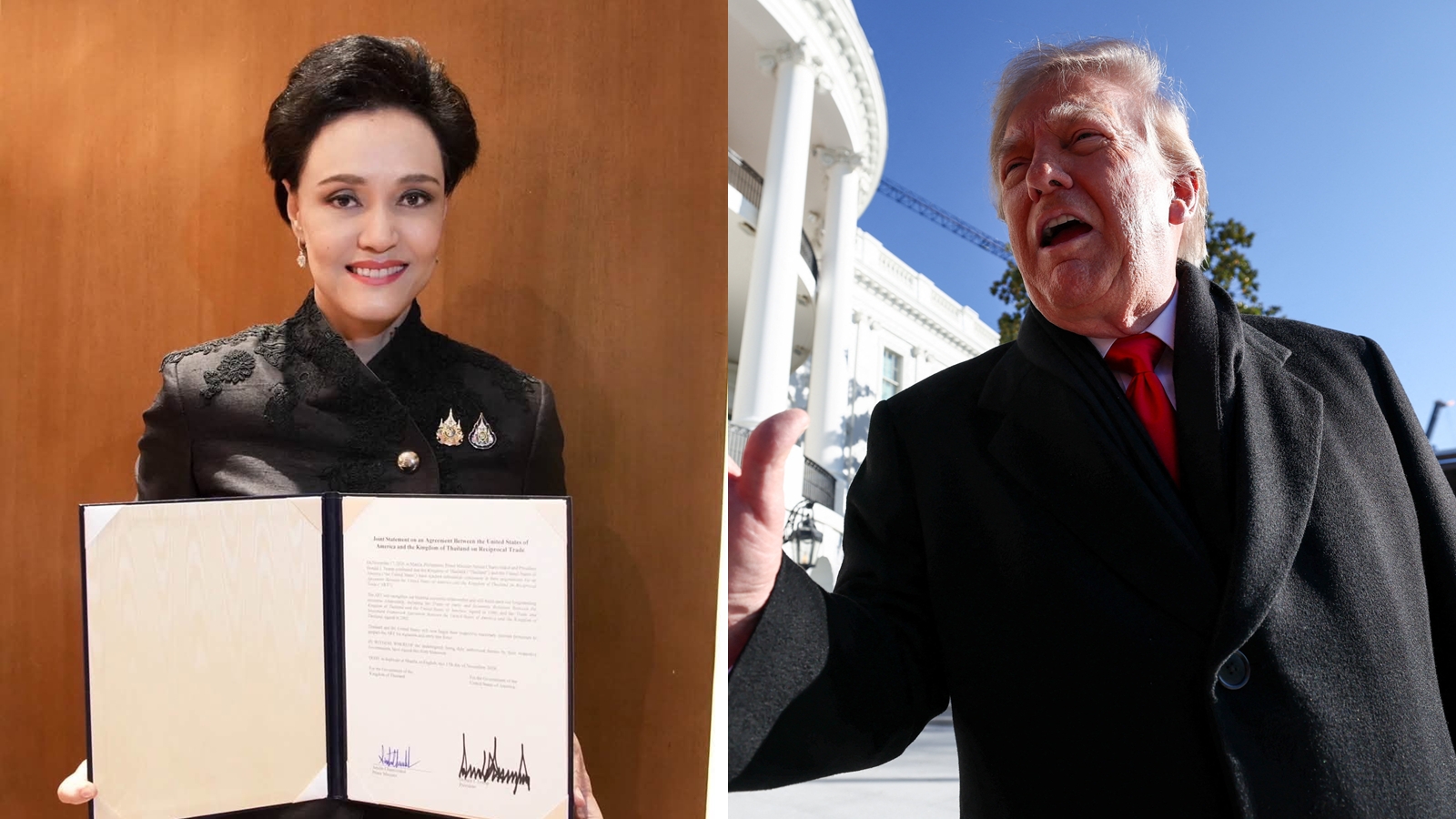
Deputy Prime Minister and Commerce Minister Suphajee Suthumpun said US President Donald Trump’s claim that Thailand would eliminate all tariffs on American imports was intended to make Americans feel good, particularly US farmers, rather than reflect the full terms of the trade agreement.
Speaking on Wednesday (18 November), Suphajee clarified Trump’s remarks during the signing of the Joint Statement on the Agreement on Reciprocal Trade (ART), stressing that Thailand had not agreed to eliminate tariffs on 100 per cent of US goods.
She described Trump’s statement as his characteristic way of speaking, adding that there was nothing wrong with it.
Suphajee suggested that Trump wanted American farmers to hear that Thailand was opening its market to US agricultural products, even though restrictions would remain in place.
She said his remarks were not about any new concessions but rather an attempt to present existing agreements in a way that would make Americans feel good.
The minister explained that the trade arrangements had been negotiated under former prime minister Paetongtarn Shinawatra’s government, when Thailand secured a reduction in US tariffs on Thai goods from 36 per cent to 19 per cent.
In return, Thailand agreed to open parts of its market to American products, but not completely.
Suphajee noted that Thailand had already granted full market access to several trading partners, including ASEAN countries, Australia and New Zealand, under agreements signed more than two decades ago. However, she emphasised that the arrangement with the United States did not provide 100 per cent market access.
She said increased competition from American imports would ultimately benefit Thai consumers and businesses by offering them more choices.
For example, Thailand already imports beef from Australia and would also allow US beef imports under limited quotas, giving consumers a choice between products from different countries.
However, sensitive products, including certain agricultural goods, would remain subject to restrictions or import quotas to protect domestic producers.
Addressing concerns among Thai farmers following Trump’s announcement, Suphajee said the government had already disclosed the agreed terms in July 2025 and that no additional concessions had been made.
She stressed that the agreement would still undergo a full review before the final contract was signed, and that market liberalisation would be implemented gradually rather than immediately.
Regarding animal feed maize, Suphajee said Thailand had measures in place to protect domestic farmers. Importers would first be required to purchase the available domestic supply before bringing in foreign maize.
She also cited a domestic maize purchasing condition involving a moisture content of 30 per cent and a price of 7.50 baht.
Suphajee said Trump’s comments should therefore be understood as a presentation of previously agreed measures rather than an announcement of new trade commitments.
She added that closer trade relations would benefit both countries by facilitating commerce and encouraging investment.
The government, she said, remained focused on protecting Thailand’s export earnings and employment.
Thailand exported more than 2.37 trillion baht worth of goods to the United States last year, supporting approximately 1.25 million workers.
Suphajee insisted that the government’s negotiations were aimed at safeguarding those economic interests and that she did not believe the agreement would cause damage to Thailand.
KioskNews shows a cleaned-up reading view extracted from the publisher’s page — the original always lives on their site, not ours.