Delimitation Bill proposes formation of commission, SC judge, CEC nominee among members
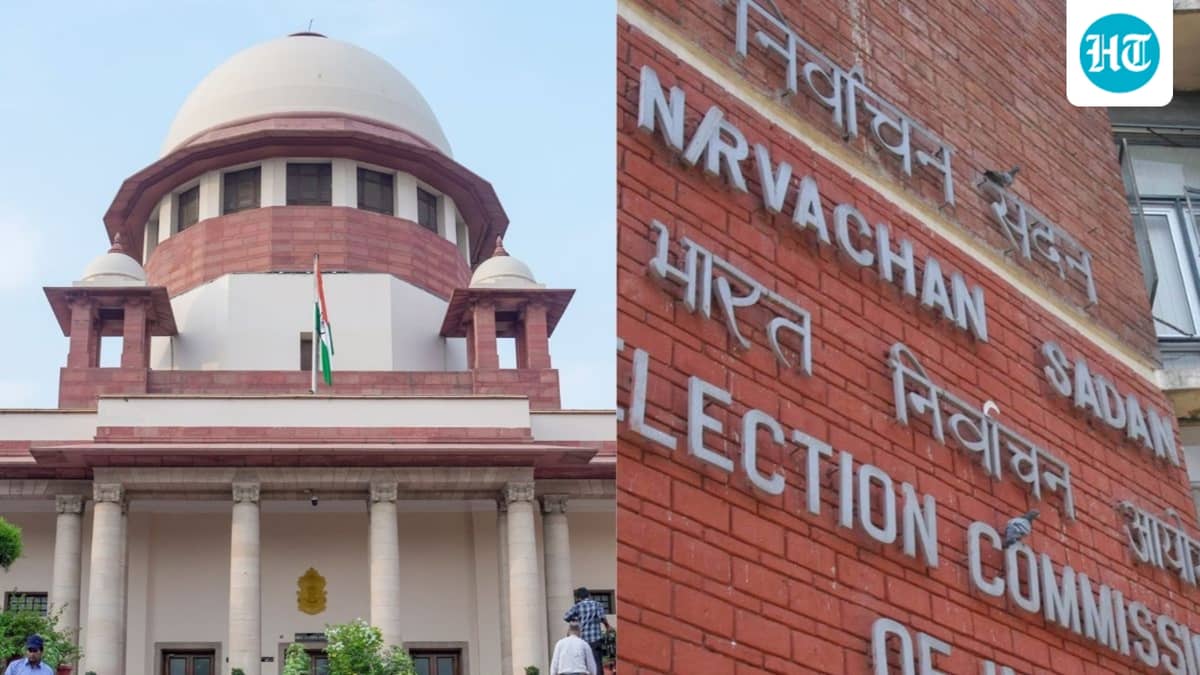
A delimitation commission will be immediately constituted after The Delimitation (Second) Bill takes effect, according to a copy of the document accessed by HT.
According to the document, the proposed three-member delimitation commission will include a serving or former Supreme Court judge, the Chief Election Commissioner or one of the Election Commissioners (ex-officio) appointed by him and a state election commissioner.
Section 3 of the Bill provides for the constitution of a delimitation commission. Here's what it reads:
“(a) one member, who shall be a person who is or has been a Judge of the Supreme Court, to be appointed by the Central Government, as the Chairperson of the Commission; (b) the Chief Election Commissioner or an Election Commissioner nominated by the Chief Election Commissioner, ex officio: ….. and (c) the State Election Commissioner of the State concerned, ex officio.”
The proposed Bill, which is expected to be introduced in the Lok Sabha during the special Parliament sitting scheduled from November 30, says that the panel will be formed if the Bill passes both Houses of Parliament and becomes an Act with the President's assent.
A serving or former Supreme Court judge will be appointed as the panel's chairperson.
The government is expected to bring the fresh delimitation bill alongside the Constitution (132nd Amendment) Bill, 2026, which seeks to amend constitutional provisions to enable the implementation of the one-third quota for women after the first delimitation exercise following its commencement. The Union cabinet had cleared the revised legislation on Friday, ahead of the special sitting of Parliament.
However, the bill clarifies that after the nomination of an Election Commissioner as a member under the relevant clause, the nomination of an Election Commissioner as a member under will be made except to fill the casual vacancy of such member under section 6.
For Meghalaya and Nagaland, the third member will be a person nominated by the respective state governor. The bill also mentions the constituencies of the Union territory of Jammu and Kashmir under Pakistan's occupation. “The Election Commission shall act as delimitation commission for the purpose of delimiting constituencies in the Legislative Assembly of the Union territory of Jammu and Kashmir falling under the occupation of Pakistan, when the area of the Union territory of Jammu and Kashmir under the occupation of Pakistan ceases to be so occupied,” the bill states.
Delimitation commission to also include MPs, MLAs as associate members
The bill which is expected to be introduced in Parliament proposes that the delimitation commission will associate ten members from each state to assist it – five Lok Sabha MPs representing that state and five members of its legislative assembly. In states with five or fewer MPs, all such MPs will be associate members, and the total number of associated members will be reduced accordingly.
However the associate members will not have voting rights or the power to sign any decision of the commission. The MPs part of the panel will be nominated by the Lok Sabha speaker, while the speaker of the respective state legislative assembly will nominate the MLAs, keeping in mind the composition of the House concerned.
The panel can also seek assistance from the registrar-general and census commissioner, surveyor general, government officials geographical information system experts and other relevant individuals.
Term and functions of the delimitation commission
The term of the commission will be specified by the Centre through a notification if the Bill is passed and becomes an Act. The Union government can, on the request of the commission, extend its term “by such further period as it may consider necessary.”
The delimitation commission will readjust:
(a) the allocation of seats in the House of the People to the States and Union territories and the total number of seats in the Legislative Assembly of each State, in accordance with the provisions of this Act;
(b) the division of each State and Union territory into territorial constituencies, on the basis of the latest census figures
KioskNews shows a cleaned-up reading view extracted from the publisher’s page — the original always lives on their site, not ours.