School for Life calls for increased investment in rural school infrastructure
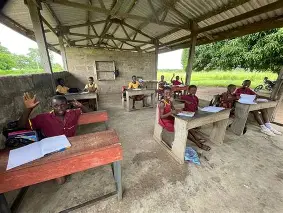
School for Life, an education-focused NGO, has called for increased investment in rural school infrastructure to improve access to inclusive and quality education for children in deprived communities.
Programmes Manager at School for Life, Zulyaden Amadu, who made the call, said inadequate classrooms, furniture, learning materials, water, sanitation and hygiene (WASH) facilities, and other basic infrastructure continued to constrain teaching and learning outcomes in many rural communities.
Mr Amadu was speaking at a media engagement in Tamale aimed at strengthening collaboration between the organisation and media houses to promote accessible, inclusive and quality education outcomes in Northern Ghana.
It was attended by representatives of media organisations across the northern part of the country to discuss challenges affecting education delivery and ways the media could contribute to promoting improved access, enrolment, retention and learning outcomes.
Mr Amadu said the media had an important role to play in drawing attention to education inequalities and amplifying the voices of communities, parents, teachers and children affected by gaps in the education system.
He said field engagements by School for Life had revealed that out-of-school children remained concentrated largely in remote and rural communities where poverty, inadequate infrastructure, gender-related barriers and limited access to educational opportunities continued to affect children's participation.
He said community ownership of schools had proved important in improving enrolment and retention stressing need to deepen community participation in school governance and decision-making.
He said the use of mother-tongue instruction also enhanced children's participation and learning outcomes particularly at the foundational level and urged stakeholders to strengthen approaches that took local languages and community contexts into account.
He said the organization's field engagements revealed that teacher shortages and deployment challenges remained significant concerns in some districts, contributing to high teacher-pupil ratios.
Mr Amadu said local volunteer facilitators played a critical role in bridging learning gaps in underserved communities and suggested that lessons from such community-based interventions could inform strategies to complement efforts to address teacher shortages in rural schools.
He also identified teacher accommodation challenges as another factor affecting contact hours in some rural communities with teachers facing difficulties in securing suitable accommodation near their schools.
He underscored need for the Ghana Education Service (GES) to strengthen teacher deployment and consider reverting to decentralised teacher postings to enable districts and communities to respond more effectively to local teacher shortages.
He also highlighted inadequate WASH facilities particularly the limited availability of separate facilities for boys and girls saying such gaps could affect children's safety, dignity and regular attendance at school.
Mr Amadu said physical accessibility to classrooms remained a challenge in some schools particularly for children with disabilities, and called for greater support through social protection programmes to enable children with disabilities to access and remain in school.
He also called for stronger community engagement in school governance, expanded support for children with disabilities, increased investment in rural infrastructure and strengthened gender-responsive interventions as part of efforts to improve inclusive education.
Participants pledged their commitment to supporting the promotion of education particularly in deprived communities, and to using their platforms to increase public awareness and accountability around challenges confronting the education sector.
DISCLAIMER: The Views, Comments, Opinions, Contributions and Statements made by Readers and Contributors on this platform do not necessarily represent the views or policy of Multimedia Group Limited.
Tags:
DISCLAIMER: The Views, Comments, Opinions, Contributions and Statements made by Readers and Contributors on this platform do not necessarily represent the views or policy of Multimedia Group Limited.
KioskNews shows a cleaned-up reading view extracted from the publisher’s page — the original always lives on their site, not ours.