From Elon Musk to Aravind Srinivas: How tech leaders reacted to Jensen Huang’s resignation
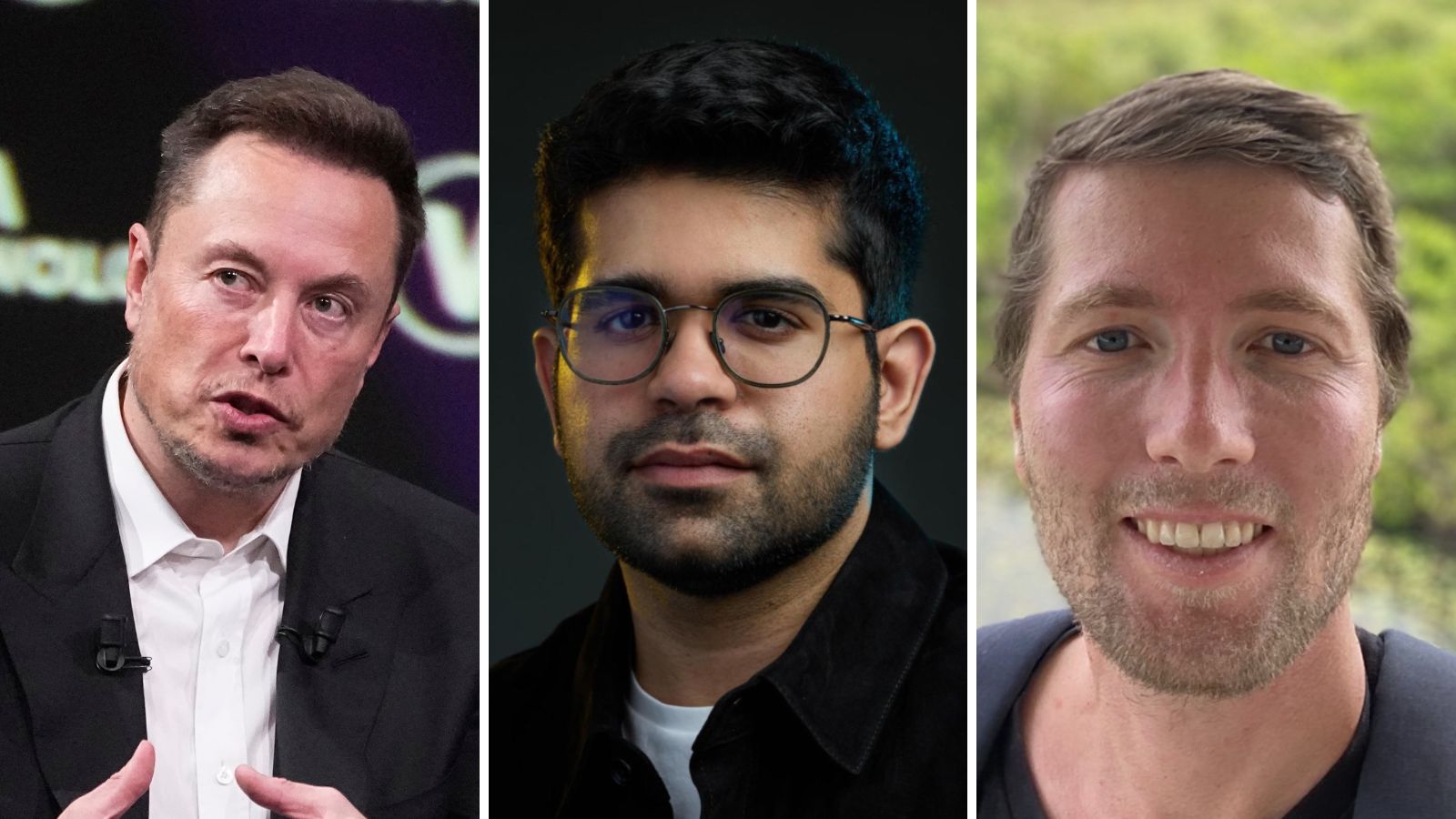
Amid the uproar over alleged affairs, Nvidia CEO Jensen Huang resigned on Thursday, November 12, after 33 years at the helm of the company. The resignation followed reports of an alleged affair with a woman suspected by US intelligence of being a Chinese spy, as well as separate reports about other extramarital relationships. The developments sent shares of one of the world’s most valuable technology companies tumbling.
Huang’s exit triggered a barrage of reactions from technology leaders, AI researchers and investors. While several questioned the decision, others praised his leadership and the role he played in transforming Nvidia into one of the world’s most influential technology companies.
Most of the reactions from Silicon Valley emphasised the 63-year-old’s professional legacy, with several leaders arguing that his personal conduct should be separated from his contribution to the tech industry. Here is a look at how some of the biggest names in technology reacted to Huang’s resignation.
Elon Musk was among the prominent names to react after The Wall Street Journal reported that Nvidia’s board was preparing to oust Huang. As reports of a potential ouster surfaced, financial blog Zerohedge took to its X account and said, “Elon please hire Jensen.” To this, the Tesla CEO Elon Musk replied, saying, “That would be an honour.”
Musk’s brief response was among the most notable reactions to Huang’s departure, suggesting that he would gladly welcome the embattled CEO to his own organisation. Huang has been arguably the most influential figure in the AI industry, with Nvidia’s chip powering most of the world’s largest AI models and data centres
A sad day
Meanwhile, Epic Games founder and CEO Tim Sweeney, in a post on X, described the development as a sad day not just for Nvidia, but also for developers and the wider technology industry. “A sad day for NVIDIA, developers, America, and all humanity. Jensen founded and ran one of the few companies to reach a massive scale while driving massive continued innovation and ubiquity, while others fell into the trap of ever-increasing extraction,” he wrote in his post.
Sweeney’s comments underscore the importance of Huang’s leadership in building Nvidia into a leading supplier of graphics processing units (GPUs) that have become integral to the development and deployment of AI.
Story continues below this ad
On the other hand, Perplexity AI co-founder and CEO Aravind Srinivas also expressed his admiration for Huang by highlighting the former CEO’s contribution to the border technology ecosystem. “Thank you Jensen Huang for 33 years of bold leadership,” Srinivas wrote on X. The Perplexity AI CEO also spoke about Huang’s generosity towards other founders, including himself, and praised him for shaping the future of American AI.
Thank you @JensenHuang for 33 years of bold leadership. You built a small startup into America’s most valuable company, with relentless improvement. Your grit and perseverance should always be remembered. Your personal generosity with time and advice to founders like me has secured a bright future for America and AI.
— Aravind Srinivas (@AravSrinivas) November 12, 2026
“You built a small startup into America’s most valuable company, with relentless improvement. Your grit and perseverance should always be remembered. Your personal generosity with time and advice to founders like me has secured a bright future for America and AI,” Srinivas wrote. His comments show the close relationship Nvidia has developed with companies building AI products and services. Nvidia’s chips and computing infrastructure have become foundational to companies developing LLMs and other advanced AI systems.
More questions on the decision
Peter Steinberger, who is credited for being the creator of the open-source OpenClaw AI agent and is now part of OpenAI, raised questions about the circumstances surrounding the CEO’s departure. In his X post, he argued that the decision could have unintended consequences for one of America’s most successful tech companies. “If that Spy’s goal was to destabilize one of the most successful American companies, they achieved their goal.”
If that Spy’s goal was to destabilize one of the most successful American companies, they achieved their goal. Ousting Jensen feels rushed and not right.
— Peter Steinberger (@steipete) November 12, 2026
He also added that ousting Jensen feels rushed and not right. Steinberger’s reaction shows the apprehension among some of the tech enthusiasts about the uncertainty that Nvidia could face after the exit of Huang, who has been steering the company for over three decades.
On the other hand, Clement Delangue, co-founder and CEO of AI platform Hugging Face, also expressed disappointment over Huang’s departure. “It’s a really sad day,” Delangue said, adding, “This whole thing sucks, and I wish none of it had happened.” He also vowed to continue supporting open-source AI, saying he would “keep fighting for open-source AI, harder than ever.”
In a subsequent post on X, Delangue expressed his confidence in Nvidia’s future, despite concerns about its leadership structure and the absence of a clear successor to Jensen Huang. Saying he was “sad but still bullish on Nvidia”, Delangue argued that the company’s distributed leadership and “comfort with chaos” were strengths rather than weaknesses. He went on to describe its organisational structure as antifragile, allowing multiple leaders to step up and helping Nvidia adapt to emerging technologies. Delangue also said Nvidia had “plenty of exceptional leaders internally” capable of becoming CEO, urging employees to carry Huang’s mission forward and honour his legacy.
Sad but still bullish on @nvidia!
I’m seeing a lot of people criticizing its structure and the lack of a clear CEO successor. Having seen it from up close, I think a lot of this criticism is ill-informed and overly simplistic (as often happens when a company is run differently from the norm).
Obviously, important to remember that this structure made NV as successful as it is and powered the AI revolution. But beyond its past success, I think it’s also what makes the company antifragile for the future.
In my opinion, NV’s distributed leadership and comfort with chaos are much more of a strength than a weakness, even without Jensen. They give an unusual number of leaders room to step up and keep the whole machine moving (as we’ve seen in the past few days). They also keep the company flexible enough to adapt to the next paradigms (open-source/local/agents/robots/biology/chemistry/…). They also encourage hard-working, self-motivated team members with a strong sense of belonging and a willingness to help each other which will matter a lot.
Personally, with the right CEO (and NVIDIA has plenty of exceptional leaders internally who could take on that role), I believe NV can keep thriving and empower every company to become an AI company and every builder to become an AI builder.
To the @nvidia team: sending you strength and support, from me, the @huggingface team and so many people across the AI community. We need you and we’re rooting for you to carry @JensenHuang’s mission forward! Taking care of his company, your company, is probably the best way to honor his legendary legacy!
💚💚💚
— clem 🤗 (@ClementDelangue) November 12, 2026
Separating personal from professional
Shaun Maguire, who is a partner at venture capital firm Sequoia Capital, offered a more nuanced assessment of the situation. While acknowledging the allegations surrounding Huang’s personal life, Maguire wrote on X – “Infidelity is obviously bad. But his contributions to American innovation and AI leadership cannot be overstated.”
Jensen is out
Infidelity is obviously bad
But his contributions to American innovation and AI leadership cannot be overstated
Jensen started NVIDIA in 1993, where he pioneered the graphics chip market when this was non-obvious
Back in 2012, Ilya Sustkever trained AlexNet on NVIDIA GPUs — thereby creating the “deep learning” age
Jensen was one of the earliest to be AI pilled and he re-oriented NVDA towards AI in the mid 2010s — none of his competitors were even thinking this way
In 2020 he acquired Mellanox for $7B. This was an Israeli company that’s irrelevant for computer graphics but was essential for AI compute — wildly increasing the bandwidth between GPUs, necessary to build high performance AI server racks (rather than just good chips)
Once AI took off, Jensen was one of the biggest champions of the ecosystem
He was technical enough to be confident about where things were going, and had enough credibility as a founder CEO that he oftentimes made risky bets on next-generation technologies or companies that helped keep American AI on the efficient frontier
Recently he was investing in open source, photonics and robotics. These areas will all be feeling his loss
Earlier he was a champion of most of America’s leading AI companies when they were unproven
He made huge mistakes with his infidelity, which is tragic for his family and NVDA
But simultaneously he will leave a huge void, with the loss of a: technical, aggressive, founder-CEO
The American AI community needs to work double-time in an attempt to fill this void
— Shaun Maguire (@shaunmmaguire) November 12, 2026
Maguire warned that Huang’s departure could leave a significant gap in the US AI industry. “The American AI community needs to work double-time in an attempt to fill this void,” he added. His comments underline a wider sentiment among tech investors and founders that Huang’s departure may have implications beyond Nvidia, particularly at a time when the US is competing with China for leadership in AI.
Story continues below this ad
In another post, Maguire also shared his pick for Huang’s successor. He said his pick for the post is Nikesh Arora, the CEO of Palo Alto Networks. Maguire argued that Arora is one of the only handful of people who have the credibility required to be aggressive on day 1. “There’s no easy choice but he’d be my go to.”
Among those who questioned Nvidia’s decision was Changpeng Zhao, founder of cryptocurrency exchange Binance. “It’s a mistake for Nvidia to let Jensen resign,” Zhao wrote on X. Dan Held, a Bitcoin entrepreneur and former Kraken executive, also expressed support for Huang, writing, “He shouldn’t have resigned.”
The reactions from the tech industry show how Nvidia’s name has grown synonymous with its celebrated founder. The company was founded in 1993 by Huang along with co-founders Chris Malachowsky and Curtis Priem. The company initially focused on graphics processors and later moved into high-performance computing and artificial intelligence. Under his leadership, Nvidia became a key supplier of compute infrastructure for the global AI industry.
After Huang stepped down, the company’s board appointed chief financial officer Colette Kress as the interim CEO as it searches for a permanent successor. Huang also resigned from the company’s board of directors. The leadership change follows controversy surrounding the former CEO and reports of him being a potential target of foreign intelligence. He had earlier, in a message to Nvidia employees, admitted to being unfaithful to his wife. Following the scandal, the board had initiated an independent probe into the national security concerns.
KioskNews shows a cleaned-up reading view extracted from the publisher’s page — the original always lives on their site, not ours.