Economic Hits And Misses Of Donald Trump Ahead Of Midterm Elections

The US midterm elections on November 3 will provide the first major electoral test for Donald Trump in his second term. While the escalating Middle East war and the resulting rise in fuel prices have dominated headlines, voters are also likely to judge the administration on several key economic promises made during the 2024 presidential campaign.
Trump's agenda was built around lowering the cost of living, reviving manufacturing, extending tax cuts, shrinking government through the Department of Government Efficiency (DOGE), and boosting domestic energy production through his "Drill, Baby, Drill" policy.
Make America Affordable Again
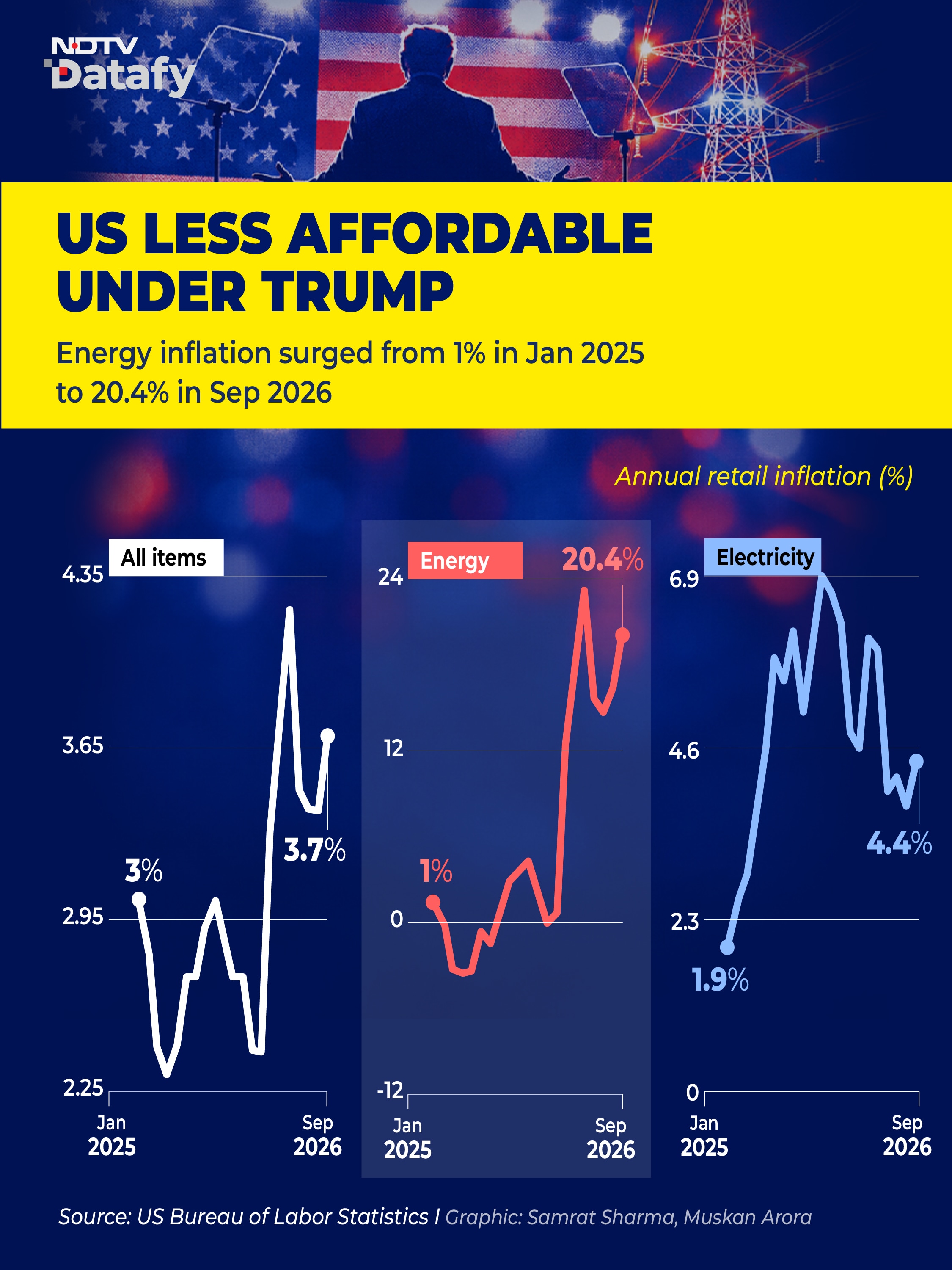
Making America affordable again was one of Trump's most prominent campaign pledges. During the campaign, he promised to slash energy and electricity prices and bring down the cost of living for American households.
However, affordability has remained a challenge for the administration. Consumer inflation rose from 3% in January 2025, when Trump took office, to 3.7% in September 2026. Energy inflation jumped sharply from 1% to 20.4% during the same period, while electricity inflation increased from 1.9% to 4.4%, according to data from the US Bureau of Labour Statistics.
Bring Back Factory Jobs
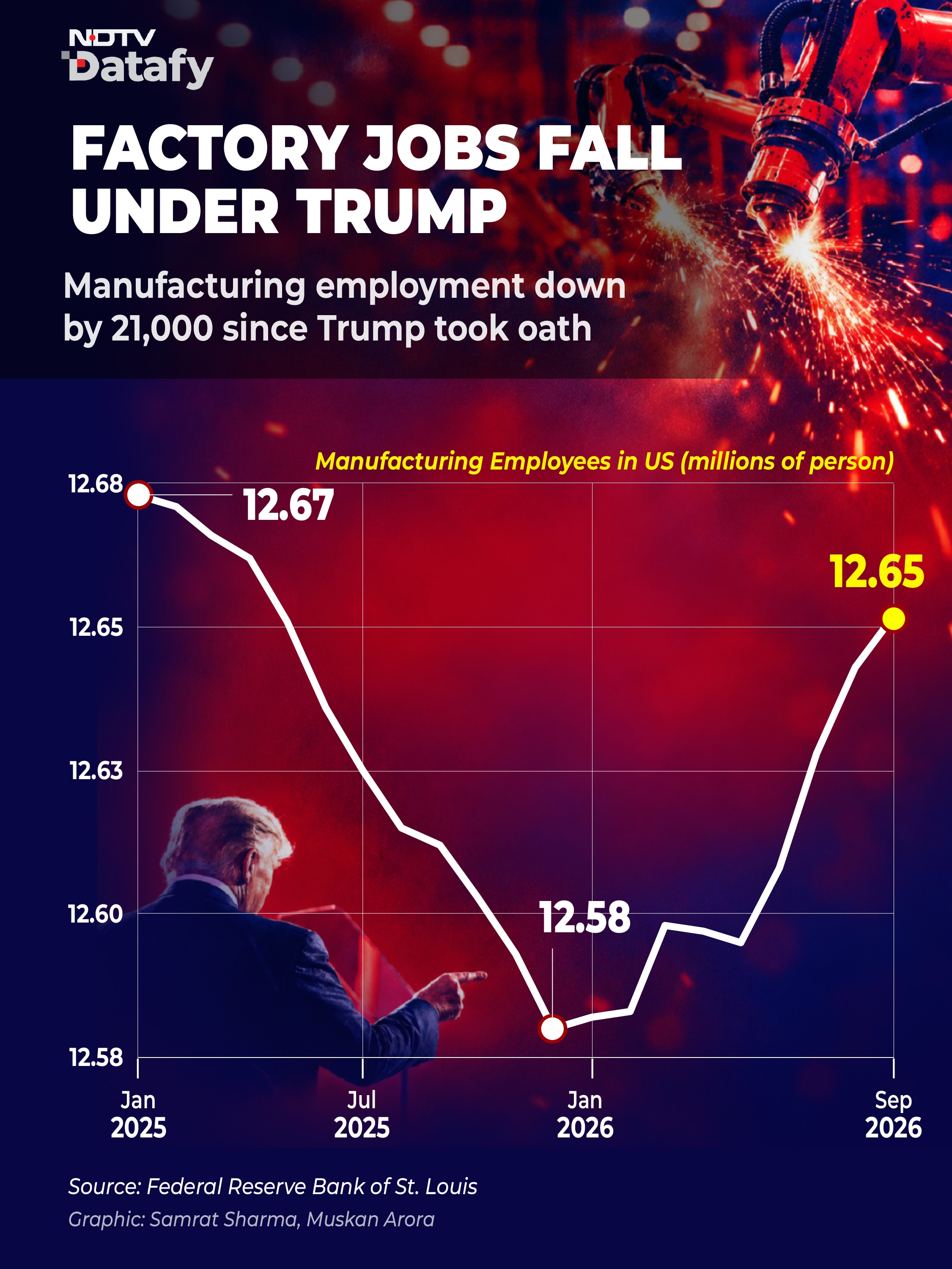
Reviving US manufacturing was another key pillar of Trump's campaign. Speaking at the Economic Club of New York in September 2024, Trump declared: "We will bring our auto-making industry to the record levels of 37 years ago, and we'll be able to do it very quickly."
Yet manufacturing employment has struggled to gain momentum. The number of workers employed in manufacturing fell from 12.673 million in January 2025 to 12.580 million in December 2025 before partially recovering to 12.652 million in September 2026, according to data from the Federal Reserve Bank of St. Louis. That leaves manufacturing employment roughly 21,000 jobs lower than when Trump was sworn in.
Shrink Government And Curb Wasteful Spending
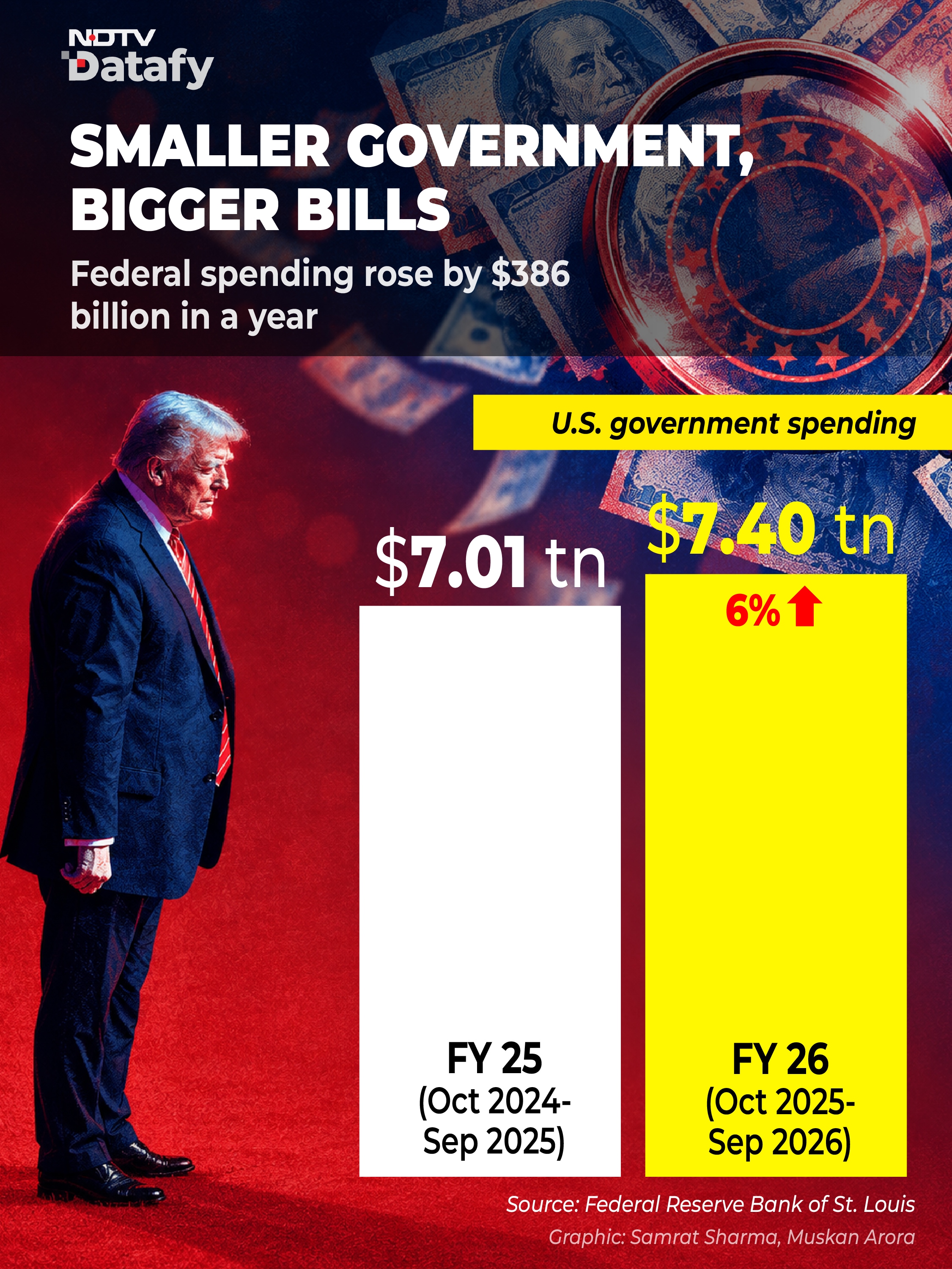
Trump also pledged to create a smaller government, reduce bureaucracy and curb wasteful spending through DOGE. The initiative was presented as a vehicle to improve government efficiency and rein in Washington's spending habits.
So far, the numbers tell a different story. Federal spending rose from $7.01 trillion in fiscal year 2025 to $7.40 trillion in fiscal year 2026, an increase of $386 billion, or nearly 6%, according to the US Department of the Treasury. While part of the increase reflects higher defence, entitlement and interest costs, overall spending has continued to climb despite promises of a leaner government.
Drill, Baby, Drill
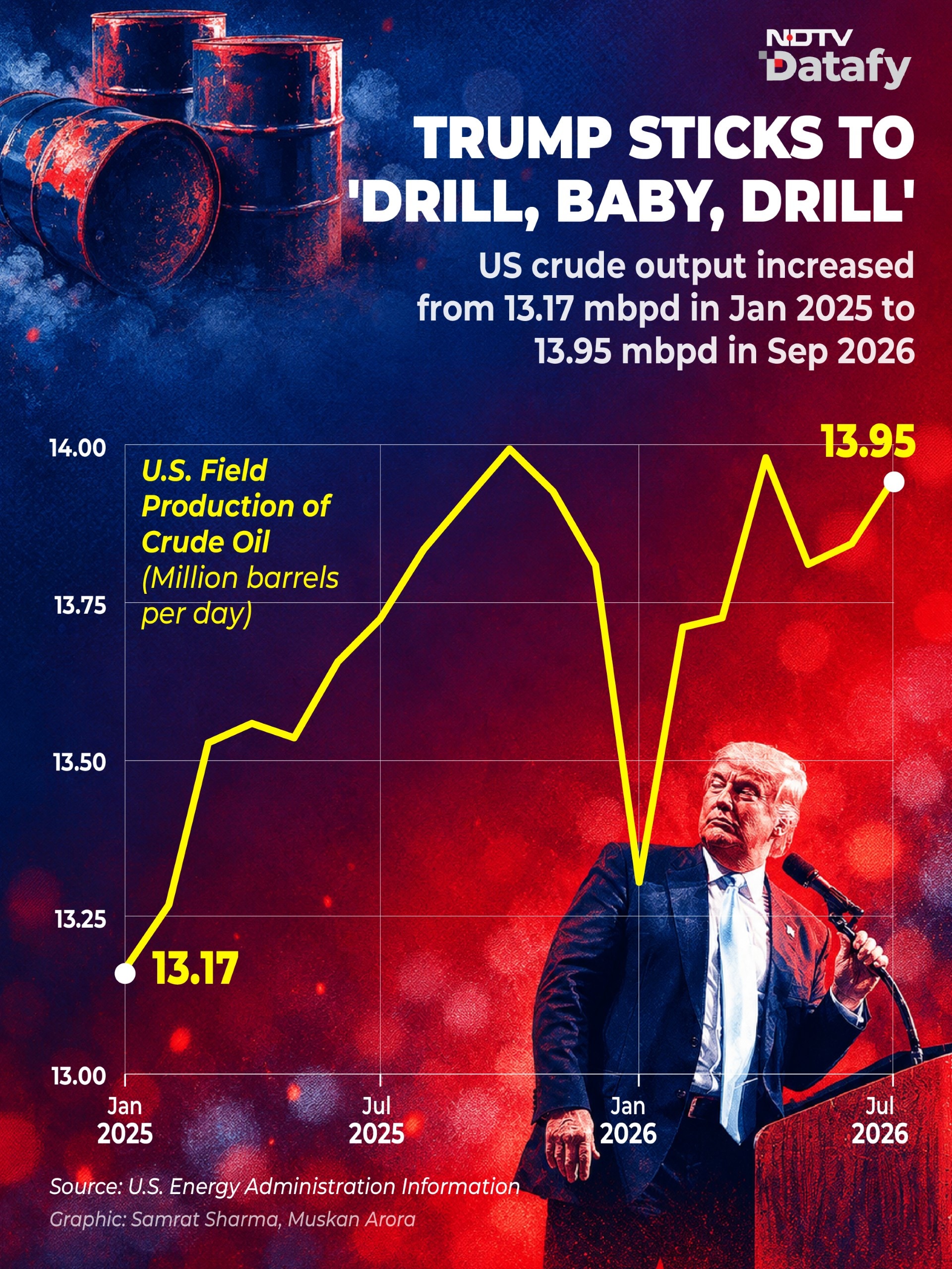
If there is one area where the administration can point to a clear success, it is oil production. Trump's "Drill, Baby, Drill" message was a centrepiece of his energy policy, focused on expanding domestic oil and gas output.
US field crude oil production increased from 13.17 million barrels a day in January 2025 to 13.95 million barrels a day in September 2026, a rise of nearly 6%, according to the US Energy Information Administration.
Tax Cuts & Extension
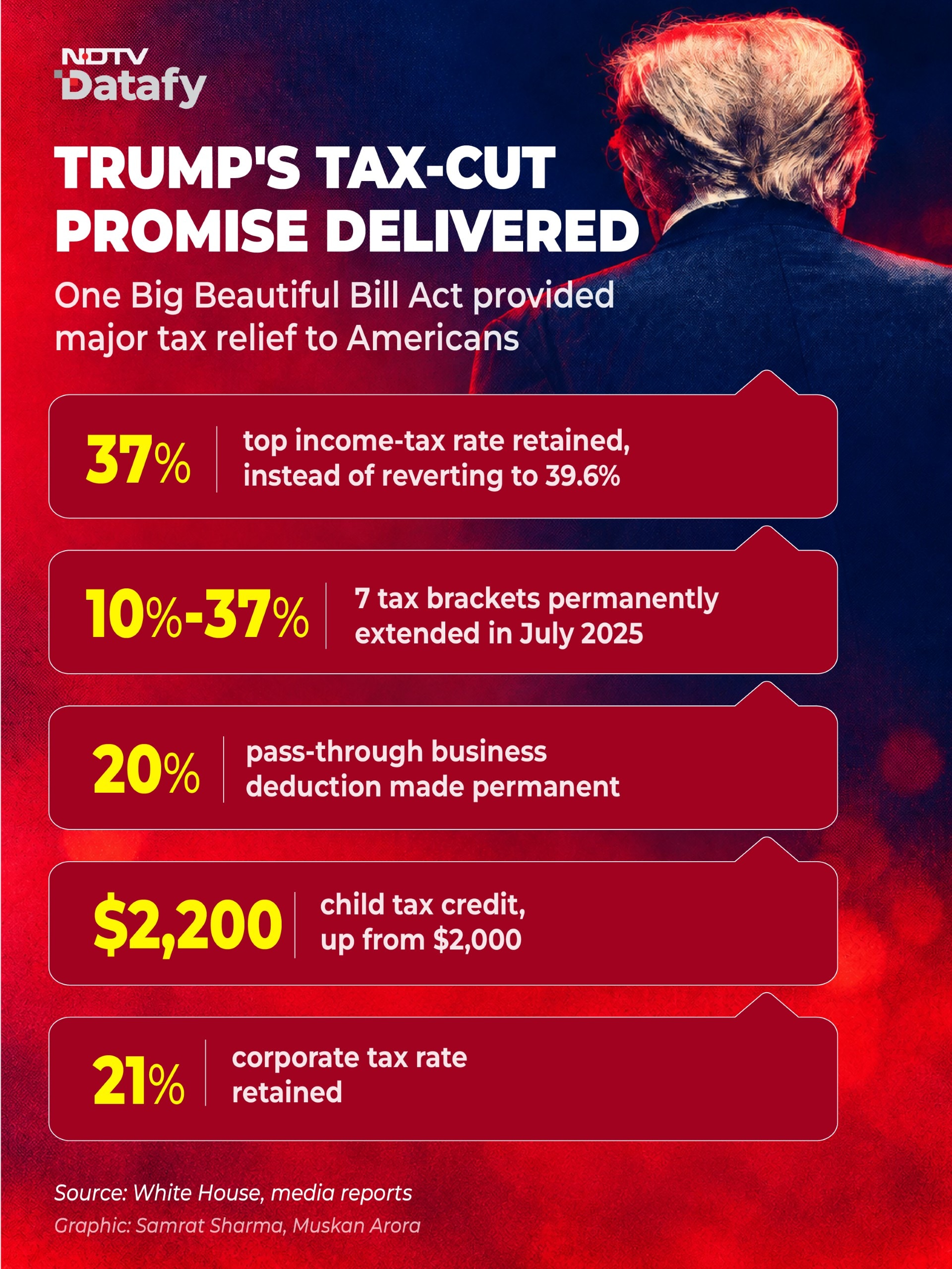
The One Big Beautiful Bill Act, signed by Trump in July 2025, stands out as one of the administration's most significant legislative achievements. The law permanently extended most of the key tax provisions from the 2017 Tax Cuts and Jobs Act that were otherwise scheduled to expire after 2025.
The legislation retained the 37% top income-tax rate instead of allowing it to revert to 39.6%, permanently extended the seven income-tax brackets, made the 20% pass-through business deduction permanent and increased the child tax credit from $2,000 to $2,200. It also preserved the 21% corporate tax rate.
Nearly two years into his second term, Trump's economic record presents a mixed picture. His administration succeeded in extending tax cuts and increasing domestic oil production, two signature promises from the 2024 campaign. But on other key pledges, including lowering the cost of living, reviving manufacturing employment and reducing federal spending, the results have been more difficult to demonstrate. As Americans head to the polls, voters will decide whether those successes outweigh the shortfalls.
KioskNews shows a cleaned-up reading view extracted from the publisher’s page — the original always lives on their site, not ours.