10 Video Games From the '90s That Are Now Considered Classics

Diego Pineda has been a devout storyteller his whole life. He has self-published a fantasy novel and a book of short stories, and is actively working on publishing his second novel.
A lifelong fan of watching movies and talking about them endlessly, he writes reviews and analyses on his Instagram page dedicated to cinema, and occasionally on his blog. His favorite filmmakers are Andrei Tarkovsky and Charlie Chaplin. He loves modern Mexican cinema and thinks it's tragically underappreciated.
Other interests of Diego's include reading, gaming, roller coasters, writing reviews on his Letterboxd account (username: DPP_reviews), and going down rabbit holes of whatever topic he's interested in at any given point.
Sign in to your Collider account
The 1990s are widely considered the most transformative decade for video games in history, and for good reason. The shift from 2D to 3D, the arrival of optical discs, the birth of all-new genres, the arrival of far more complex stories... The list of reasons why the '90s saw video gaming completely transform into a proper art form are pretty much endless. And as such, it should come as no surprise that several games from this decade are now considered classics.
The number of video games from the '90s worthy of the "classic" label are too many to count, but there are ten in particular that have gone down in history as some of the most essential, influential, and impactful games in the medium's history. From handheld RPGs like Pokémon Red and Blue to fighting game essentials like Street Fighter II: The World Warrior, the biggest classic games of the '90s are a testament to how much the medium has evolved since its inception.
10 'Pokémon Red and Blue' (1996)

Nowadays, the Pokémon multimedia franchise is easily one of the most gargantuan and essential pillars of modern pop culture. Even history's greatest giants have to start somewhere, though, and in the case if Pokémon, that was Pokémon Red Version and Pokémon Blue Version. Published by Nintendo for the Game Boy in 1996, these have since aged as two of the best '90s video games worth playing over and over.
Far from only being essential because of their historical importance, Pokémon Red and Blue are still incredibly entertaining and highly replayable.
Indeed, far from only being essential because of their historical importance, Pokémon Red and Blue are still incredibly entertaining and highly replayable. They helped establish core RPG mechanics and gameplay loops, have some of the best world-building in the series, and single-handedly launched the global phenomenon that this franchise has since become.
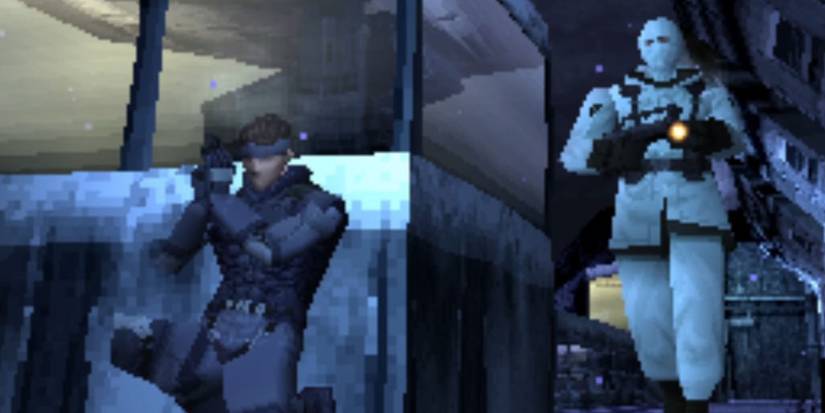
The racing platformer Penguin Adventure was technically the world's introduction to Japanese video game creator Hideo Kojima, but it was the quiet success that was 1987's Metal Gear that showed the world they were in the presence of a master who would soon become one of video game development's first true auteurs. However, it wouldn't be until the third mainline installment in the series, Metal Gear Solid, that Kojima would truly cement his status as a bona fide genius.
Far and away one of the best video games of 1998, Metal Gear Solid was one of the first games to fully push the video gaming medium into the territory of genuine art. Never before had gamers experienced a title that felt this potently cinematic and radically experimental, and those experiments were so successful that the game has somehow aged like fine wine since its release.
8 'Super Mario World' (1990)

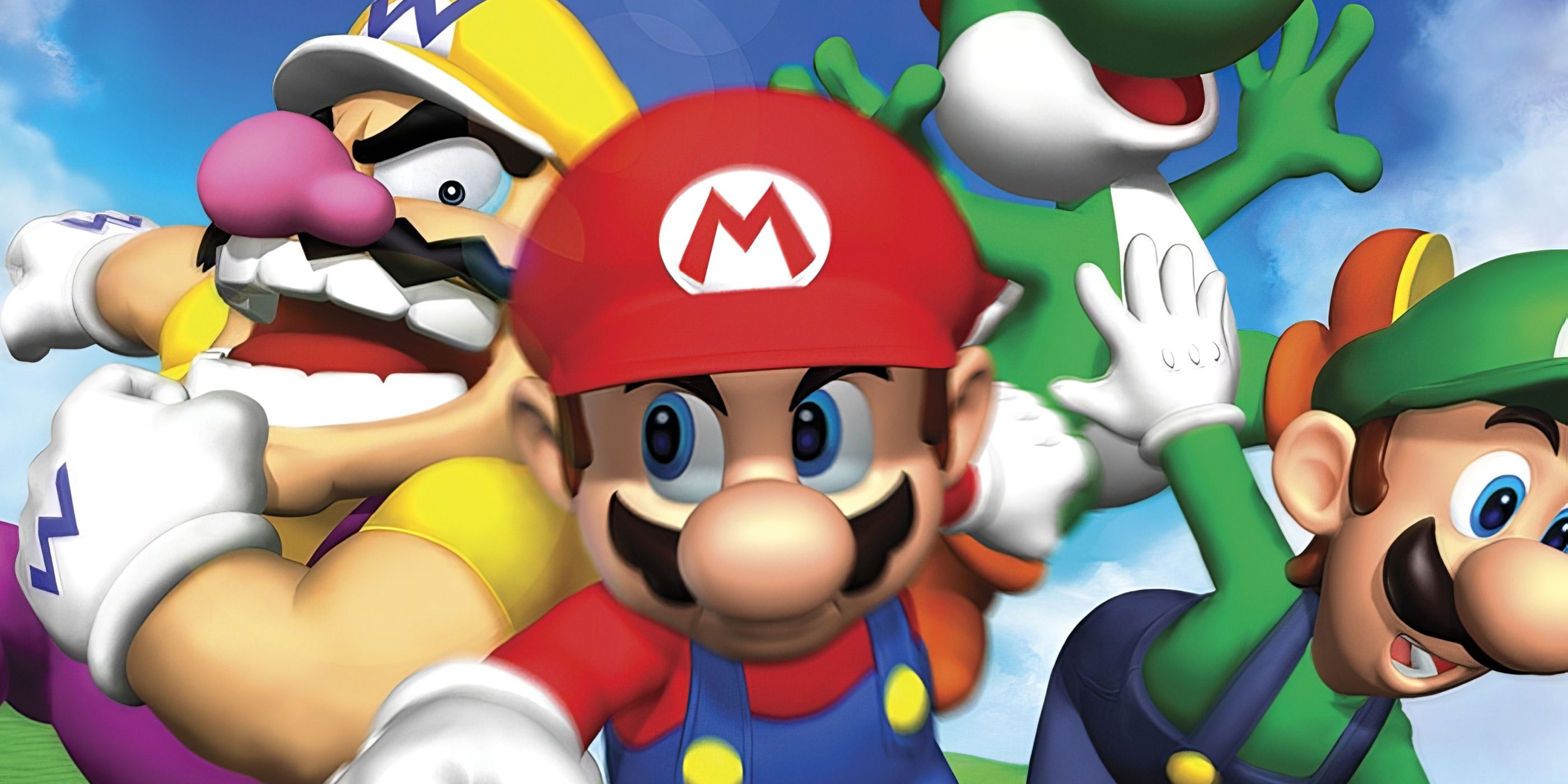
Nintendo really kicked things off on the right foot in the '90s, publishing Super Mario World for the Super Nintendo Entertainment System in Japan in 1990. The Super Mario Bros. franchise had already established itself as something really special going into the '90s, with World only further proving that this series of platformers was sure to remain a mainstay of the gaming industry for the foreseeable future.
Over three decades later, Super Mario World is still seen as one of the most beloved Nintendo classics from the 20th century, one of those Mario Bros. games that are perfect throughout. Seen by many as the absolute peak of the 2D side-scrolling genre, this groundbreaking SNES launch title may not have radically altered what Mario had to offer, but it sure did perfect the formula in ways whose influence can still be felt across the entire genre to this day.
7 'Final Fantasy VII' (1997)
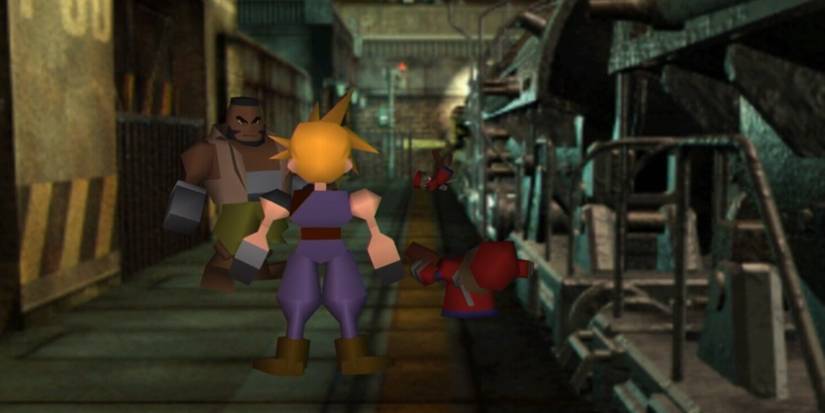
The Final Fantasy franchise was a massive, unbelievably impactful game series from the very start, but Final Fantasy VII was an undeniable watershed moment in the franchise's history, as well as a defining milestone for the entire video game industry. Almost three decades and one massive three-game remake project later, this is still generally remembered as one of the best JRPGs of all time.
Released on three CD-ROMs for the original PlayStation, the game not only shattered regional boundaries by becoming an international success, but also proved that story-driven games could hold just as much power as any film or TV show. It proved that Western audiences craved the sort of RPG experiences that Japan had to offer, as well as highly cinematic games and bold storytelling. For that and many more reasons, it's a real must-play classic.
6 'Street Fighter II: The World Warrior' (1991)

The franchise today is as mainstream as they come, which makes it easy to forget that the original Street Fighter was a commercial disappointment back in 1987. On the other hand, its sequel, Street Fighter II: The World Warrior, became the best-selling game since the Golden Age of arcade video games. When the game came out on SNES, it became Capcom's best-selling software game for the next two decades.
All this record-breaking would be worth nothing if Street Fighter II didn't actually have any staying power, though. However, the game continues to be remembered as one of the best video game masterpieces of the 1990s, having helped lay the groundwork for modern esports and revitalize the global arcade industry while it was going through a steep decline. Indeed, the game was absolutely revolutionary back in 1991, and it's still just as entertaining and iconic all these many years later.
5 'GoldenEye 007' (1997)

By the time Pierce Brosnan entered his tenure as James Bond, the 007 film franchise was already well-established as one of the most popular and iconic action film franchises on the planet. As such, it's no shocker that the series eventually made the jump to game consoles. Based on GoldenEye, Brosnan's first movie as Bond, the Nintendo 64's GoldenEye 007 is nothing short of one of the best FPS games of all time.
Developed by a small team of rookie creators, it proved that shooters could work on console just as well as on PC.
The game, which was originally conceived as a side-scrolling platformer for the SNES, eventually evolved into one of the most groundbreaking 3D shooters of the 20th century. Developed by a small team of rookie creators, it proved that shooters could work on console just as well as on PC. Unique level design, pioneering stealth mechanics, and revolutionary couch multiplayer all made it jaw-droppingly modern back in 1997; and almost 30 years later, it's still worth playing for hours on end.
4 'Chrono Trigger' (1995)

Developer and publisher Square had such immense faith in Chrono Trigger that they had their development team led by a trio of designers they dubbed the "Dream Team": Hironobu Sakaguchi, creator of Final Fantasy; Yuji Horii, creator of Dragon Quest; and Akira Toriyama, author of the Dragon Ball manga series. The end result was a tremendous critical and commercial success, and many continue to deem it one of the greatest video games ever made.
Indeed, far from just being one of the best JRPGs in history or one of the best turn-based RPG games ever, it was a massively innovative game that introduced revolutionary elements to the RPG genre which changed it forever. A masterclass in tight, impactful storytelling, zero-fluff game design, and 16-bit 2D spite artistry, it's one of the most essential video game classics that anyone who loves the medium should play at least once.
3 'Doom' (1993)

There is arguably no shooter video game more impactful, foundational, or influential than Doom, the third major independent release by developer and publisher id Software. It was a critical and commercial success upon release, but it's the ever-lasting impact that it has continued to have over the decades that has truly enshrined it as one of the most crucial works of the video game canon.
It is, indeed, one of the most influential video games of the 20th century, and then some. Fundamentally birthing modern multiplayer culture, establishing the PC as the ultimate gaming powerhouse, and embracing modding culture were but a few of the contributions that Doom had—and has continued to have—within the gaming space. With its being playable pretty much anywhere and everywhere with a screen and a processor, there's no excuse for anyone who calls themselves a gamer to say that they've never played Doom.
2 'Super Mario 64' (1996)

Super Mario 64 did not invent 3D gaming, but it did completely revolutionize how 3D games were played and designed. By pairing 360-degree analog joystick movement with a moving camera and some of the smoothest controls the industry had ever seen, Nintendo didn't just change the course of the Mario franchise going forward, but of the entire gaming industry as a whole.
There are plenty of Nintendo games that are amazing from start to finish, including several from the 1990s, but remarkably few are even remotely as important or foundational as Mario 64. The game still plays surprisingly nicely considering that it truly was the very first of its kind, and that's why it's one of the biggest and most iconic classics in the history of video games.
1 'The Legend of Zelda: Ocarina of Time' (1998)

The Legend of Zelda became one of Nintendo's biggest franchises pretty much right away, but it would be its transition into 3D that would fully cement it as one of the most essential classic franchises in the history of video games. In the eyes of many, Ocarina of Time, the game that took Zelda into the 3D realm, is something akin to the Citizen Kane of video games. At least as far as the '90s—and, arguably, the entire 20th century—go, it doesn't get much pop-culturally significant than this.
Arguably the most essential Nintendo game that every fan of gaming has to play at least once in their lives, Ocarina of Time is a classic unlike anything else that any video game console has ever seen. It's the definitive gold standard for foundational action-adventure game design, thanks to its invention of many a modern 3D action mechanic and its masterclass in atmospheric world-building and storytelling. Even to this day, it's still a must-play cornerstone of video gaming history.
Collider Exclusive · 8 Questions · 2 Minutes What Fantasy World Do You Belong To? Middle-earth · Grand Line · The Continent · Camp Half-Blood
Pick your magic, your crew, where you want to wake up and who you would rather be fighting, and we will tell you which world you actually belong in. Four are open to you: an ancient kingdom living through its last good age, an endless sea full of pirates, a continent that pays people to kill monsters, and a summer camp where the Greek gods are extremely real and mostly a nuisance.
💍Middle-earth(Rings of Power)
👒Grand Line(One Piece)
🐺The Continent(The Witcher)
🔱Camp Half-Blood(Percy Jackson)
01
What kind of power do you want? Every one of these worlds runs on a completely different sort of magic.
02
Who is travelling with you? Nobody gets through any of these stories entirely on their own.
03
Where do you want to wake up tomorrow? The best fantasy is usually just somewhere you would genuinely like to live.
04
How are you making a living out there? Even in fantasy somebody has to pay for the horse.
05
There is something in the woods. What do you do about it? All four of these worlds keep something unpleasant out there in the dark.
06
Who is the villain of your story? The enemy tells you far more about a world than the hero ever does.
07
What do you actually believe in out there? Every world hands its heroes one rule and asks them to hold onto it.
08
A thousand years from now, how are you remembered? Eight questions in, this is the one that decides your world.
The Map Is Drawn Your World Is…
Four worlds and four completely different ideas of what a good life looks like. This is where you belong, what it would ask of you, and what you would get back in return.
Middle-earth
You belong somewhere old enough that the mountains have names and somebody can still tell you who gave them. Middle-earth is for people who think the right thing is worth doing even when it will not be finished in their lifetime.
- This is the only world on the list where doing good is understood as a very long defeat, fought anyway, by people who will never see how it ends.
- You are drawn to grandeur, to white cities and deep forges and the sense that almost everything you touch is older than your entire family line.
- The Rings of Power is set in the last good age before it all goes wrong, which gives every quiet scene in it a slightly unbearable weight.
- You would take the hard road, and you would take it on foot.
The Grand Line
You want the sea, a crew, and absolutely nobody telling you where you are allowed to go. The Grand Line is the world for people whose main ambition in life is finding out what is over there.
- One Piece has run for decades on one very simple engine, which is a group of people who each want something impossible and have decided to go and get it together.
- You collect people. Your ideal crew is a set of misfits who were each written off somewhere else before you turned up and offered them a better idea.
- The world is enormous and deliberately ridiculous, and the emotional gut punches land harder because of that rather than in spite of it.
- You would set sail knowing the map runs out, which is more or less the entire point of it.
The Continent
You would rather be feared and useful than liked and useless. The Continent is a world where the monsters are the straightforward part of the job and the people are where it all gets complicated.
- Witchers get paid to do what nobody else will and resented for existing at all, which is a trade most people would refuse and you would probably accept.
- You have no real illusions about which side is the good one, largely because on the Continent that question tends to have a disappointing answer.
- The best of these stories are not about the fighting. They are about somebody with a rigid code being repeatedly cornered into caring about people.
- You would take the coin, finish the job properly, and be out of town before the story got told wrong.
Camp Half-Blood
You want the myths to be real and loose in the actual world, and you want to find out at about thirteen that you were never anywhere near as ordinary as everybody kept telling you.
- Percy Jackson takes the oldest stories we have and drops them into car parks and diners, which makes the gods considerably funnier and a great deal worse.
- You would be the kid every school gave up on, who turns out to have been built for something nobody thought to test for.
- The series is genuinely about friendship rather than destiny, and it says so out loud every time a prophecy tries to get in the way.
- Camp Half-Blood is the real fantasy here: a place where the thing that made you difficult everywhere else is the thing that makes you belong.
KioskNews shows a cleaned-up reading view extracted from the publisher’s page — the original always lives on their site, not ours.