How Serie A became must watch soccer: The rule changes that opened up Italy's beautiful game
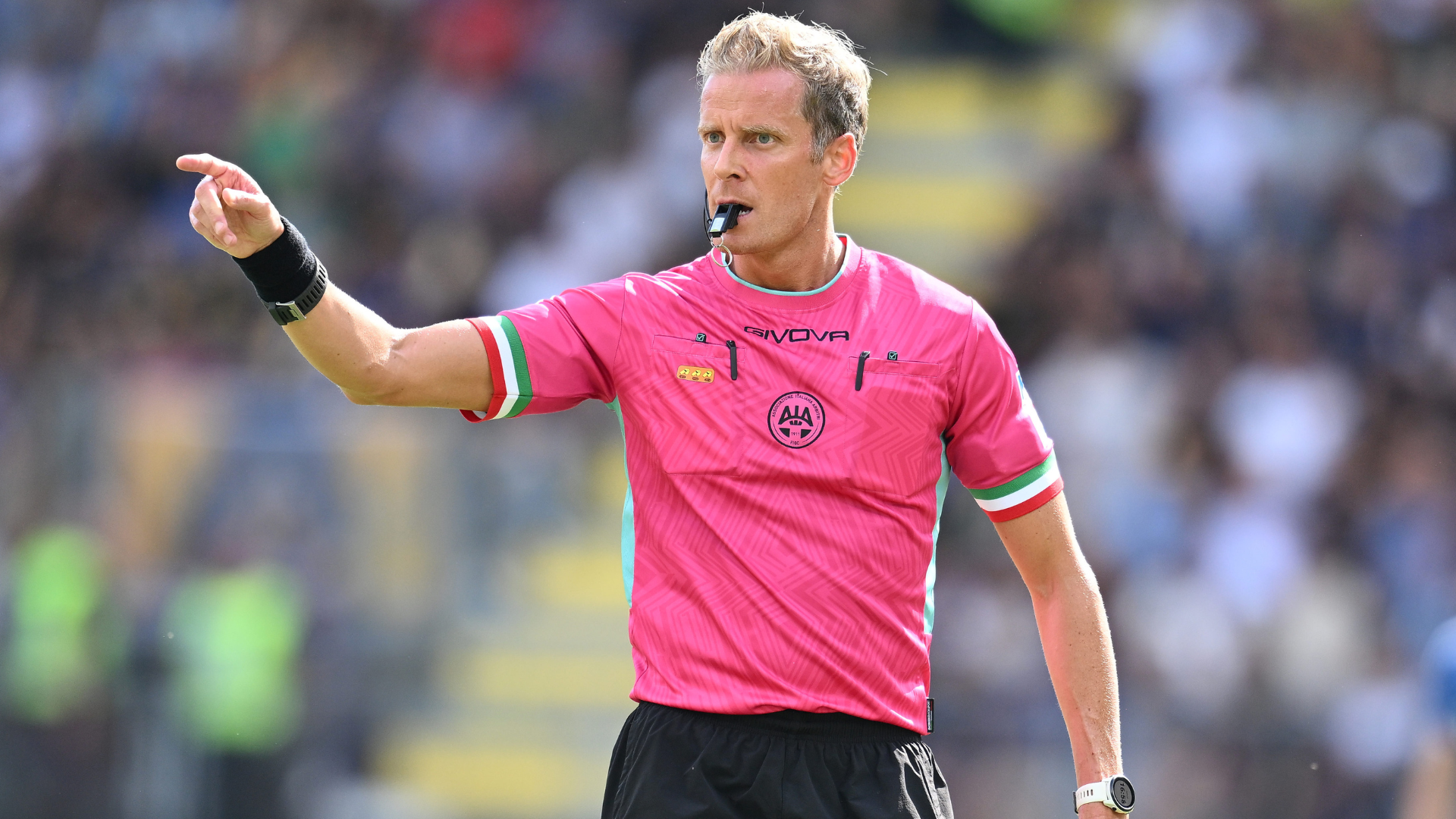
Under Daniele Orsato's leadership and new officiating rules, ball-in-play time is up five minutes per match while fouls, penalties and stoppage tactics have dropped sharply

• 3 min read
Serie A returns this weekend following the international break, with the first five matchdays already showcasing a much higher level of soccer than in recent seasons. Unlike in other leagues, the improvement is not just down to new signings, but also to the new refereeing rules introduced across European leagues this season. Serie A is probably the league that has benefited most from the new rules, and here's why.
Alongside the new rules, the Italian Referee Association (AIA) underwent a major overhaul ahead of the new season. Former AIA president Gianluca Rocchi stepped down in April, following the emergence of an investigation into Italian referees. Later, the investigation ended with no consequences, but a new hierarchy was established, and former Italian referee Daniele Orsato was appointed as the new leader of the Italian referees.
Orsato immediately set a new direction, one that mirrors his own style as a referee: fewer fouls, more action. His ideas completely changed the game for the better, as multiple players and managers pointed out in the opening games of the season. Inter coach Cristian Chivu, speaking after a 3-2 win against Napoli in September, said: "I want to congratulate the referees for their handling of the game. The game flows, it's entertaining, there's no more time-wasting, and players who go down know they might have to leave the pitch. They are maintaining a consistent approach that everyone appreciates, and I want to commend them all."
Lazio coach Gennaro Gattuso said that, "the referees have changed the way they officiate, and as a result, the league has become more entertaining."
In particular, Chivu was referring to a new rule introduced across the leagues this season, which requires players who go down and request medical assistance to leave the pitch for one minute. The measure is designed to discourage time-wasting while ensuring that players who genuinely need medical attention can still receive it. This is a change that can have a positive impact on the game, as players can no longer waste as much time as they did in the past, when opponents or teammates would often put the ball out of play and cause lengthy interruptions. In the opening four matchdays, effective game time in Serie A was 59 minutes per game, five minutes higher than last season's 54.
Fewer interruptions, fewer fouls whistled but also fewer penalties and red cards. There have been significantly fewer fouls than last season, with the average dropping from 12.68 to 11.38 per team per game. The number of red cards has been remarkably low, with just two so far in six matchdays. Referees have already handed out 160 yellow cards, averaging just over three per game. There have also been five penalties awarded in the first five matchdays, the fewest at this stage of any season since VAR was introduced in Italy in 2017-18.
This is something that Italian soccer needed desperately, as the league has been widely criticized over the years for the time wasted and the limited time played compared to the other top European leagues. There have also been more goals so far, with Serie A averaging 2.88 goals per game in the opening matchdays of the season. Only the Bundesliga (3.72) and LaLiga (2.92) have recorded higher figures among Europe's top five leagues. That is a notable improvement for a competition that has finished bottom of the top five leagues for goals scored in three of the past four seasons. Numbers never tell the whole story, but they certainly point to an encouraging start. With the league returning this weekend after the international break, there is plenty of reason to be optimistic and plenty more to look forward to as Serie A continues to build on an exciting opening to the season.
KioskNews shows a cleaned-up reading view extracted from the publisher’s page — the original always lives on their site, not ours.