Singapore tests self-driving excavators to cut construction manpower needs
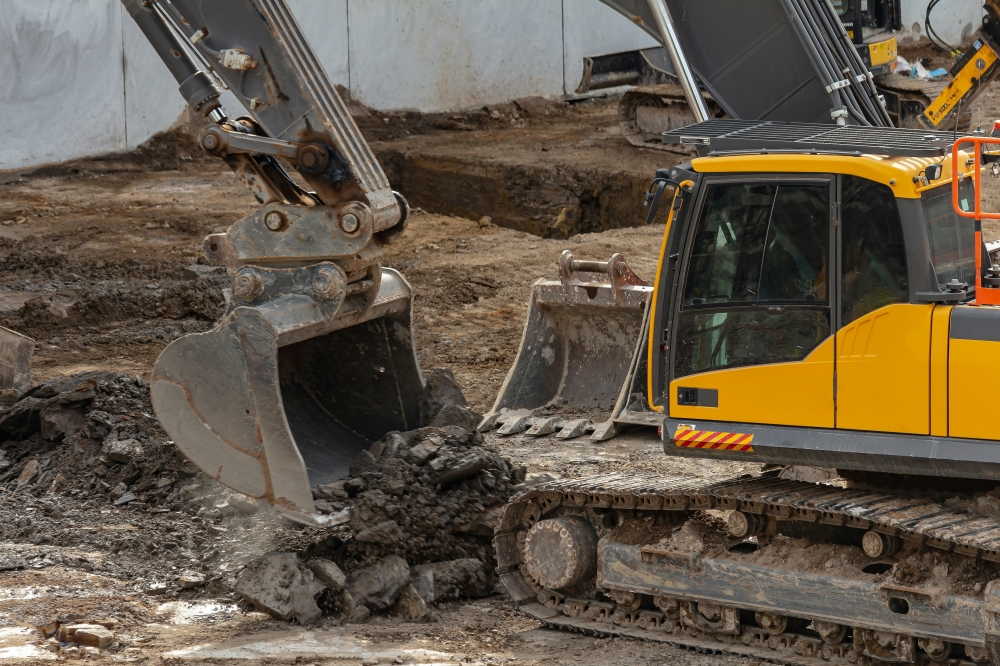

For illustration only. JTC Corporation, a government agency under Singapore’s Trade and Industry Ministry, and Kajima Corporation, a leading Japanese construction company, are collaborating on the pilot project. — Unsplash pic
First Published: Thursday, 17 Sep 2026 5:54 PM MYT
SINGAPORE, Sept 17 — Singapore has rolled out its first pilot project to explore the use of autonomous heavy construction equipment to ease manpower constraints and improve worksite safety.
JTC Corporation, a government agency under Singapore’s Trade and Industry Ministry, and Kajima Corporation, a leading Japanese construction company, are collaborating on the pilot project.
JTC Assistant Chief Executive Officer Calvin Chung said increasing the workforce was not a sustainable way to meet Singapore’s future construction needs, given JTC’s pipeline of at least 800 hectares of earthworks projects over the next five years.
“If the pilot succeeds, we will deploy autonomous heavy construction equipment across suitable projects in our pipeline and support wider industry adoption,” he said in a joint statement on Thursday.
JTC is targeting a 50 per cent reduction in operator manpower, with one operator overseeing two machines.
The pilot projects will be held at Jurong Innovation District, where autonomous machines such as excavators and compactors will be tested at the Bulim Autonomous Yard (BAY), a JTC sandbox for validating autonomous construction equipment under real site conditions.
Following the BAY trials, JTC will work with the Manpower Ministry (MOM) to develop operating guidelines and safeguards to support industry-wide deployment while prioritising human safety.
These include geofencing to keep machines within designated areas, Light Detection and Ranging (LiDAR) sensors to detect people and obstacles, and emergency stop controls on site and in the control room.
The statement said the trial will involve an operator assigning tasks and setting virtual geographic boundaries, or geofences, for each autonomous construction machine.
Using sensors and artificial intelligence, the machine would then carry out the tasks independently, without an operator in the cabin or elsewhere. — Bernama
KioskNews shows a cleaned-up reading view extracted from the publisher’s page — the original always lives on their site, not ours.