UK embassy in Japan warns of rise in drink spiking and credit card fraud at Tokyo bars
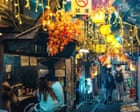
The British embassy in Tokyo has launched a social media campaign warning visitors to exercise caution after a rise in cases of drink-spiking and credit card fraud against tourists in the Japanese capital.
In a recent clip made in conjunction with the embassy, the British rapper and manga artist Shao Dow, a frequent visitor to Japan, notes that although the country “is incredibly safe, that doesn’t mean you can let your guard down”.
He warns that young male tourists are particularly susceptible to being lured into bars on the promise of being able to chat to attractive, English-speaking women. They are then served drug-laced drinks and enormous sums are charged to their credit cards.
Drink-spiking cases involving British and other international tourists have been on the rise in the past two years in popular nightlife districts such as Roppongi, Shibuya and Kabukicho.
Some victims have lost up to £30,000 (US$39,000) in a single night, Dow says, and wake up with no memory of what happened. “Look, do me a favour,” he adds, “Stay alert, trust your gut, keep an eye on your stuff and don’t follow strangers into bars.”
Police in Tokyo have come under pressure to tackle the rise in incidents targeting tourists. Earlier this month, 160 riot police conducted predawn raids on two establishments in Kabukicho after reports they had ripped off customers. Five people were arrested.
Between January and October, police recorded 340 cases – up 195 from last year – in the Shinjuku area after customers, some of whom were lured into bars by street touts, were charged extortionate sums. In one case, ¥9.6m ($60,000) was allegedly charged to a customer’s credit card.
According to the newspaper Asahi Shimbun, victims have paid ¥390m in total and foreign nationals had been the targets in 70% of cases. The newspaper quoted a senior investigator as saying the reported crimes were the “tip of the iceberg” since many visitors returned home before they realised they had been swindled, while others had left Japan without reporting the incidents to police.
Reports say the rise in cases was being fuelled by Japan’s tourism boom. A record 42.7 million people visited Japan last year, including 530,000 from the UK.
after newsletter promotion
The Guardian has approached the Japan National Tourism Organisation for comment.
Year-end fundraiser
$0 of $2,000,000 goal
A moment full of possibility – and risk
We hope you appreciated this article. Before you close this tab, can we ask you to support the Guardian at this crucial time for democracy in the US? With Black Friday approaching, our most impactful monthly support option is just $7.50 a month for six months.
In the last two years alone, Donald Trump has eroded many of the pillars of US democracy – slashing funds for universities, undermining science, shutting down arts institutions, and attacking the free press as an “enemy of the American people” and “a threat to our national security”. While he and his allies have enriched themselves and spread lies, federal forces have harassed and imprisoned innocent people and violated the constitutional rights of many Americans.
Now, in a sweeping change election, the American people have spoken: Donald Trump, Pete Hegseth, RFK Jr, Elon Musk and the tech oligarchs may finally be held to account. A majority of American voters have demanded an end to the costly and immoral wars, the flagrant profiteering, and the corrosive attacks on communities and democratic institutions.
It’s a moment full of possibility, with more stories than we can possibly cover. New leaders are emerging from Texas and Michigan to Iowa and South Carolina – and heading to Washington to fight for affordability, against wealth inequality, and for human survival in the face of AI and the climate crisis.
These new leaders will be facing a cornered Trump and his hardline chief of staff, Stephen Miller, who have nothing left to lose. The next few years are critical for the future of the country. Journalism that covers the epic clash between these forces has a vital role to play right now.
Investigative journalism provides a fact-based paper trail for an emboldened Congress to follow. Members of Congress – and the American public – often rely on our in-depth reporting to inform the tough questions, to connect the dots and to pursue accountability for wrongdoing.
At the Guardian, our newsroom is devoted to uncovering the truth and conveying it to as many people as possible. We’re not alone in this mission, but this kind of journalism faces unprecedented hurdles: big tech threatening our financial stability and stealing our work for AI, billionaire owners telling journalists what to publish, and a hostile executive branch intent on suppressing our reporting.
The Guardian is free to dig deep without fear because we’re funded by our readers. Our readers hold us to account, and we hold the powerful to account.
However, this only works when enough of our readers contribute. Against the advice of most industry analysts, we’ve refused to put up a paywall – we believe good journalism should be freely available to all people, regardless of ability to pay. If you’re counting on our reporting, and you can’t afford to pay, please stop reading this message and go back to our articles.
If you can afford to contribute, please know that your support is not only helping yourself – from voters in Kansas to immigrants in Minnesota and families in Gaza, your generosity is bringing factual news to people around the globe.
Today is among our most important fundraising days of the year. To sustain our unique financial model, our goal is to raise $2,000,000 before the new Congress is seated on 3 January. More than 19,000 people have contributed already. All gifts are gratefully received, but for the next several days only, our most impactful monthly support option is $7.50 a month for the first six months. If you can afford 37 seconds, please join our ranks – and show your support for the rekindling of democracy in the US and around the world.
KioskNews shows a cleaned-up reading view extracted from the publisher’s page — the original always lives on their site, not ours.