Hongkongers to pay 10% of market price of some drugs under chronic disease scheme

Patients under the government’s chronic disease management scheme will be able to purchase some medications at a cost as low as one-tenth of the market price with the launch of a primary healthcare drug list next month.
The Health Bureau also announced on Wednesday that a HK$200 (US$25.50) drug subsidy would be offered to each patient under the scheme, an amount that is expected to be enough to cover the costs of the less expensive non-patented drugs.
The Community Drug Formulary, which will be launched on December 30, will allow patients of the Chronic Disease Co-care Scheme to purchase non-patented drugs for HK$2 per week and patented drugs for HK$30 each week.
Previously, patients of the scheme had access to 113 non-patented drugs for free, but needed to pay out of their own pocket for patented drugs at market prices.
Dr Cheung Wai-lun, director of the Strategic Purchasing Office under the Health Bureau, said the new pricing regime had taken into account the affordability for patients, the market rate and the financial sustainability for the government.
“When we are offering drugs for free, it could easily lead to excessive stockpiling and over-requesting of drugs, which is not beneficial for the treatment outcomes of patients and would result in significant drug waste,” he said in a press briefing.
“Following a review, we believe that keeping medications free of charge in the long run is not an appropriate arrangement for either the system as a whole or patients themselves.”
However, the authorities will provide a HK$200 annual subsidy to each participant to cover non-patented drugs, which means some patients would not need to pay at all, he said.
The Chronic Disease Co-care Scheme (CDCC), first launched in November 2023, allows eligible residents to undergo screening for diabetes, hypertension, high cholesterol and later hepatitis B as well, and receive follow-up at private family doctors at a subsidised rate.
Following the launch of the formulary, family doctors under the co-care network will prescribe drugs from the formulary, comprising a total of 151 drugs, including an extra five patented drugs and 33 non-patented drugs in addition to the current basic-tier drug list.
The new drugs added to the list cover disease categories such as urology, ophthalmology and dermatology, on top of the current 19 types of diseases such as diabetes, hypertension, gastroenteritis, pain management and more.
Cheung said patients need to pay only one-third to one-tenth of the costs of the newly added drugs.
He said in the long run the government would continue to expand the drug formulary to include 200 to 400 types of drugs, with the beneficiaries increasing from the current 70,000 to more than 100,000 as the authorities continue to expand the types of diseases covered by the co-care network.
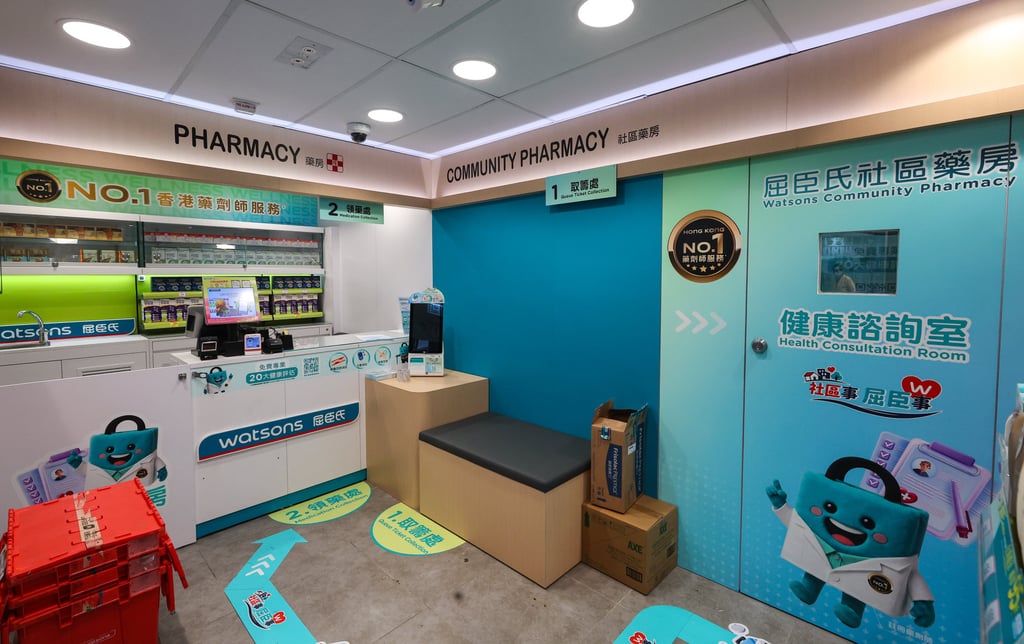
Apart from obtaining drugs directly at their private family doctors’ clinics that have joined the scheme, patients could also choose to visit one of the 20 community pharmacies in the Eastern, Sha Tin, Yuen Long and Yau Tsim Mong districts.
Cheung said the government would expand community pharmacies to the remaining 14 districts by the fourth quarter of 2027, with five pharmacies per district.
He said the government aimed to increase the number of community pharmacies to at least 200 in the long run to ensure “there’s always one around the corner”.
Meanwhile, some patients of family medicine clinics under the Hospital Authority, meaning those with hypertension, high cholesterol or diabetes, and with long periods between their follow-up appointments, could also choose to visit those pharmacies to refill their drugs, paying the same price as at public clinics.
Cheung said the authorities have not yet set any key performance indicators on the number of patients using the community pharmacy services, citing the early stage of launching the initiative and the continual updates of the drug formulary.
KioskNews shows a cleaned-up reading view extracted from the publisher’s page — the original always lives on their site, not ours.