Estate agent loses £200k court battle with race driver neighbour over hedge dividing seaside homes
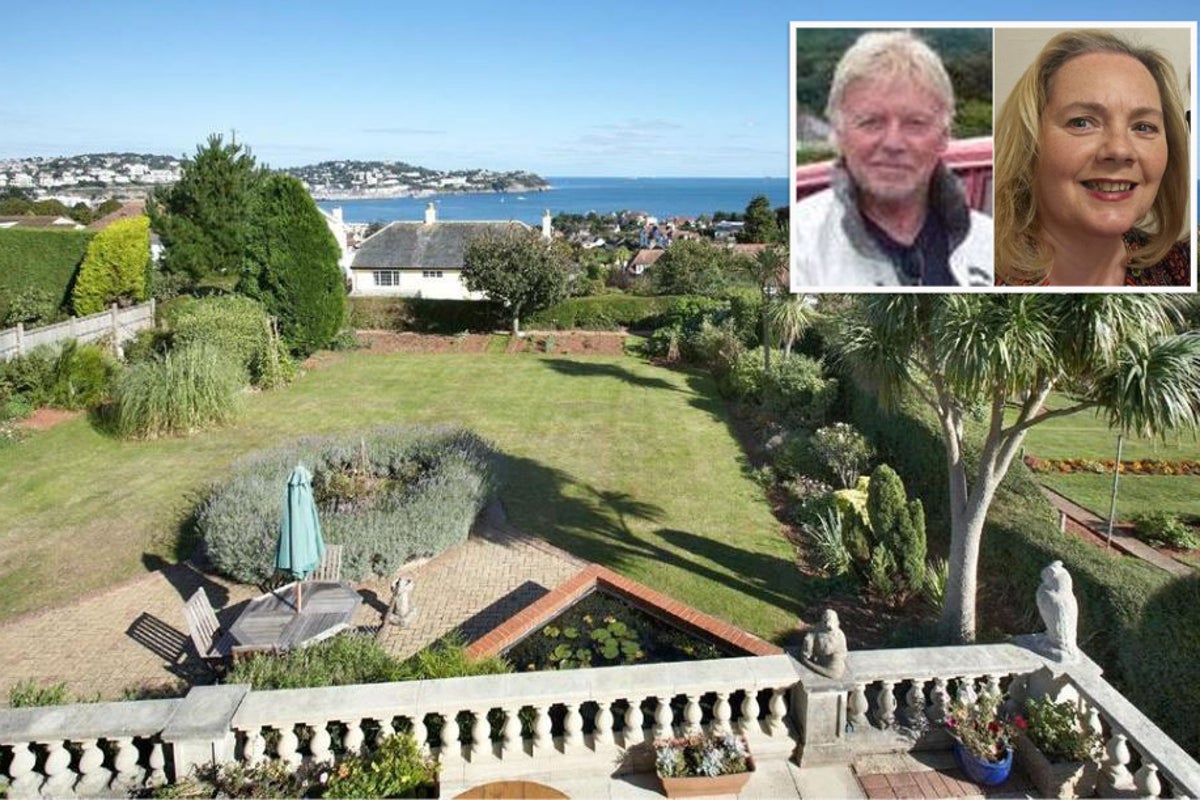
An estate agent has been left with a £200,000-plus court bill after losing a "tragic" court fight with her millionaire ex-rally driver neighbour over a hedge between their "idyllic" seaside homes.
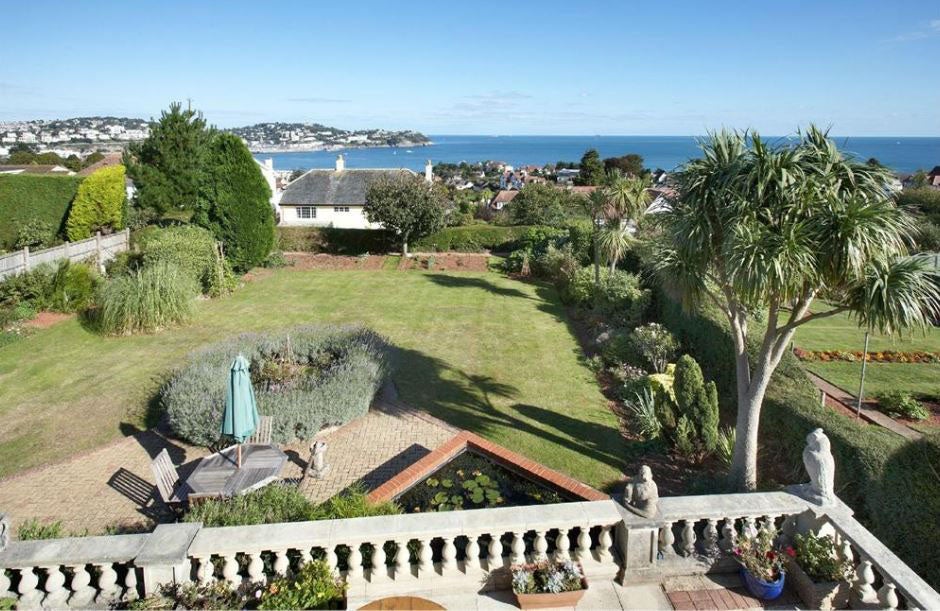
Estate agency boss Sarah Douglas, 57, moved into her £700,000 hilltop house, which boasts far-reaching "fabulous views" across the sea and coastline of Devon resort town Torquay, in 2017.
But her "idyllic circumstances" were shattered in 2018 when she became embroiled in "an unfortunate boundary dispute" with her then next door neighbour after he ripped out a hedge between their properties.
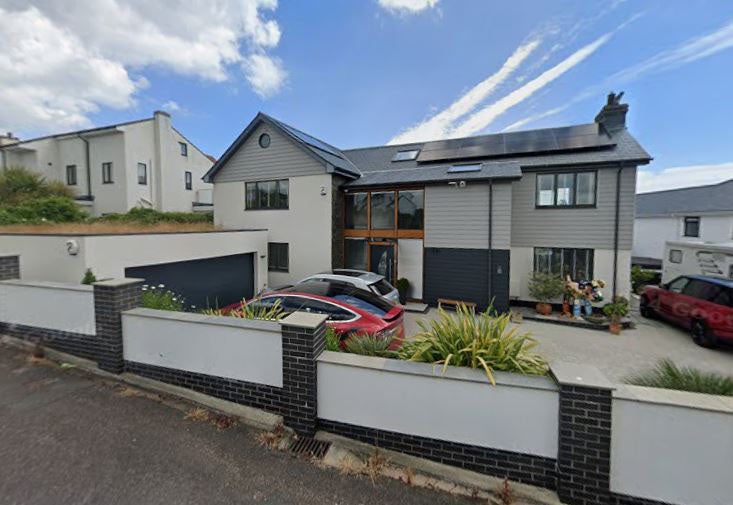
That neighbour later moved out, but the row continued after wealthy pensioner Ronald Channon, 87, - a former rally driver turned insurance boss - paid £1.4m for the house next door to Ms Douglas in June 2021, and promptly erected a new fence on what she insisted was "her land".
The fight between the pair, who were both labelled "strong characters" by a judge, ended up in court in 2025, with years of scrapping coming down to a disagreement over where the boundary lay between the two high-end properties.
Mr Channon claimed it should run along the line of the stems of the original torn out hedge, meaning the fence would stand on his land, while Ms Douglas said it should follow the line of the hedge's "southernmost leaf" - meaning it would have been wrongly built in her garden.
Ms Douglas lost the fight, after a judge ruled that a boundary following the outside of the hedge would make no sense, as it would change according to how bushy the hedge was at any given time.
Now she has also lost a High Court challenge to an order that she pay most of the costs of the case, leaving her facing having to pay more than £200,000 of her neighbours' lawyers' fees, on top of her own costs.
Judge Paul Mitchell, at Plymouth County Court, after the trial of the case last year, labelled the row a "tragedy," adding: "This is a wholly unfortunate dispute which, from any objective viewpoint, should plainly not have got to this point...clearly it has caused a significant amount of stress and upset, let alone cost.
"The properties which the parties respectively occupy are in what might be called an idyllic position, commanding fabulous sea views and should be enjoyed by each party to the maximum.
"This dispute has substantially impacted upon the pleasure that each has been able to derive from living in what otherwise should have been something bordering idyllic circumstances."

As a driver and co-driver, Mr Channon achieved rallying success nationally and internationally, placing 13th in the 16,000-mile London to Mexico World Cup Rally in 1970, and was still racing well into his seventies.
Ms Douglas meanwhile is one of the bosses of a successful south Devon estate agency.
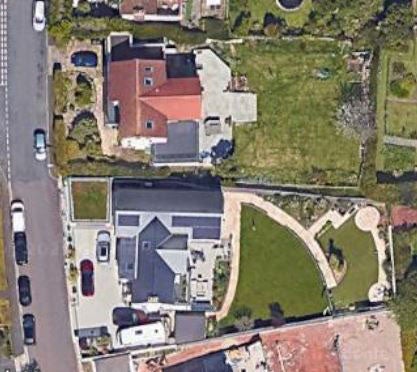
Explaining the genesis of the row in his judgment, Judge Mitchell said that the two houses sit on Mead Road, in Torquay, near the top of a hill affording both far-reaching sea views from their rear gardens, with Ms Douglas' property to the north of and higher up than that of her neighbour.
In 2018, her then neighbour removed a hedge between the two properties, which Ms Douglas insisted belonged to her and which had acted to stabilise and retain the stepped-up bank between the two houses.
In 2022, shortly after Mr Channon moved in, he built a new fence along the strip formerly occupied by the hedge, but on his side of where the hedge's stems had been planted.
"It is claimed that the removal of the hedge was a trespass; further or alternatively, that the removal constituted a nuisance which has led to instability; and it is alleged that Mr Channon has adopted the nuisance and/or the trespass of his predecessor in title," the judge explained.
He went on to say that the row had then snowballed, with Ms Douglas suing for a declaration that she owned the entire strip formerly occupied by the hedge, up to its "southernmost leaf," along with an injunction and damages for the retaining bank being weakened.

Mr Channon had gone on to countersue, claiming £200,000 damages for diminution in the value of his house plus "harassment and nuisance" over incidents including Ms Douglas' dogs getting into his garden and weeds encroaching on his property.
His counterclaim was ultimately dismissed, but the judge found in his favour over the boundary line, ruling that the fence he built is on his own land despite the southerly part of the hedge having formerly occupied that space.
"It seems to me...where the boundary separating two properties is demarcated by a hedge which belongs within the curtilage of one of the properties, the boundary will run along the outer edge of the growers or trunks or stems," he said.
"One can easily surmise that the growers were not the width of a tree trunk or anything of that sort. They were relatively thin stems.
"The boundary is then more or less a fixed point. The practical effect of that on the ground is that the boundary line...is the [southerly] outer line of the growers of the hedge.
"This is a wholly unfortunate dispute, which, from any objective viewpoint, should plainly not have got to this point, but, given that it has, clearly it has caused a significant amount of stress and upset, let alone cost.
"Each party is plainly a strong character with strong views, forthrightly expressed.
"Each case of this sort is, in its own way, a tragedy."
He went on to order that the estate agent should pay 70% of her neighbour's legal bill for the fight, estimated at over £300,000, with £108,402 up front pending an assessment of the full amount.
Unhappy with the ruling, Ms Douglas went on the challenge it in the High Court.
She argued that she should not have to pay any of her neighbour's costs, having succeeded in beating his £200,000 counterclaim, and also claimed the county court judge had blundered by agreeing that the boundary line should now run through the middle of where the stems of the hedge had stood.
In his ruling, Judge Mitchell had found that the exact line of the boundary would be along the southern edge of the hedge's stems, but had gone on to approve the boundary line being drawn through the middle of where the stems had stood - as argued for by Mr Channon's expert surveyor - saying that the difference was a matter of "millimetres" and was so small as to not matter.
On appeal, Ms Douglas objected to this, claiming that the judge had wrongly robbed her of a wafer-thin strip of her garden with his decision.
.JPG)
But Mr Justice Linden, in a ruling given last week, said the county court judge had been within his rights to say that the tiny difference didn't matter.
"It will be seen that this is essentially an argument that, for various reasons, the judge should not have found that the difference between the line...was marginal - 'a matter of mere millimetres or de minimis'.
"Instead, he should have directed that the experts plot the boundary...and, absent agreement, the matter should then be determined by the court.
"The question whether the difference between the two lines was de minimis was one of fact for the judge and his finding was based on the evidence.
"He read, saw and heard all of the evidence and, indeed, undertook a site visit, and his finding was plainly open to him.
"He found that the growers were relatively thin stems and that the relevant section...would therefore be 'marginally out by the width, or perhaps half the width, of the growers' i.e. a matter of mere millimetres.
"The difference between the two lines was, the judge permissibly found, immaterial.
"The judge was also fully entitled to take the view that it certainly would not justify the continuation of the litigation by requiring the experts to plot what the southern line of growers would have been if the hedge had not been removed in 2018, with the possibility of a further hearing if they were unable to agree.
"The costs of the litigation were already very substantial."
Going on to rule against her on the costs issue also, he said that the main issue had been the position of the boundary and Mr Channon had won that argument.
"In my view, the judge was fully entitled to find that Mr Channon was the successful party in this case, given that he had won on the issue which the judge found to be the stand out issue in the case.
"The judge expressly took into account the fact that Mr Channon’s counterclaim had failed, save insofar as it mirrored his defence on the boundary issue.
"He also took into account that the counterclaim 'caused not insubstantial costs' and he was obviously aware of the purported value of the counterclaim.
"The weight to be given to these factors was a matter for the judge and it is important to note that he gave them significant weight in making a deduction of 30% from the costs which Ms Douglas was liable to pay.
"I consider that the judge’s exercise of his discretion in relation to costs was entirely open to him.
"It is clear that both sides pursued their respective positions robustly. The judge also expressly took into account that there had been intransigence on both sides," he concluded, dismissing the appeal.
Ms Douglas has been ordered to pay £108,402 on account of her neighbours costs by 8 October 2025, ahead of an assessment of her full bill at a later date.
KioskNews shows a cleaned-up reading view extracted from the publisher’s page — the original always lives on their site, not ours.