‘Gen Z not here to make reels’: DU students’ women’s safety protest intensifies
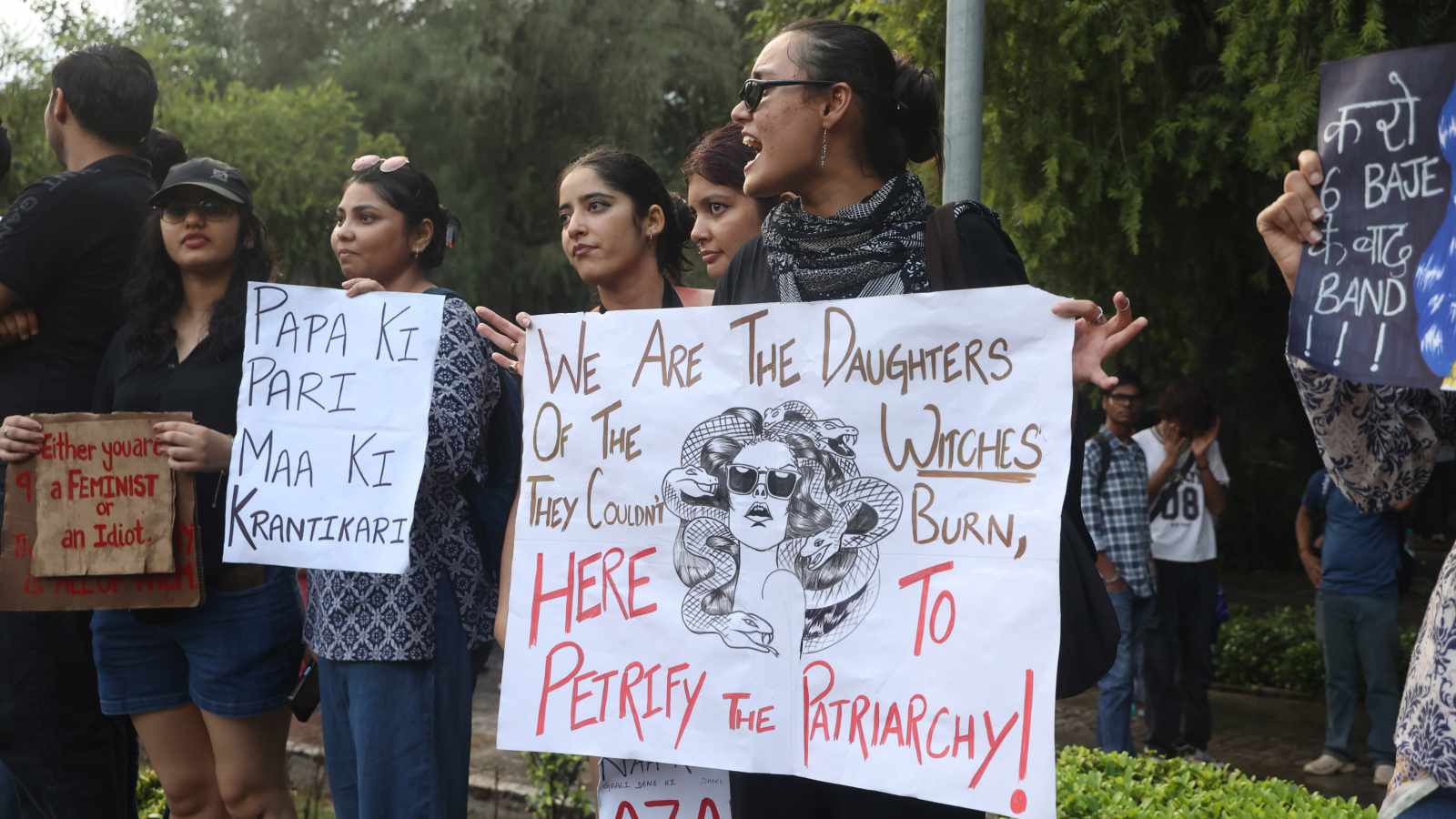
Rain, loud sloganeering, placards with messages for authorities, and drenched students trying to “force a change”: these were the scenes that unfolded as hundreds of Delhi University (DU) students gathered at the Faculty of Arts on Monday evening for the third and the largest such demonstration in a week, demanding better safety measures for women.
The protest was open “strictly for women and queer participants”, according to organisers.
Last week, similar marches took place near Lady Shri Ram College and Gargi College and Kamala Nehru College after a 17-year-old girl was allegedly gangraped at Aastha Kunj Park in South Delhi.
Giving examples of incidents from Punjab and Bihar, protesters on Monday said that women were not better off even in the Capital as they recounted the challenges they face daily during commute and restrictions they face from families.
Varsha, a second-year student at Shri Ram College of Commerce, kept track of time during the demonstration.
“My father tracks my location continuously. He keeps a check … does not want me to be out once the darkness falls. It’s deeply frustrating…Had I been a son, such severe restrictions would never have existed.”
Clashes at Lovely Professional University (LPU) about 350 km away in Punjab early Sunday, which allegedly prompted an exodus of panicked women hostellers, found resonance at the march on Monday,
Story continues below this ad
“It was only a few days ago that we met over 20 students from LPU at an event in Gurugram… many became friends. When you hear women terrified of stepping out of their hostels there, it feels very personal. If it can happen to them, who guarantees we aren’t next?” said Sunishka, a second-year student at Daulat Ram College.
Holding placards with slogans such as “Pinjra todna nahi chhodenge (We won’t stop breaking the cage),” “Darr ke aage azaadi (freedom beyond fear),” and “We should not need a protest to feel safe”, students drew a line at being locked indoors.
A third-year student at Daulat Ram College, hailing from Uttar Pradesh and living in a PG accommodation, said, “The problem is that our classes were shifted online, but what is the solution to all the crimes? If this massive democracy cannot control its men, what is the solution…confining us to our rooms?”
She added, “Even if I step out at 7 pm to go to a nearby shop, it becomes an issue with parents constantly asking for photos and live locations. It feels like I am the problem. We are not the ones committing the crimes. The administration needs to increase security, fix broken street lights, and educate sons early on.”
Story continues below this ad
Manshi, a Master’s student at Jesus and Mary College (JMC), recalled the daily commuting hazards. “During my undergraduate days at Bhagini Nivedita College in South Delhi, stepping out always felt unsafe…There were no streetlights on the approach stretches,” she said.
The double standards for men and women begin at home, Manshi said.
“My younger brother can walk into the house at any hour with zero restrictions,” she shared, adding, “For me, even stepping out to attend this march led to a fight with my parents. It is infuriating that we are forced to battle our own families, fighting for our basic rights.”
A second-year student at Daulat Ram College, who did not wish to be named, pointed out that a dark, unmonitored lane is part of the daily commute route.
Story continues below this ad
“There are no lights, and overgrown bushes are never cleared. Because something happened to me there once, I always call my parents and keep them on the line while walking.”
The student added, “Gen Z did not come out in the rain just to make Instagram reels. We are here because we are exhausted, frustrated, and want to force a change.”
Day scholars shared similar experiences of fear that persist. Richa, a first-year student at the Delhi School of Economics, shared the woes during the hour-long commute to home. “The fear is constant the moment it gets slightly dark… whether we are waiting for a bus or taking an Uber,” she said, recounting instances of being stalked.
Saying that safety laws remain confined to paper, she added, “There are safety laws, but when our own Chief Minister studied in this very university, why is there still zero deterrence on the ground?”
Story continues below this ad
The anxiety was equally palpable among women students who have come from other states.
“My family moved to Delhi 10 years ago, but the molestation incident in Bihar’s Jamui shook me completely,” said Shikha Kumari, a first-year Master’s student at North Campus, hailing from Bihar’s Vaishali district.
Recalling that even her parents had experienced safety scares traveling between villages back home, she added, “I had to join because women simply aren’t safe anywhere, no matter their age. If that is the condition back home, what is different for young students like us in Delhi?”
KioskNews shows a cleaned-up reading view extracted from the publisher’s page — the original always lives on their site, not ours.