The 10 Heaviest TV Finales of All Time, Ranked

Jeremy has more than 2900 published articles on Collider to his name, and has been writing for the site since February 2022. He's an omnivore when it comes to his movie-watching diet, so will gladly watch and write about almost anything, from old Godzilla films to gangster flicks to samurai movies to classic musicals to the French New Wave to the MCU... well, maybe not the Disney+ shows.
His favorite directors include Martin Scorsese, Sergio Leone, Akira Kurosawa, Quentin Tarantino, Werner Herzog, John Woo, Bob Fosse, Fritz Lang, Guillermo del Toro, and Yoji Yamada. He's also very proud of the fact that he's seen every single Nicolas Cage movie released before 2022, even though doing so often felt like a tremendous waste of time. He's plagued by the question of whether or not The Room is genuinely terrible or some kind of accidental masterpiece, and has been for more than 12 years (and a similar number of viewings).
When he's not writing lists - and the occasional feature article - for Collider, he also likes to upload film reviews to his Letterboxd profile (username: Jeremy Urquhart) and Instagram account.
He has achieved his 2025 goal of reading all 13,467 novels written by Stephen King, and plans to spend the next year or two getting through the author's 82,756 short stories and 105,433 novellas.
Sign in to your Collider account
There are a few ways to make the ending of a TV show impactful, with one being, quite obviously, to really hit those still watching emotionally, or otherwise heighten what the show had been going for thematically up until that point. Enter these finales, which are all quite heavy in one way or another, with some being outright tragic, and others maybe being a little more emotionally varied; some level of bittersweet, for instance.
This will also be focusing on shows that were intentionally sad, rather than shows that were sad to see finish the way they did because of quality (like, you might've felt despair seeing the Game of Thrones and Dexter finales, but not for the reasons the writers probably wanted). Also, spoilers are unavoidable when talking about heavy television finales, so if that didn’t go without saying, there you go. It’s been said (and you were warned).
10 "Not Fade Away"
'Angel' (1999–2004)

The ending of Angel is seen by some as tragic, and some as bittersweet, but if it’s the latter, it’s probably a little heavier on the bitter than the sweet? Like, Angel was always a darker show than Buffy the Vampire Slayer, and so its ending is appropriately a bit bleaker than the more balanced bittersweet ending found in Buffy the Vampire Slayer.
It’s also in line with the show, and the whole sense of the battle the characters have been fighting for five seasons never truly being over. So, they don’t really win, but you also don’t see them die, so maybe they're still fighting. Realistically, they probably did all die, but it does a Butch Cassidy and the Sundance Kid-style ending, since there is always that hope, even if it’s just getting to see characters going out on a high and/or dying the way they always wanted to live. And that’s sad, but it potentially adds something sweet to complement the bitterness.
9 "Changing Nature"
'Dinosaurs' (1991–1994)
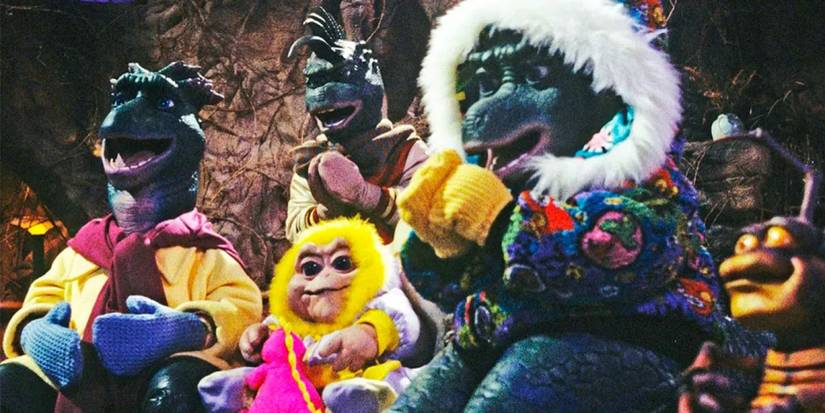
It’ll forever be wild how Dinosaurs ended, since this was a family sitcom series, and this finale, “Changing Nature,” addresses the age of the dinosaurs coming to an end, suggesting all the characters are soon going to die. They have to confront their mortality, and maybe the only excuse you can make for it not being the true final episode is the fact that some episodes written/produced before it were ultimately screened after it.
Still, this is the intended finale narratively speaking, and regarded as the final episode, so it’s clearly one hell of a way for just about any show to end, let alone one that was largely suitable for all audiences. But hey, kids do have to learn about death eventually, and it is the one thing everyone does know happened to the dinosaurs in reality, so…
8 "Wolf's Rain"
'Wolf's Rain' (2003–2004)

This is another finale that requires some explanation, but weirdly enough, like Dinosaurs, it is also about the end of the world, and you have to come to terms with various endearing characters dying. It’s Wolf’s Rain, but the production here was also a bit funny, because there were 26 episodes in the original series run, though four are skippable recap episodes, and then there were four actual episodes released as an OVA (original video animation), and they add up to one feature-length finale, essentially.
If you count all four episodes as one finale, then you do have to see everyone die, but if you're just looking at the last of those four, then the remaining few characters die there, and you do get some suggestion of the world and things being reborn, but there’s only a little by way of hope there. The cycle resets, and there’s not really a victory achieved on any front, but neither is it a total loss. Still, what stands out most is the sheer emotional damage inflicted by seeing the whole cast cut down, one by one.
7 "Whenever You're Ready"
'The Good Place' (2017–2020)

The Good Place is wonderfully unpredictable for a show that initially seems like a fantastical sitcom, because it’s about people in a strange afterlife they're told is heaven, but various things seem a bit off throughout season 1. Then the finale of that first season comes around, and they learn they're in hell, which kicks off more interesting things tackled – and worked toward – regarding ideas of morality, human nature, and what happens after death.
There is a victory achieved by the end of season 4, but that series finale, “Whenever You’re Ready,” does a remarkable and unpretentious job of exploring how even an ideal afterlife would/should be finite. The characters have been dead the whole time, but they have to accept – and come to terms with – another more permanent death, and it is framed as bittersweet, but it’s still surprisingly moving, and it does get you thinking about the ideas of immortality and the afterlife in ways that are eye-opening and honestly quite sobering.
6 "Goodbye, Farewell and Amen"
'M*A*S*H' (1972–1983)
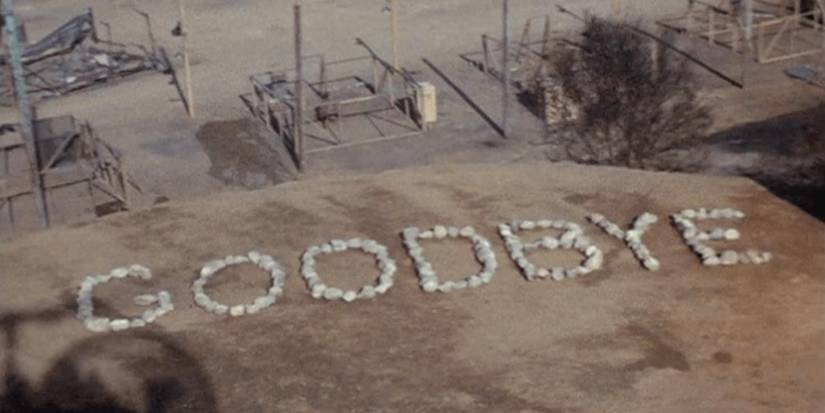
M*A*S*H had some serious episodes in its earlier seasons, but not as many as were found in its later seasons. It’s not a linear progression from comedy to dramedy, yet there is a general emotional (or vibe? Sorry) shift throughout. Also, even if the season 3 finale might be more heartbreaking, you do still get a good deal of heaviness in the ultimate series finale, appropriately named “Goodbye, Farewell and Amen.”
Part of that comes down to this finale being feature-length, and so there’s a lot of room to put all the characters through some particularly serious challenges, emotionally speaking (especially Hawkeye and Winchester) in the closing stages of the Korean War. It’s a final excuse to showcase some of the horrors of war, and a further opportunity to really push the drama to new heights, all before it feels undoubtedly bittersweet to see everyone have to say goodbye, once everything’s been said and done.
5 "Everyone's Waiting"
'Six Feet Under' (2001–2005)

This one can be compared to the finale of The Good Place, since Six Feet Under’s finale, “Everyone's Waiting,” is also about accepting and experiencing death. Well, the whole show’s about that, but the finale does naturally drive it home much harder (and the episode titles aren’t all that different, either: “Whenever You’re Ready” versus “Everyone’s Waiting”).
One member of the Fisher family dies at the start of Six Feet Under, and another dies toward the end of season 5. And then in this very last episode of season 5, you get a montage (again, right at the end) that keeps jumping forward in time, showing how all the characters eventually meet their ends. It has to happen to everyone in real life, and maybe it’s even less surprising that it happens to everyone in a show all about death, but still, the execution here does hit incredibly hard, and it’s the kind of thing that might well change the way you look at – and think about – life and death going forward.
4 "Time of Eternity"
'Berserk' (1997–1998)

You might want to forget the ending to Berserk, once you’ve seen it, but that’s probably not going to happen. This is, of course, if you're talking about the original anime series, because the story did progress beyond that, since the anime was based on a then-ongoing manga, and there have been other adaptations of Berserk that have told more of the story, in effect.
The story itself is kind of unfinished in a different way, since Kentaro Miura, who created the series, passed away in 2021, while Kouji Mori has been continuing the series for now, but that’s all getting a bit distracted from the main point. The original anime series of Berserk has such a bold ending, being equal parts tragic and anticlimactic, but it does work pretty well for a largely harrowing dark fantasy series/story.
3 "Made in America"
'The Sopranos' (1999–2007)
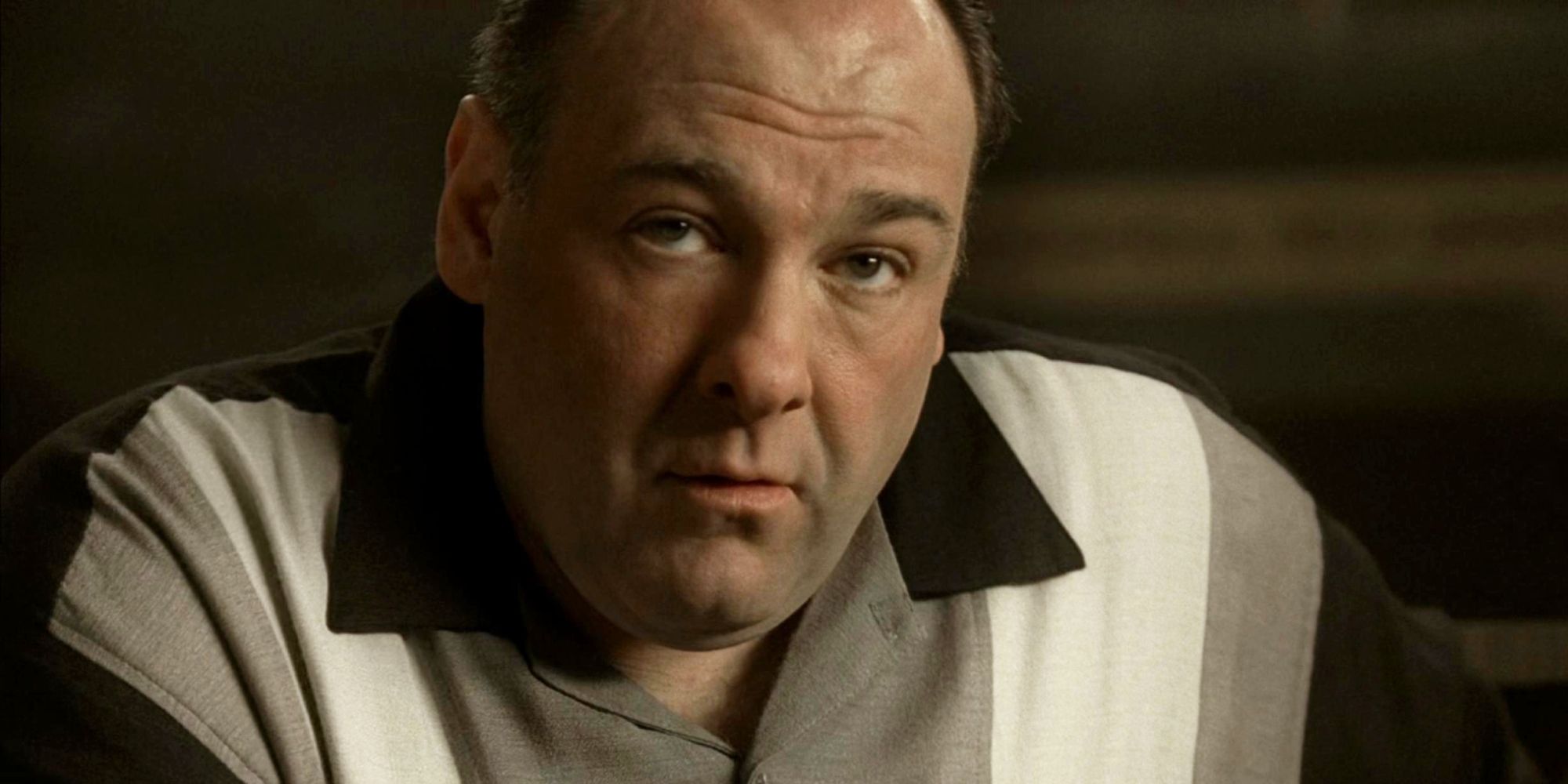
There’s a lot of hopelessness throughout the entirety of The Sopranos, and sure, you get a fair bit of comedy in the show as well, but generally, each season is a little darker and more emotionally intense than the last. So, season 6 inevitably gets the bleakest, with a particularly high number of characters dying throughout that last batch of episodes, to the point that “Made in America,” as the series finale, feels notably sparse.
It’s an empty episode, with one more definite death and then that final scene that doesn’t outright show Tony dying, but it might. Probably. Or if not, there are other ways you can see his life as being over. Not many of the characters still standing in this final episode are in a better spot than they were at the start of the series, to say the least, and there is a uniquely eerie and somber mood to the whole thing, as a culmination of an already rather despair-heavy final season.
2 "START"
'The Americans' (2013–2018)
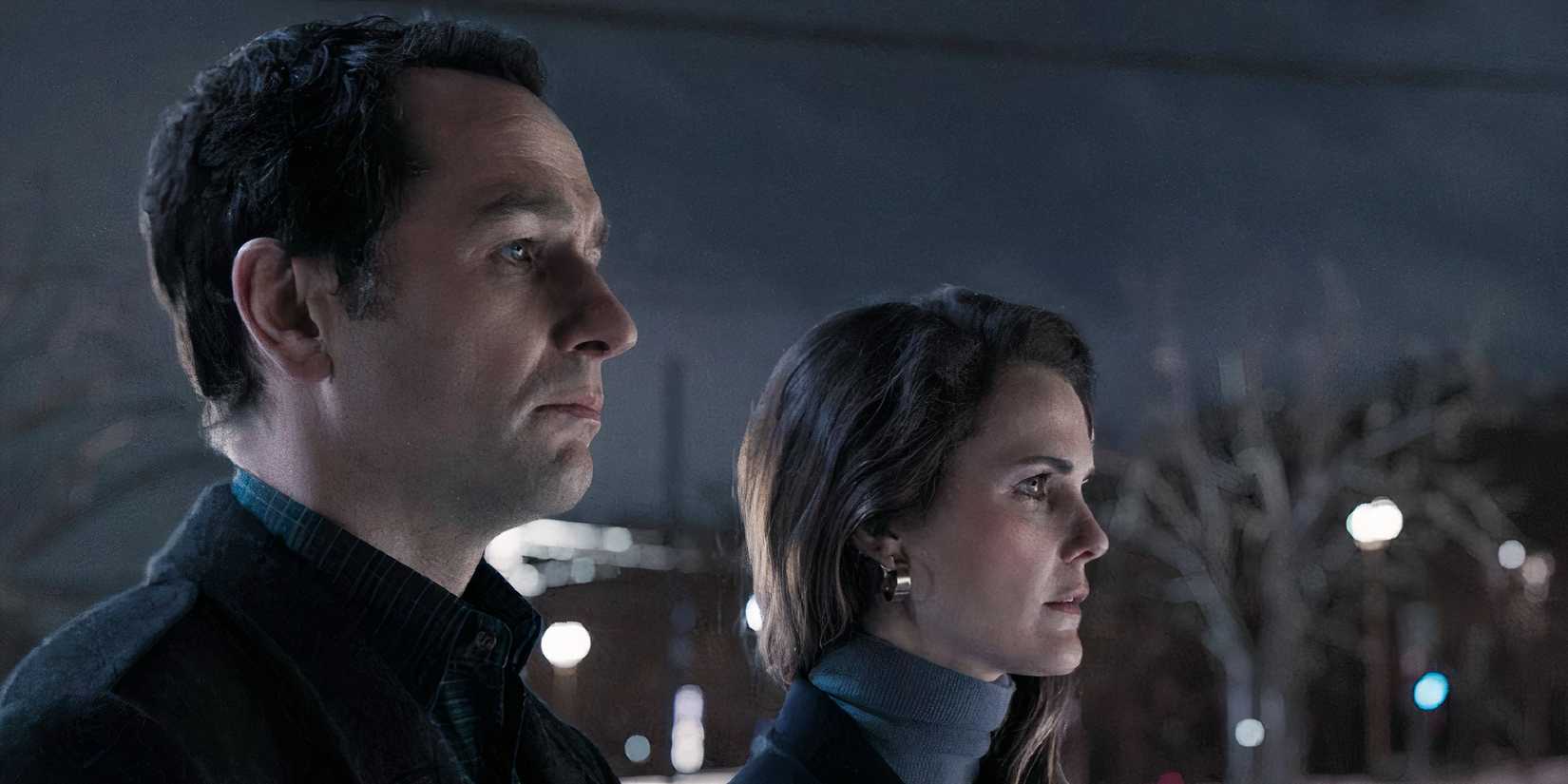
If there’s a silver lining with the ending of The Americans, it’s that none of the primary characters die, but if there had been a fatality while the rest of the characters “won,” it could've felt bittersweet. Instead, no one really gets what they want, and the family that Philip and Elizabeth have struggled to keep together while working undercover in the U.S., as Soviet spies, is shattered.
It's not a satisfying ending in the conventional sense, but it feels right and satisfying for the kind of show that The Americans was.
While it’s not a satisfying ending in the conventional sense, it feels right and satisfying for the kind of show that The Americans was, and then there’s a further sense of things being disheartening because of what happens historically not long after the show finishes (the Soviet Union collapsing, rendering so much of the stress and espionage kinda pointless). Tragic endings work, though, depending on the story, and also depending on the execution, and here, the largely tragic ending definitely did feel like the correct one.
1 "Goodbyeee"
'Blackadder' (1983–1989)

This might be a bit of an odd example, since Blackadder had four different seasons, sure, but the emphasis there is on “different,” since each one was self-contained. There were cast members shared throughout, but they all played different characters in each season, and that made sense when each season took place in a new historical period, with the fourth season ultimately set during World War I.
It was the final proper season of Blackadder, and while other seasons had ended with tons of people dying, those deaths were often played for comedy. In the final episode of season 4, “Goodbyeee,” they’re made to charge over the top of their trench to certain death, and it’s all done in a deadly serious way that really contrasts with most of the rest of the show. Even if Blackadder was often a dark comedy, the way it chose to conclude its final season was just dark, but also brutally honest and undoubtedly effective as an anti-war statement, largely thanks to it being so disarming, found in a show like this one.

Blackadder
- Release Date
- 1983 - 2009-00-00
-

Edmund Blackadder
-

Tony Robinson
Baldrick
-

Tim McInnerny
Lord Percy
-

Lieutenant The Honorouable George Colthurst St. Barleigh
KioskNews shows a cleaned-up reading view extracted from the publisher’s page — the original always lives on their site, not ours.