At England's Sutton Hoo, archaeologists uncovered ghost-like outline of Anglo-Saxon body in sand
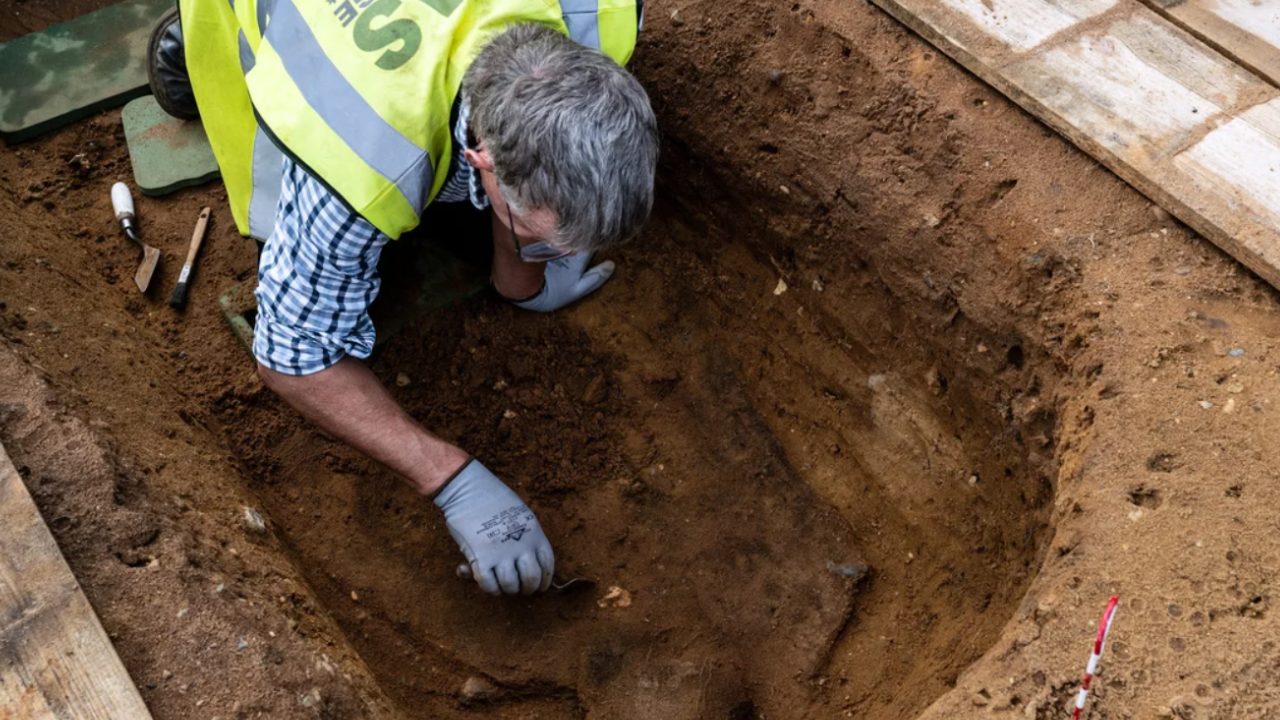
Time Team at Sutton Hoo in 2025 | Image Courtesy: Harvey Mills/National Trust Images
Imagine excavating a centuries-old grave, brushing away layers of sand and soil, only to find the outline of a person staring back at you. There are no bones, no skull and no remains of the body itself.
Yet, somehow, its shape is still there, preserved in the sand like a ghost that never quite left.This is what National Trust archaeologists have uncovered at Sutton Hoo, one of England's most famous Anglo-Saxon burial sites. The discovery of a rare 'sand body', accompanied by beads, a knife, tweezers and a brooch, is offering researchers a glimpse into the lives of people who lived more than a thousand years ago. Even more intriguingly, the excavation has revealed signs that another person may have been buried directly beneath it, raising the possibility of a double burial.
When the body disappears, but its shape remains
The discovery might sound like something straight out of a ghost story, but there is a fascinating explanation behind it. The sand bodies are a result of the unusual conditions in which these people were buried, as National Trust UK explains.Over hundreds of years, the acidic soil gradually dissolved the bones and soft tissues of the deceased. However, as the body decomposed, the surrounding sand retained its shape, eventually hardening into a solid impression of the person who had once occupied that space.
What remains is not an actual skeleton or a preserved corpse, but a negative impression of a human body.National Trust archaeologist Angus Wainwright explained in the announcement that these burials were found during earlier excavations at Sutton Hoo in the 1980s. The bodies and bones had disappeared into the acidic soil, leaving behind hard sand that retained their form. He compared the unusual discovery to some of the bodies found at Pompeii, although the preservation process is different.Finding another such burial gives archaeologists an opportunity to study a person whose physical remains would otherwise have been lost entirely. The outline can offer clues about how the individual was laid to rest, while the objects buried alongside them provide a little more information about the life they might have led.
A grave that tells a story through its belongings
While the sand body itself is remarkable, the objects found alongside it are just as interesting.
Archaeologists recovered beads, a pair of tweezers, a knife and a brooch, all of which could help researchers understand the person who was buried there.Grave goods were an important part of burial practices in early Anglo-Saxon communities. Objects were often placed alongside the deceased, reflecting aspects of their identity, clothing, daily life or the status they held within their community. Jewellery, for instance, could offer clues about how someone dressed, while tools and other personal belongings could tell researchers something about the world they inhabited.The brooch and beads show how people dressed and adorned themselves. The knife and tweezers, meanwhile, add to the collection of everyday objects that accompanied the individual into the grave. Although it is difficult to establish exactly who the person was from these belongings alone, they offer a starting point for understanding a life that has otherwise disappeared from the archaeological record.There is also evidence from elsewhere in Garden Field that suggests the cemetery may have belonged to a community experiencing changes in wealth and social standing.
A gold ingot discovered during the wider excavations has raised questions about whether some of the people buried here were accumulating wealth and gaining influence.Sutton Hoo is best known for its extraordinary royal burial, but its surrounding landscape was also home to ordinary people who lived, worked and raised families in the region. Their graves may not contain the same extravagant treasures, but they can tell us just as much about how Anglo-Saxon society functioned.
Beyond the famous royal burial ground
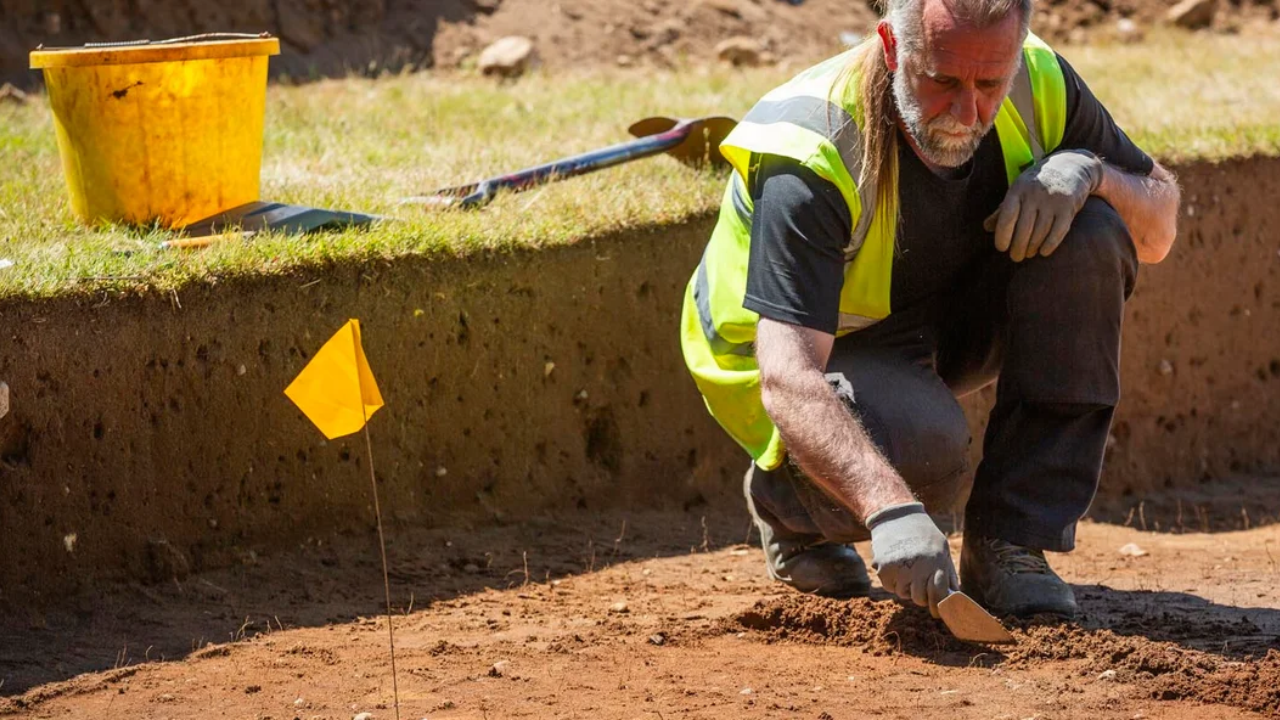
Time Team at Sutton Hoo | Image Courtesy: James Dobson/National Trust Images
Located near Woodbridge in Suffolk, England, Sutton Hoo became internationally famous in 1939, when archaeologists uncovered an extraordinary Anglo-Saxon ship burial beneath one of its burial mounds.The 27-metre-long ship had been used as a burial chamber, containing an impressive collection of objects, including a helmet, a sword, a shield, gold ornaments and silverware. The discovery transformed what historians knew about early medieval England, revealing the wealth, craftsmanship and international connections of the Anglo-Saxon world.The burial is widely associated with King Rædwald of East Anglia, who is believed to have died around AD 627, although his identity has never been conclusively established.For decades, much of the archaeological attention at Sutton Hoo has centred on these royal burial mounds and the powerful people who were laid to rest there. The recent excavations in Garden Field, however, are helping researchers look beyond the kings and their treasures.According to Wainwright in the announcement, the landscape surrounding the royal burial ground was equally familiar to the everyday East Anglians who lived in the villages and farms of the river valley. The latest excavation shifts attention towards these communities, their ancestors and their descendants.The Garden Field cemetery could therefore help researchers understand who lived in the region, how they buried their dead and whether they had connections to the people associated with Sutton Hoo's royal mounds.
It is a reminder that history is not only shaped by the people who ruled, but also by the communities who lived alongside them.
Another mystery lies beneath the sand body
As if discovering a human-shaped outline without a human body were not intriguing enough, archaeologists have another mystery to investigate. Evidence found directly beneath the sand body suggests that a second individual may have been buried in the same grave.Whether the two people were buried together or at different points in time is not yet clear.
They could have shared a family connection, or the grave might have been reused after an earlier burial. Researchers will need to examine the evidence more closely before drawing any conclusions about their relationship.The discovery also adds to questions surrounding the different burial practices found across Sutton Hoo. Some individuals were cremated, while others were buried with their bodies intact. The reasons behind these choices, and what they might reveal about the communities living in the area, remain subjects of investigation.Archaeologists are also continuing to study the Bromeswell Bucket, a sixth-century Byzantine vessel discovered during the earlier 2024 excavation at Garden Field. The bucket was found to contain a cremation burial and grave goods, adding another layer to the site's complicated history.
For Dr Helen Geake, Time Team's Anglo-Saxon specialist, there are still several unanswered questions about the cemetery, she explains in the joint press release. This includes the date of the bucket, the choice between cremation and burial, and the significance of the possible second individual beneath the newly discovered sand body.The excavations are part of a wider research project between the National Trust and Time Team, which has spent two seasons investigating Garden Field. The findings are being presented in a new four-part documentary series, with the first episode released on YouTube on November 14, 2026.
For now, the ghostly outline in the sand remains one of the most intriguing discoveries from the excavation. There are no bones to identify, no face to recognise and no name to attach to the person who was buried there. Yet, through the shape left behind and the belongings placed alongside them, archaeologists are slowly piecing together a life that might otherwise have been forgotten.
KioskNews shows a cleaned-up reading view extracted from the publisher’s page — the original always lives on their site, not ours.