Plea seeks awareness of health risks of marriages between blood relatives; Supreme Court calls for govt reply
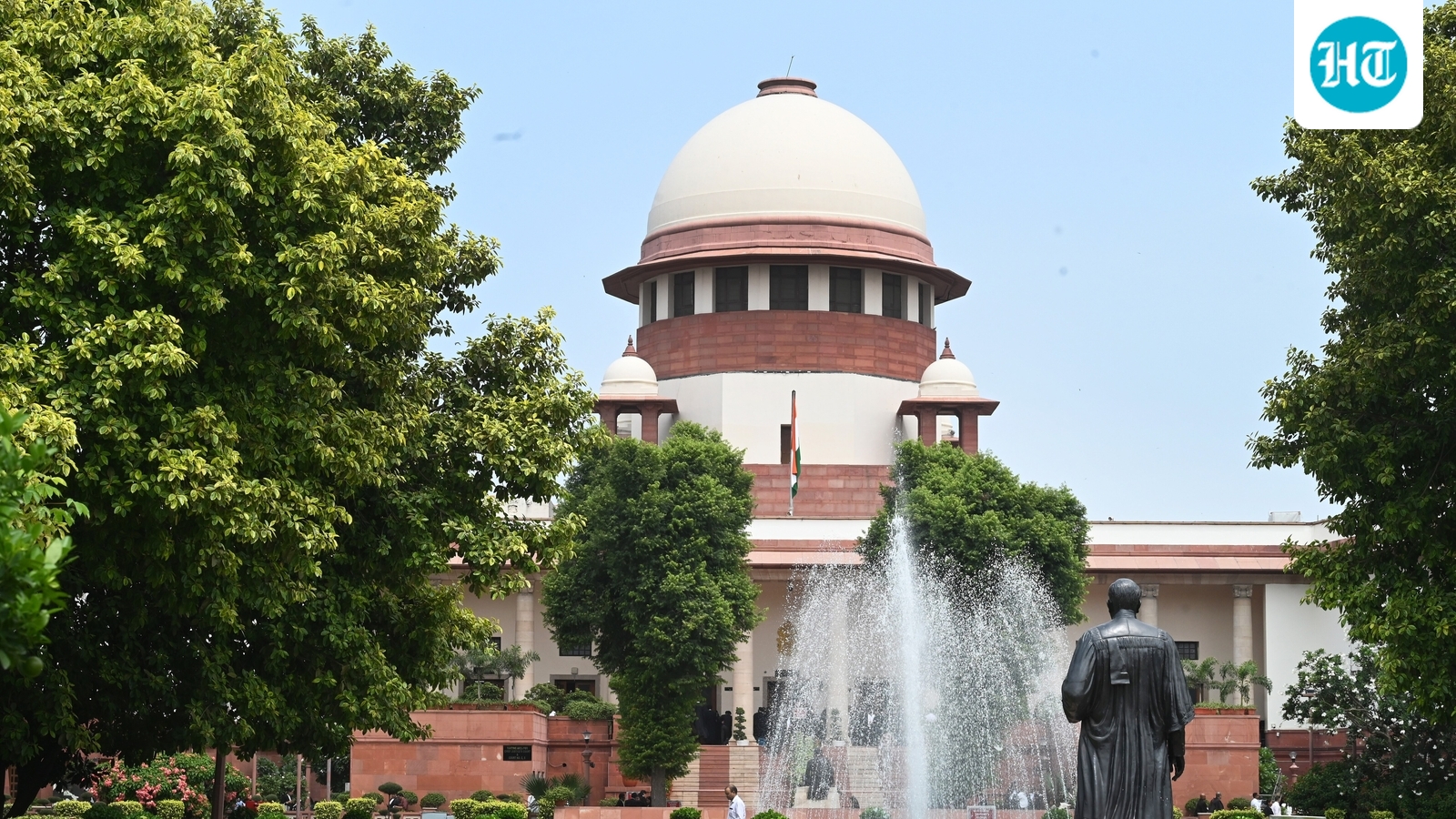
The Supreme Court on Friday sought the Centre’s response to a petition seeking increased awareness about the adverse health risks involved in consanguineous marriage, even as it said that restricting such marriages fell within the legislative domain.
Consanguineous marriage is defined as a union between two individuals who are related by blood, typically second cousins or closer, with an inbreeding coefficient (F) equal to or greater than 0.0156, according to genetic law
A bench headed by Chief Justice of India Surya Kant passed the order while hearing a petition filed by a law graduate whose parents are first cousins. She suffered from 40% visual impairment, photophobia and cone dystrophy, conditions which medical specialists attributed to children born to a consanguineous couple.
“We will issue notice on the limited purpose to impress upon the Union of India to consider the desirability of bringing suitable legislation or to ensure wide publicity on the negative impacts of consanguineous marriages," The court said,
The petition sought an amendment to the Hindu Marriage Act, 1955, and other legislation governing such marriages. However, on this point, the court held that it lay within Parliament’s domain.
The bench, also comprising justices Joymalya Bagchi and V Mohana, said, “Even Fundamental Duties listed in our Constitution, Article 51A talks of developing scientific temper. For this limited purpose alone, we are issuing notice.”
The bench pointed out that autonomy of choice in a marriage has been recognised by the courts on the basis of informed consent.
“A person may wish to marry an HIV+ person. That is his or her personal choice. It is not for courts to regulate it by issuing a mandate. The only requirement is that the consent obtained must be an informed consent,” the court said.
The plea
Senior advocate Kaadambari Singh, appearing for the petitioner, said that her plea does not seek a complete or immediate judicial ban on all consanguineous marriages.
“The petitioner is well aware that traditions and customs are deeply ingrained in society and doesn’t wish for such marriages to be pushed into secrecy or illegality. But this raises a question of inter-generational equity,” the lawyer said.
Singh pointed out that permitting validation of marriages within prohibited degrees on grounds of custom or usage violates the right to health and living a dignified life of the progeny born from such unions.
“This disadvantage is not a choice; it is an imposition from birth. There exists no constitutionally justifiable rationale to sustain such differential exposure to serious medical risks simply because a practice is socially accepted within particular groups,” the petition said.
In southern states, the incidence of such marriages is as high as 28%, which requires awareness to be carried out at the level of Anganwadis and Panchayats to ensure persons are told about the health risks to children before such marriages take place.
The petition even sought a phased national framework for prevention of such marriages. Within the framework, it sought the inclusion of premarital genetic counselling, voluntary genetic screening in regions with high prevalence, the running of a continuous public awareness campaign, and the strengthening of the necessary institutional infrastructure for inherited-disorder prevention and counselling.
KioskNews shows a cleaned-up reading view extracted from the publisher’s page — the original always lives on their site, not ours.