Japan’s FamilyMart pulls up striped socks to survive convenience store rivalry
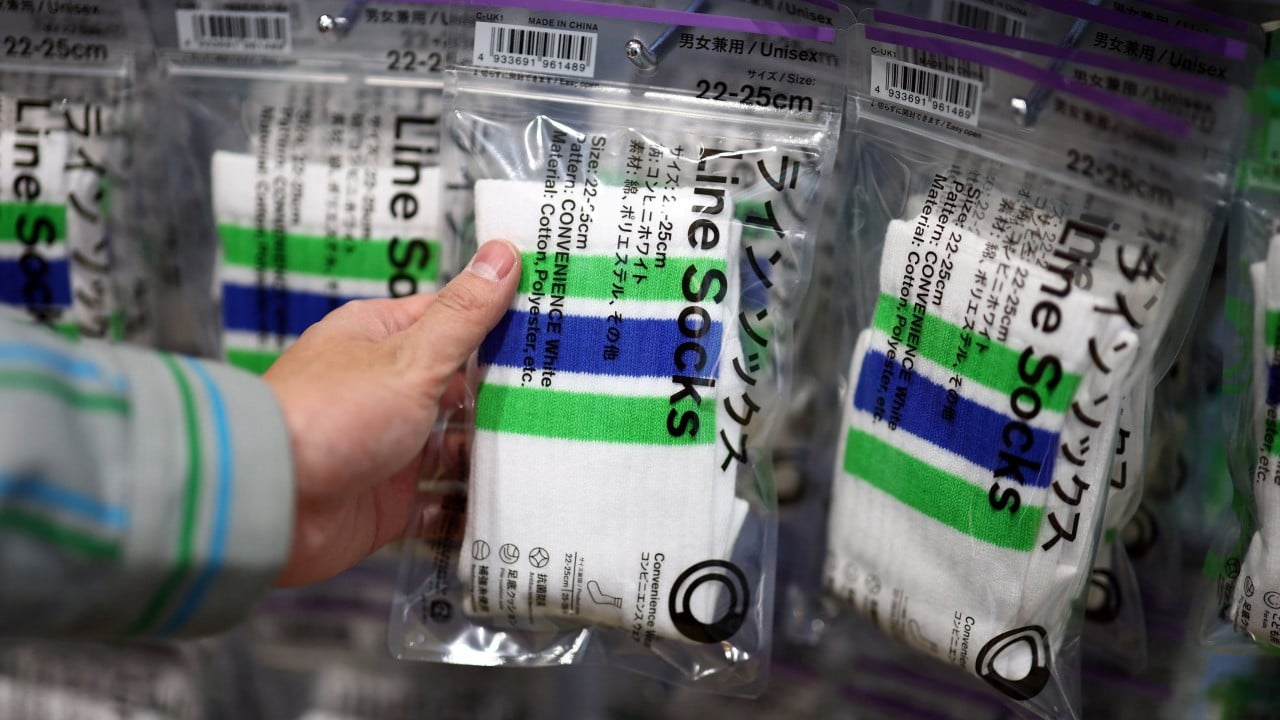
For some people, the blue, green and white striped socks hanging near the entrance of a FamilyMart convenience store may look more like an emergency purchase than a fashion statement.
Yet the 390 yen (US$2.44) socks have become one of Japan’s best-known products at convenience stores, which are usually the go-to for snacks and drinks. With 40 million pairs sold since 2021, they have helped FamilyMart reinvent itself as a lifestyle brand in the competitive conbini market.
Now, Japan’s second-largest convenience store chain is building on that fashion credential with a wider range of lifestyle items, including matching bandanas for pets and owners, in a push for growth beyond daily necessities. It has also backed the strategy with branding initiatives including a recruitment campaign featuring pop star Lady Gaga.
The effort to cultivate a fashionable image is helping FamilyMart stand out as inflation-weary shoppers cut back on spending, pharmacies eat into sales of household staples and a shrinking population limits expansion opportunities in a market saturated with around 56,000 stores.
“FamilyMart has really upped its style game over the past year or two,” said Tatsuhiko Yuki, a 56-year-old taxi driver and regular customer.
Yuki described FamilyMart as a destination for collectibles, having bought 20 pairs of its striped socks, including limited-edition versions inspired by Nintendo game Animal Crossing, along with a dozen other FamilyMart items such as towels.
“Their designs have a retro feel that’s just right,” he said.
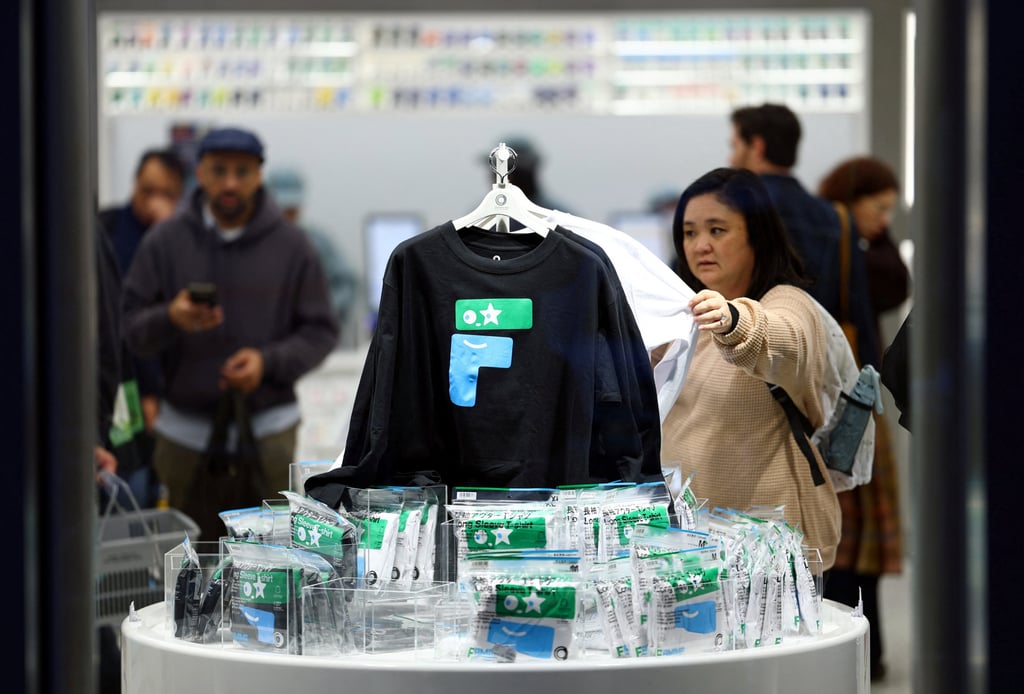
FamilyMart, known as “Famima” and for its blue, white and green branding, launched its Convenience Wear line in 2021, tapping parent Itochu’s textile expertise and teaming up with Facetasm streetwear designer Hiromichi Ochiai.
Fuelled by social media buzz, the business has become a more than 20 billion yen operation, with sales set to rise another 30 per cent this financial year ending March.
While apparel accounts for less than 1 per cent of FamilyMart’s sales and a fraction of Itochu’s 2.65 trillion yen in annual gross trading profit, analysts said Convenience Wear helps the chain burnish its image and increase spending by customers visiting its 16,500 stores.
“We’ve taken a fairly adventurous approach with Convenience Wear,” said line-up head Takehiko Sugai at FamilyMart’s new flagship Tokyo store, whose creative direction was overseen by Nigo, founder of streetwear label A Bathing Ape.
Sugai said FamilyMart combines daily essentials with niche limited-edition collaborations such as Netflix’s Stranger Things and the manga series JoJo’s Bizarre Adventure, helping draw customers into its stores.
The business will add a pet range in February, which will include collars and leads that allow owners and pets to coordinate outfits.
“Exclusivity is our crucial differentiator from rival chains,” Sugai said. “If customers want our products, they have to come to our stores.”
FamilyMart declined to disclose how much Convenience Wear is boosting overall store traffic, but Sugai said limited-edition releases regularly generate spikes in customer visits.
Rival Lawson, jointly owned by Mitsubishi and KDDI, has partnered with Ryohin Keikaku to sell Muji-branded products, while 7-Eleven operator Seven & i Holdings in September expanded its fashion range through collaborations with brands targeting young generations.
But analysts said no rival has matched the cultural resonance of Convenience Wear.
“Famima should be able to keep a degree of competitive edge for a while because they’ve succeeded in building a loyal customer base that will choose Famima when given a choice of stores,” said Hyakunen Consulting economist Takahiro Suzuki.
01:16
Why are Japan’s claw machines offering groceries as prizes?
Declining foot traffic, driven in part by widening income disparities and consumer belt-tightening, means convenience-store operators must seek ways to boost spending per customer while also building a loyal customer base, Suzuki said.
FamilyMart’s strategy is not without risk. Fashion trends can be fleeting and products aimed at younger consumers may struggle to gain traction with the company’s broader customer base.
Yet Sugai said the sustained popularity of its striped socks suggests Convenience Wear is moving beyond novelty status.
For customers such as Yuki, that approach appears to be working.
“I stop by just to see what’s new,” he said. “It has become more than a convenience store.”
KioskNews shows a cleaned-up reading view extracted from the publisher’s page — the original always lives on their site, not ours.