BRICS At 20: How Big It Is, And Why It Matters To India And The World
India will host the 18th BRICS Summit in New Delhi on September 12-13, marking the fourth time it has hosted the gathering. This year's theme, Building for Resilience, Innovation, Cooperation and Sustainability, comes at a time of escalating military tensions, trade disputes and shifting geopolitical alliances.
As countries redraw their strategic partnerships in an increasingly fragmented world, the grouping that US President Donald Trump once dismissed as a "little group" is emerging as a more influential force in global affairs.
BRICS vs G7
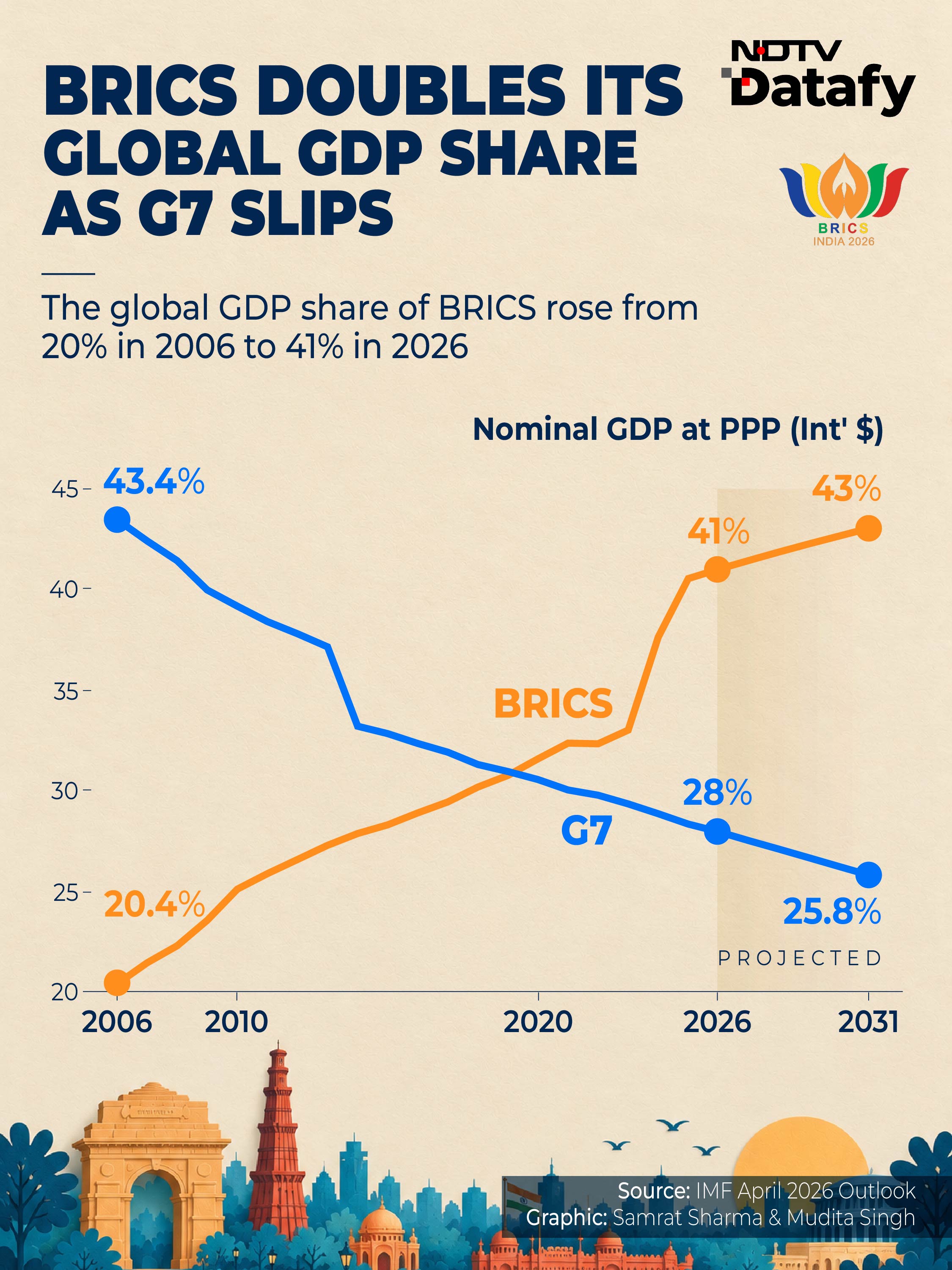
BRICS began as a four-nation grouping in 2006, bringing together Brazil, Russia, India and China. At the time, the bloc accounted for 20.4 per cent of the global economy, less than half the G7's share. Over the years, however, the inclusion of new members and the rapid growth of emerging economies steadily expanded BRICS' economic footprint.
BRICS overtook the G7 in terms of global GDP share in 2020, according to the IMF's World Economic Outlook (April 2026). By 2026, the bloc is estimated to account for 41 per cent of global GDP, compared with 28 per cent for the G7. The gap is expected to widen further in the coming years.
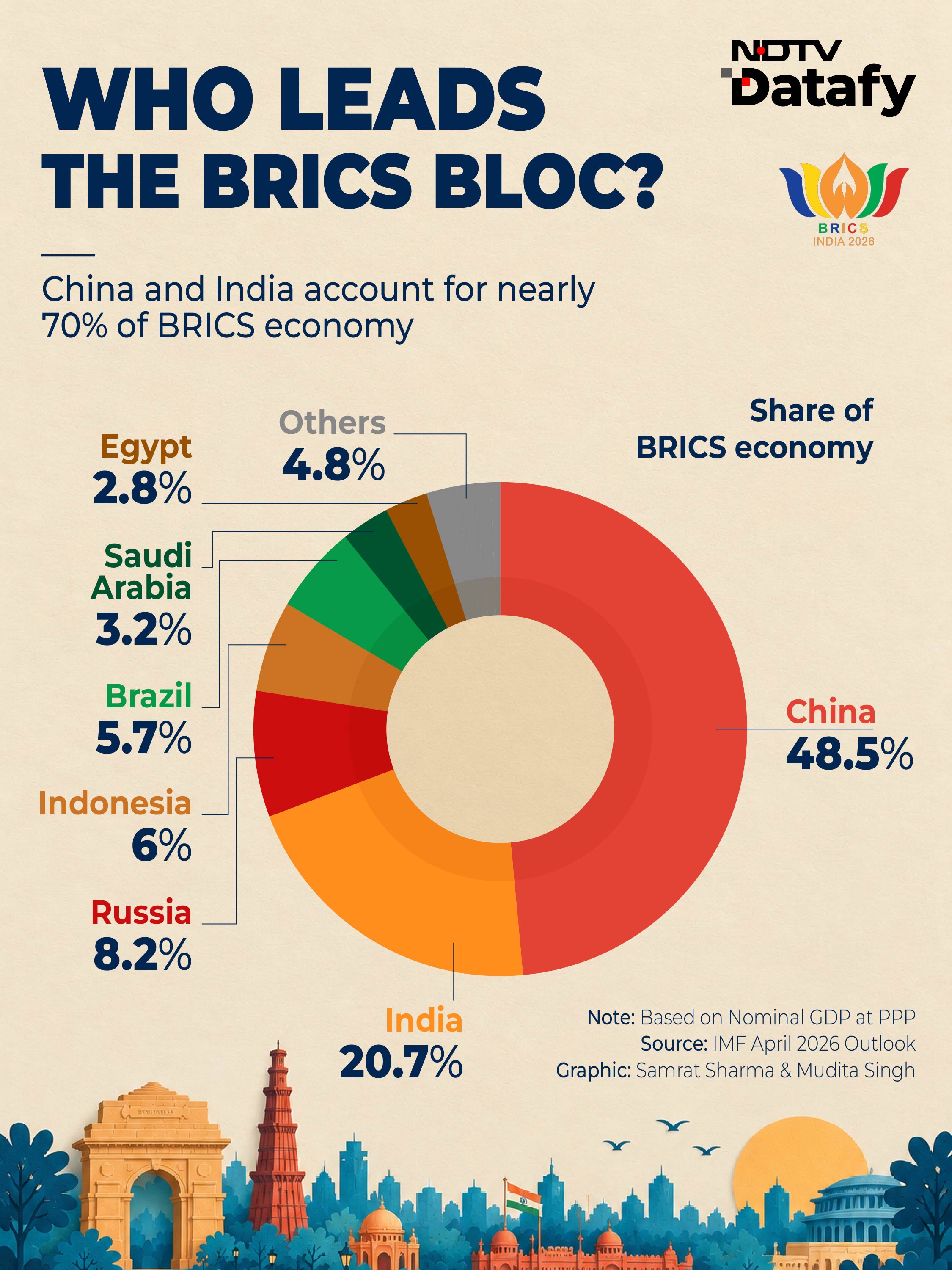
Who Leads BRICS?
Although BRICS now has 11 member countries, its economic strength is heavily concentrated in China and India, which together account for nearly 70 per cent of the bloc's GDP. China alone contributes 48.5 per cent, followed by India at 20.7 per cent.
Russia accounts for 8.2 per cent of the bloc's economy, while Indonesia contributes six per cent, Brazil 5.7 per cent and Saudi Arabia 3.2 per cent. The remaining members account for comparatively smaller shares.
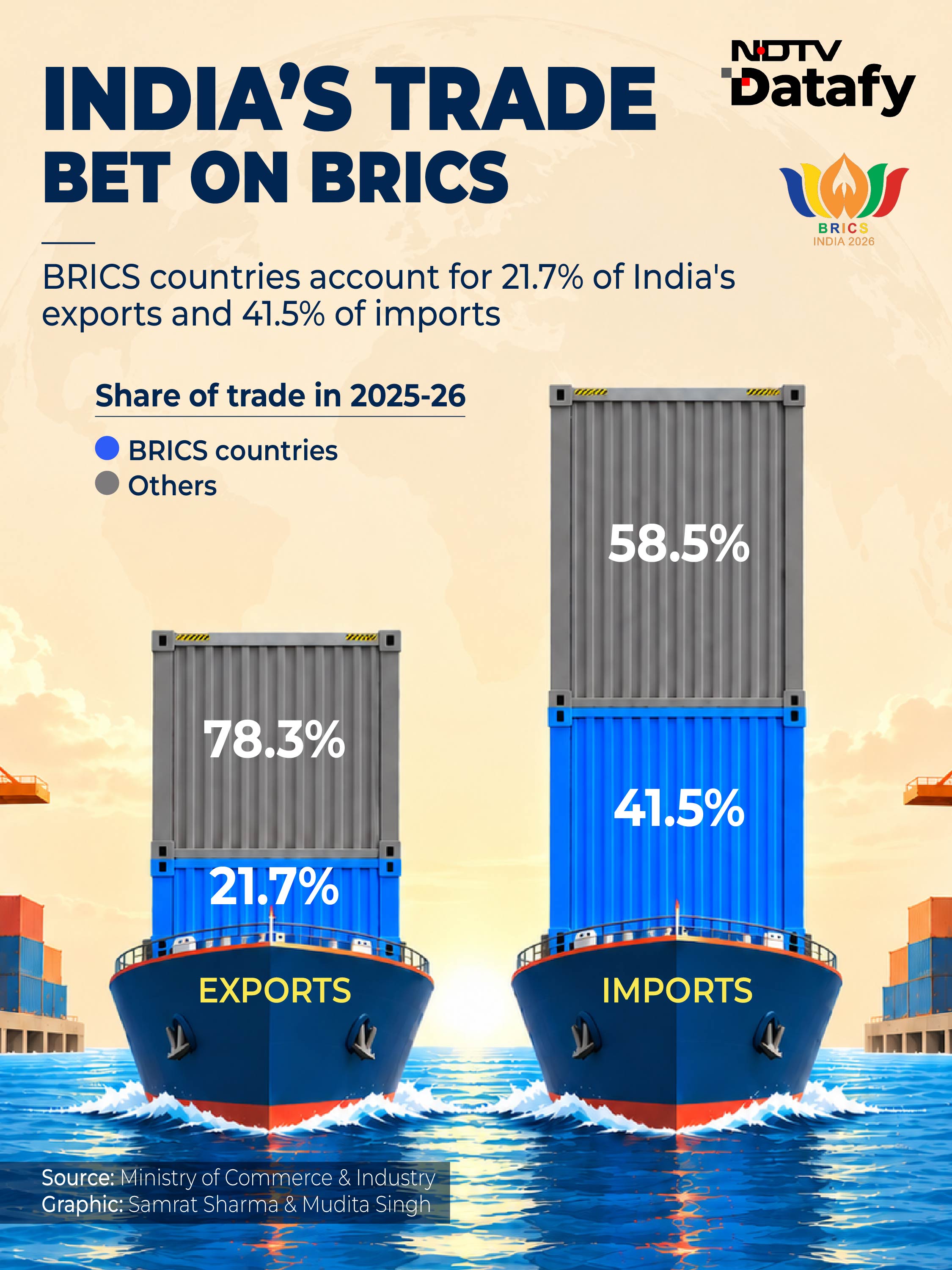
Role Of BRICS In India's International Trade
BRICS has become increasingly important to India's external trade. In 2025-26, the bloc accounted for 22 per cent of India's exports and 41 per cent of its imports, according to the Ministry of Commerce & Industry.
China remains India's largest trading partner and a key source of imports, while Russia's importance has risen sharply because of India's growing purchases of discounted crude oil. Together, BRICS countries now occupy a central position in India's trade basket.
India's Key Trade Partners Within BRICS
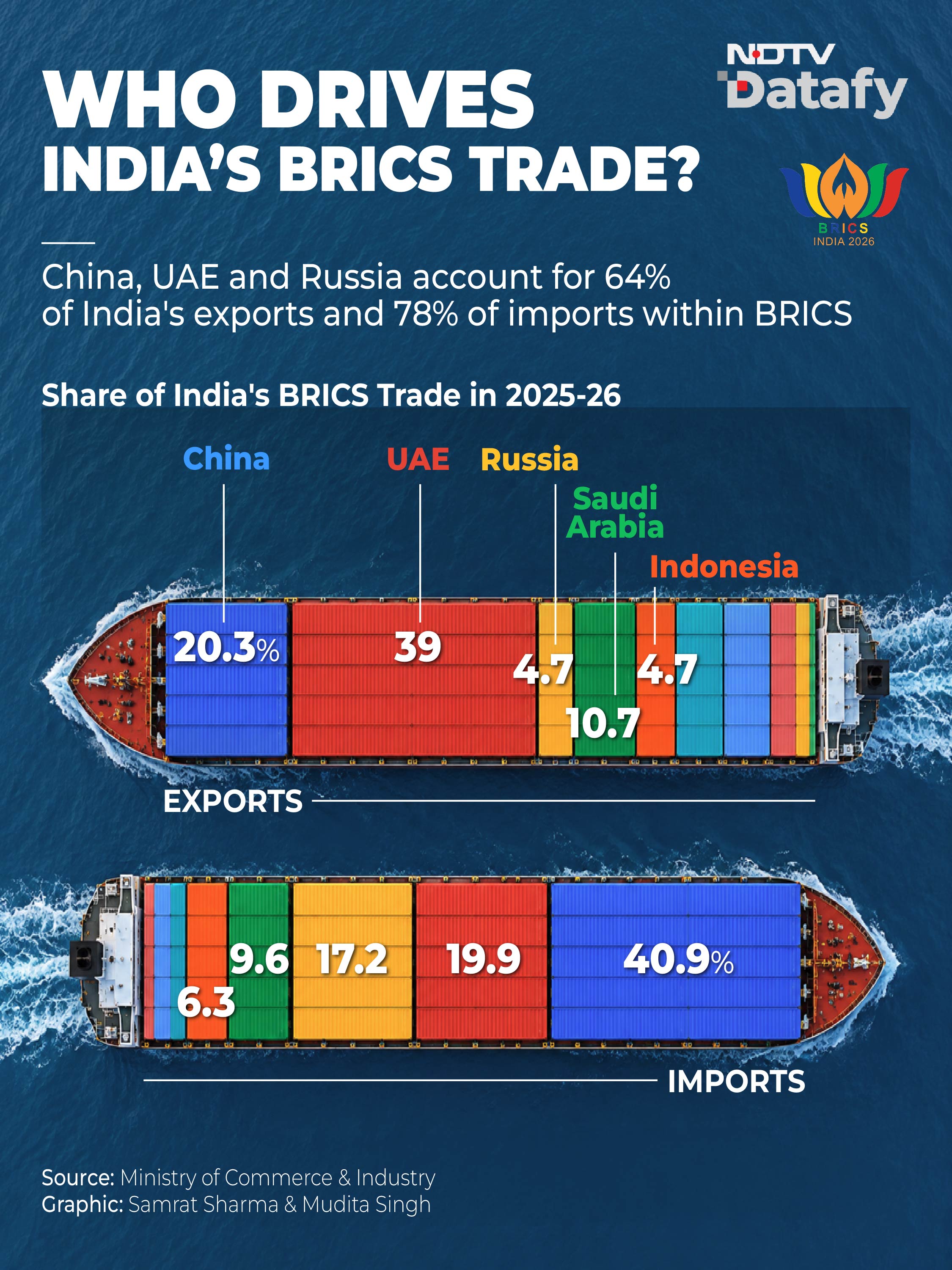
Trade within the bloc is dominated by a handful of countries. China, the UAE and Russia accounted for 64 per cent of India's exports to BRICS countries and 78 per cent of its imports from the grouping.
China alone contributed 41 per cent of India's imports from BRICS members, underlining its dominance in the bloc's trade architecture. On the export side, the UAE accounted for 39 per cent of India's exports to BRICS countries, driven largely by shipments of pearls, precious stones and jewellery.
Indians In BRICS Countries
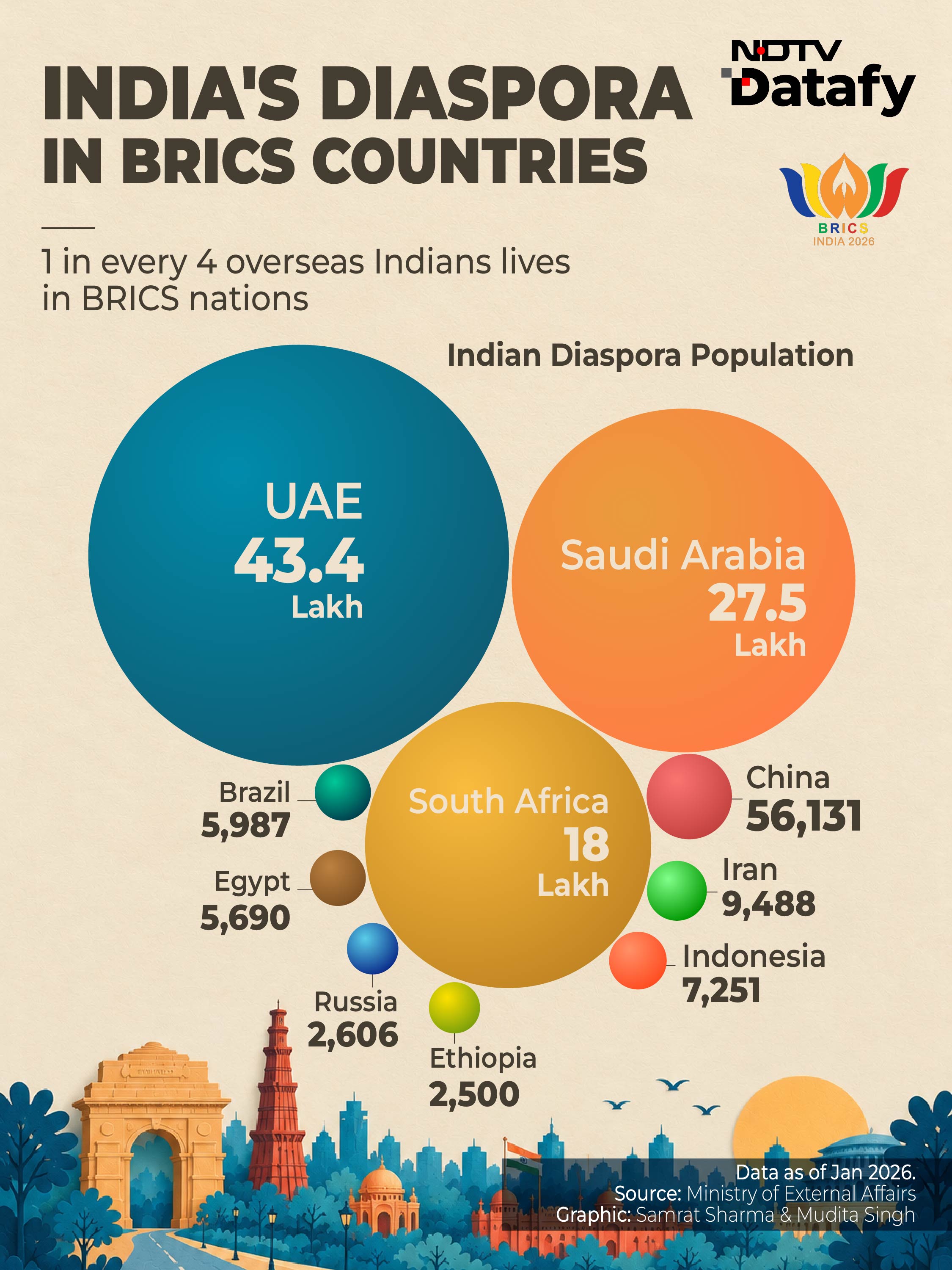
BRICS also matters to India beyond trade and economics. The grouping is home to a significant share of the Indian expats. Of the 3.73 crore overseas Indians worldwide, nearly 89.8 lakh live in BRICS countries.
The UAE and Saudi Arabia together host more than 70 lakh Indians, making them the largest destinations for the Indian expats within the bloc. South Africa ranks third, with an Indian-origin population of around 18 lakh.
Two decades after its formation, BRICS has evolved from a loose coalition of emerging economies into a bloc that commands a larger share of global output than the G7. For India, its significance extends beyond economics. The grouping is central to the country's trade, energy security, expat links and broader diplomatic outreach. As the global balance of power gradually shifts towards the Global South, BRICS is likely to play an increasingly important role in shaping the emerging world order, giving India a larger platform to advance its strategic and economic interests.
KioskNews shows a cleaned-up reading view extracted from the publisher’s page — the original always lives on their site, not ours.