Infertility can test even the strongest friendships. But it brought Yaelle and Lucy together
I still remember the exact street I was walking down in Elwood, Victoria, when I took a deep breath and tapped Ali’s* number, preparing to make the call I’d been dreading. I was due to meet her for dinner and drinks that evening – only this time, I wouldn’t be splitting a bottle of chardonnay. I was joyfully – albeit a little guiltily – 13 weeks pregnant.
For the previous 18 months, Ali had been a vital source of support. Though further along the quest for a baby than me, together we’d lamented our empty wombs over wines and beach walks. She’d seen me sob after a miscarriage and swing between plans to invest in IVF and book flights to India, to seek a different kind of fulfilment, if kids weren’t on my bingo card.
While many of my friends had fallen pregnant easily, having friends whose path to parenthood had been rocky was perversely reassuring. They understood what it meant to freak out if a work trip fell during ovulation, and why you didn’t drink in the week before your period in case you were pregnant, then drank too much when your period came to try to numb the disappointment.
I wanted to give Ali a heads-up before dinner so she could cradle her emotions in private because, as anyone who’s experienced fertility challenges will tell you, pregnancy announcements can be hard. Whether it’s a relative using a family dinner to announce their baby news or an acquaintance posting tiny Converse sneakers and an ultrasound pic on their socials, you can be genuinely happy for them while equally sad for yourself. And if you’re feeling emotional, those emotions are better processed behind closed doors.
Fertility counsellor Suzanne Hurley describes infertility as “one of the most challenging human experiences” because sufferers are grieving the loss of something that has not happened. Worse, not everyone’s loved ones can offer the support they need.
“A good friend is someone who can tolerate [their friend’s] pain,” says Hurley. “But many people can’t, and often it’s not even conscious. They just don’t have the capacity, either because they’ve never had adversity in their lives or because they’ve always been told they can get whatever they want.”
It’s impossible for friendships not to be impacted by fertility.
Anna*, a writer who did six rounds of IVF
Anna*, a 42-year-old writer who did six rounds of IVF over five years, said some friends handled her struggles with grace and empathy, while others couldn’t read the room. “I had friends who sent me a picture of an ultrasound and I was like, ‘Guys, grow a brain!’ When you go through IVF, you have constant scans of your empty uterus and developing eggs and of no baby, so when you see someone’s ultrasound of their baby, it’s so triggering.
“Another friend who knew we were going through IVF signed us up to a baby-sharing website; we were emailed a photo of their baby every single day. It’s impossible for friendships not to be impacted by fertility.”
Anna didn’t know anyone else experiencing infertility, and told very few people to save having to hear inane platitudes. “One of my closest friends would repeat, ‘You’ve got to stay positive. It’s going to work!’ Eventually, I said to her, ‘You don’t know that. The doctors we’re paying all this money can’t guarantee that.’
“She said, ‘You’re right. I’m sorry. I just don’t know what else to say.’ She didn’t get offended; she just listened. It was really validating to have someone sit in the shit with me.”
Yaelle Ohana found that her most supportive community during three years of trying to get pregnant was on the internet. “Most of my friends have older kids, and I felt like they didn’t understand me and couldn’t support me,” she recalls. “I worried that I wouldn’t get to be a mum and I genuinely thought, ‘What am I here for? What is my purpose?’ ”
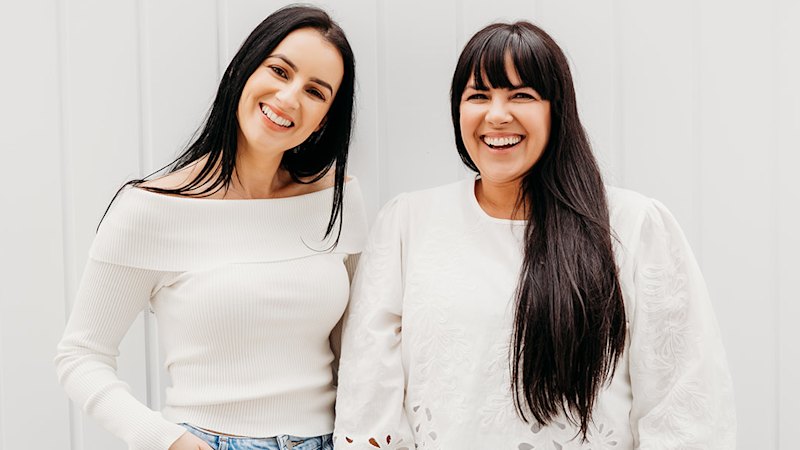
Now 48, she started an Instagram account about her IVF experience in 2021 and soon connected with Lucy Kokkotas, now 37, who lived in a nearby suburb and quickly became a lifeline. “We would be messaging each other and sending voice notes all night,” Ohana says. “We were 11 years apart in age, but she understood me because she was in the same boat.”
It worked both ways, with Kokkotas remembering Ohana as one of the few people she could be completely honest with. “I didn’t tell any of my friends about doing IVF – I was so bitter and angry and felt such hopelessness,” she says. “I cried when friends told me they were pregnant and that made me feel like such a bad person, but I could tell Yaelle about that.”
Hurley says many women struggling with infertility isolate themselves. “It’s really hard to be that person who’s always sad and always grieving and always wanting something that’s not happening,” she says. “Often they don’t like how sad they’ve become and don’t want to impose that on others. Or they don’t want to have difficult conversations because people are often so poorly informed about infertility and give very unhelpful advice.”
Isabelle Oderberg, co-founder of the Early Pregnancy Loss Coalition and author of Hard to Bear: Investigating the Science and Silence of Miscarriage, suffered seven pregnancy losses. At times, she says she had to distance herself from friends who were pregnant, or simply insensitive to her needs.
“I was invited to a baby shower and sent my friend a message that said, ‘As much as I love you, and as excited as I am, I don’t want to ruin your baby shower by being emotional, so I’m going to give it a miss.’ ”
The friend understood and offered to catch up one-on-one when Oderberg was ready. But it’s not always so straightforward. Oderberg says there can be pressure on women with fertility challenges to keep up appearances and celebrate others’ pregnancies, when the reality is that infertility is an acute form of grief. “I’ll never understand why people want to have someone at their baby shower who is grief-stricken and putting on a front to celebrate something that’s breaking their heart,” she says.
But amid the heartache, Oderberg also received incredible kindness from some of her friends. “There were people who handled it beautifully,” she says. “Listening is more valuable than talking because you can’t offer someone support until you understand where they’re at. People think, ‘Oh, I won’t say anything so I don’t say the wrong thing.’ But not saying anything can create even more damage.
“The one thing we all have in common is that we want to be seen and have our losses acknowledged.”
Hurley says the best friend we can hope for regarding infertility is someone who can be curious and consider what we might be going through. “I like the idea of [friends offering] companionship; you show up and sit down beside people and say, ‘Hey, I’m interested. What do you want to talk about?’ That way you’re there for their needs and not your own.”
After Ohana finally fell pregnant with her daughter Olivia, now four, she referred Kokkotas to her doctor at Adora Fertility. And when Kokkotas eventually had Alexia, who’s now three, they started the IVF Real Talk podcast to give other women the sense of community they had craved. “When I looked at Yaelle being pregnant and having a baby, I felt such hope,” Kokkotas says. “You feel validated when you have a friend who has been through this as well, and you’ve got someone to cheer you on.”
In my case, when Ali answered the phone and heard my news, she simply laughed – she was also pregnant. Suddenly, we were thrust into a new season of friendship together. It was an extraordinary stroke of luck, and I know not every friendship or fertility journey gets such a neat resolution.
As Ohana says, beautiful moments of friendship can still be had even on our darkest days. “We were so lucky to have our IVF community. Without it, I can’t imagine how isolating it would have been.”
*Not their real names
For pregnancy loss and miscarriage support, contact 1300 308 307.

KioskNews shows a cleaned-up reading view extracted from the publisher’s page — the original always lives on their site, not ours.