Mira Kapoor reveals how she and Shahid Kapoor divide parenting duties: ‘Sports and diet are his responsibility’
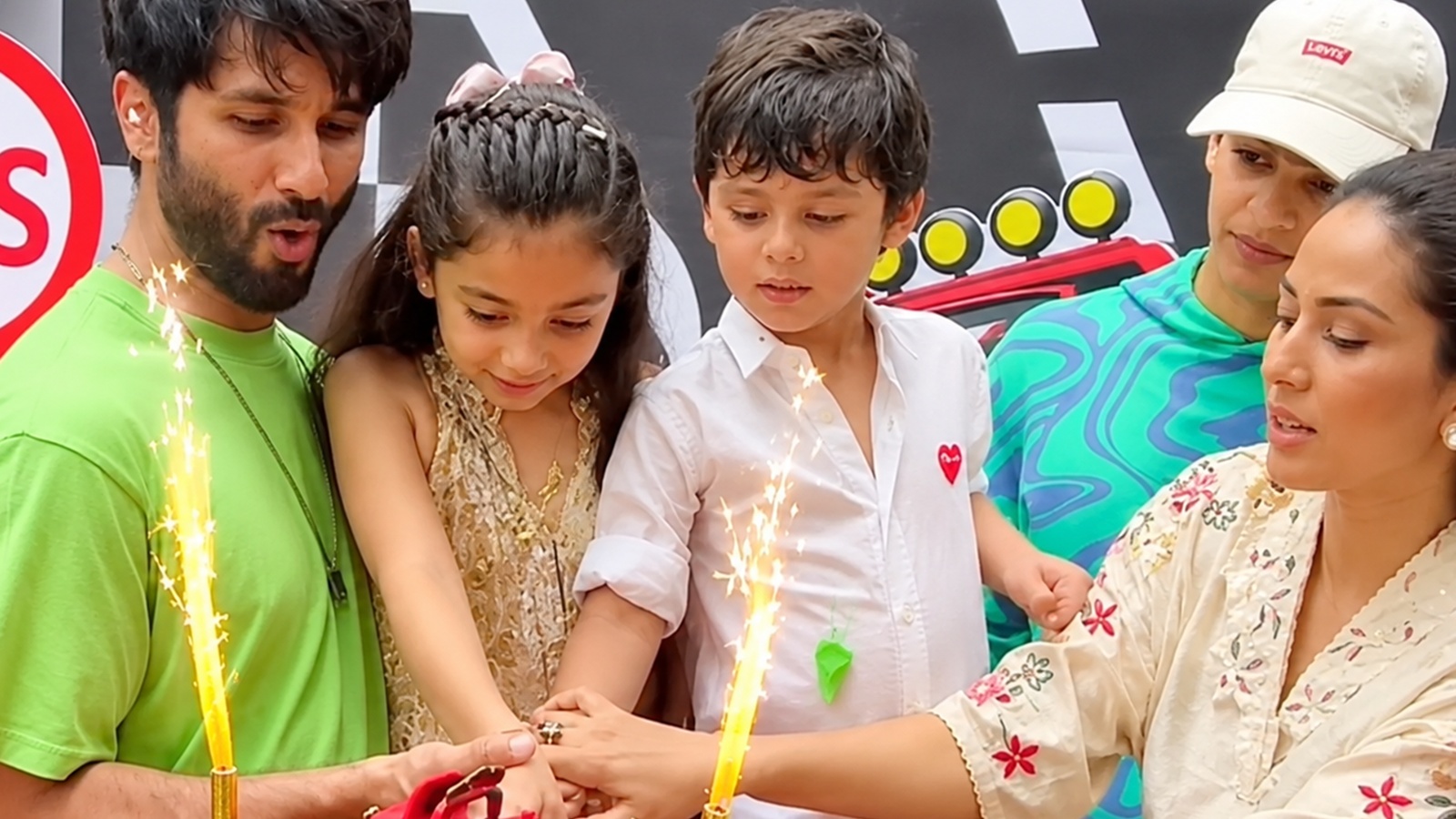
Mira Kapoor shared how she and her husband, actor Shahid Kapoor, parent and discussed how they divide responsibilities in a conversation with actor Kareena Kapoor Khan on her talk show, What Women Want. “I think it’s very important because one person can’t do everything. Sports and diet are Shahid’s responsibility. Homework. Birthday parties. Classes. General behaviour…that’s with me. If either of us is travelling, the other one has to do it. I’m actually very fun when he is not around. So they love me. They can stay up late with me when he’s not there. Then they’ll come and sleep with me. We’ll make funny reels,” she shared.
Taking a cue from her candid admission, we explored more about shared responsibilities.
According to Delnna Rrajesh, psychotherapist and relationship breakthrough coach, this arrangement reflects an important psychological lesson: successful co-parenting isn’t about dividing children into responsibilities. “It is about ensuring neither parent carries parenthood alone. In many families, one parent becomes the default manager of everything. Even when the other parent helps, the planning, remembering, anticipating and emotional responsibility remain concentrated with one person. This invisible mental load can lead to exhaustion, resentment and emotional burnout,” expressed Delnna.
DISCLAIMER: This article is based on information from the public domain and/or the experts we spoke to.
A significant difference exists between helping with parenting and taking ownership of parenting. “Helping means waiting to be told what needs doing. Ownership means noticing, planning, remembering, and following through independently. Children need two emotionally available parents, not one exhausted parent and one occasional assistant. Given today’s demanding professional lives, unpredictable schedules and increasing work pressures, families need another essential quality: the ability to interchange responsibilities without disrupting the household. While dividing tasks according to individual strengths, preferences and comfort creates efficiency, no responsibility should become so exclusively attached to one person that everything falls apart in their absence,” mentioned Delnna.
If one parent ordinarily manages academics, the other should still know the child’s school schedule, teachers and assignments. If one handles nutrition or sports, the other should be equally capable of stepping in. “This principle extends beyond parenting to household management, finances, caregiving and everyday family responsibilities. A well-functioning family is not one where everyone has a fixed job. It is one where everyone knows enough, cares enough and takes responsibility when circumstances demand it,” shared Delnna.
But fairness does not necessarily mean splitting every task equally. “Families have different strengths, working hours and circumstances. What matters is whether responsibilities feel equitable, both parents remain involved, and arrangements can evolve. Divide responsibilities for efficiency, but share the capability and accountability to fulfil them,” emphasised Delnna.
Story continues below this ad
 Here’s what you should consider (Photo: Freepik)
There is another beautiful psychological dimension in Mira’s description of becoming playful when Shahid is away. “Children need structure and consistency, but they also need laughter, spontaneity and emotional connection. Play builds bonding, trust, and memories. A parent should not become so consumed by managing childhood that they forget to experience it with their children. Equally, neither parent should be permanently assigned the role of disciplinarian or entertainer. Children benefit from warmth and boundaries with both parents. They also learn that flexibility, cooperation and mutual respect are natural parts of family life,” said Delnna.
Most importantly, children learn relationships by observing them. “When they see adults stepping in without resentment, respecting each other’s contributions and adapting to changing circumstances, they develop a healthier understanding of partnership. Age-appropriate responsibilities can also teach children to participate in family life rather than expecting everything to be done for them,” said Delnna.
Parenting is not a competition over who does more. “It is a partnership built on shared responsibility, flexibility, trust, and the freedom to step in for one another. And perhaps one of the greatest gifts we give our children is the experience of growing up in a family where responsibility is shared, support is dependable, and love is expressed through both everyday action and joy,” shared Delnna.
DISCLAIMER: This article is based on information from the public domain and/or the experts we spoke to.
KioskNews shows a cleaned-up reading view extracted from the publisher’s page — the original always lives on their site, not ours.