Blind spots in Delhi pollution monitoring as GRAP-III kicks in
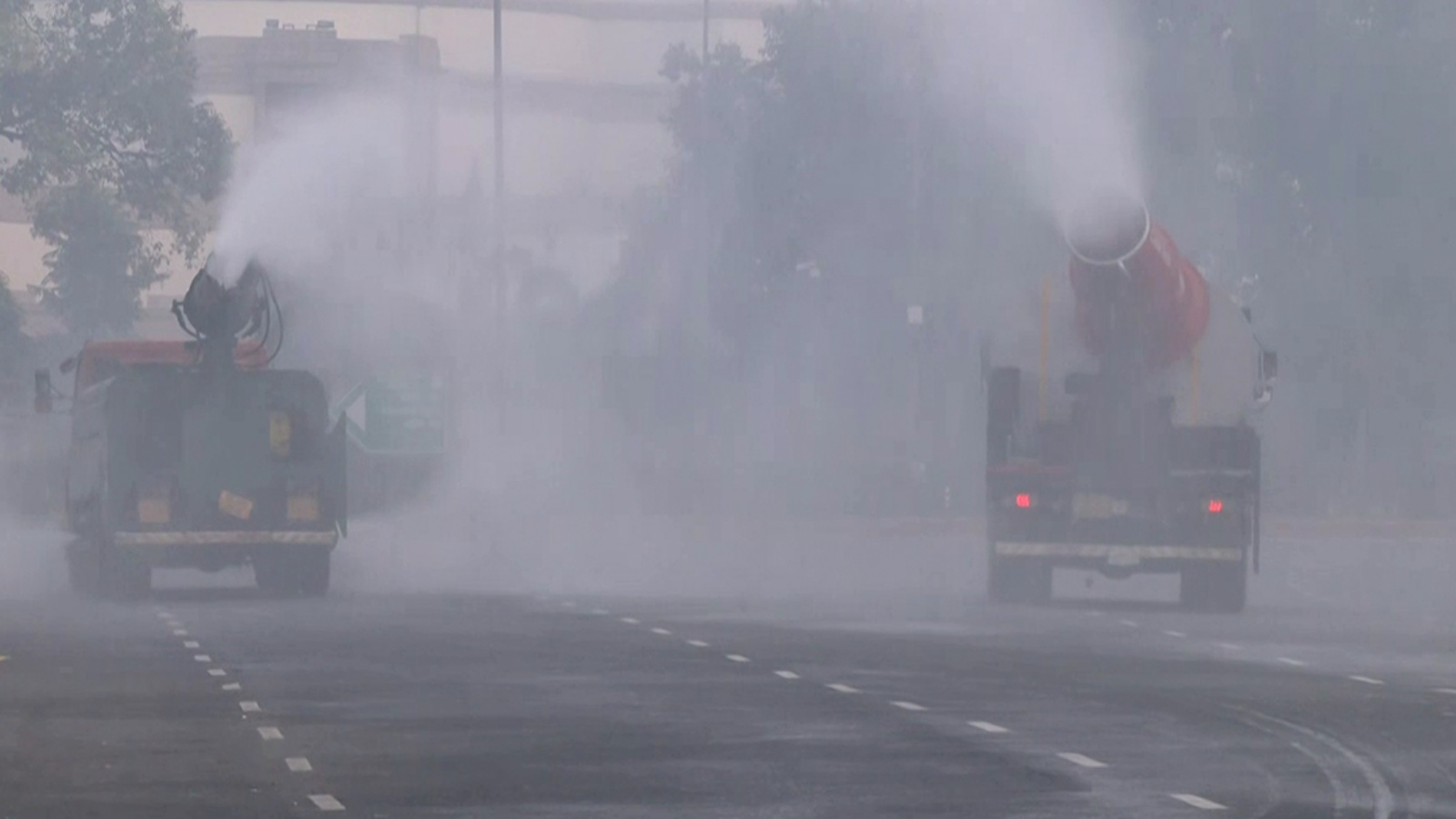
Just two days before Diwali celebrations kick off in full swing in Delhi-NCR, several of the Capital’s key air-quality monitoring stations went blank, the Central Pollution Control Board’s (CPCB) official data revealed.
Across the Capital, as fireworks were burst in parts of the city by Friday night, around a dozen monitoring stations recorded gaps in particulate pollution data, according to an analysis by The Indian Express.
The data gaps come at a time when the air quality in the city remained in the ‘Very Poor’ category for the fifth consecutive day with the 24-hour average AQI settling at 382. The AQI is expected to worsen to ‘Severe’ category over the weekend.
The Commission for Air Quality Management in the National Capital Region and Adjoining Areas imposed stage three emergency measures in Delhi-NCR under the Graded Response Action Plan (GRAP) to prevent further deterioration of the situation.
11 stations hit
From Nehru Nagar to Burari Crossing, at least 11 monitoring stations were affected in all on Friday, including Vasundhara Enclave and Nangloi, which were among the monitoring stations inaugurated just last month.
The disruptions led to 22 blind spots in hourly PM2.5 tracking and 27 missing PM10 hourly readings. Of these, seven had both pollutants missing and four others reported gaps in only one.
Three major monitoring stations suffered complete data outages across all 24 air-quality and meteorological parameters, including PM2.5, PM10, NO, NO2, NOx, ammonia, sulphur dioxide, carbon monoxide, ozone, temperature and wind speed.
Story continues below this ad
While IIT Delhi went blank for nearly two hours from 11 am to 1 pm; Nangloi lost four hours of data from noon to 4 pm; and NSIT Dwarka faced blackout for four hours during the peak evening period from 5 pm to 9 pm Friday.
On the other hand, Shadipur missed six PM2.5 readings while IIT Delhi failed to record six PM10 data points.
Blackouts through the week
The blackouts have extended through the week leading up to Diwali. For instance, stationwise data maintained by the Centre and state pollution control board revealed ITO’s PM10 monitor remained completely non-functional for 86 consecutive hours, from midnight on November 1 to 2 pm on November 4 before finally sputtering back to life.
The pattern was broader — 144 missing PM2.5 readings and 282 missing PM10 readings across the Capital’s 59 monitoring stations through the week.
Story continues below this ad
Not only individual pollutants, complete outage on all monitored parameters were also common during this period. NSIT Dwarka recorded the highest number of such hourly data gaps, with 27 hours of missing data, followed by Nangloi with 23 hours.
Sonia Vihar recorded 10 such hours, IIT Delhi seven, while Najafgarh and Burari Crossing logged two and one hours, respectively.
A senior scientist at Delhi Pollution Control Committee (DPCC) explained: “Under standard operating protocol, the central server in DPCC is configured to automatically trigger an operational alert whenever a CAQM Station fails to transmit telemetry for three consecutive hours…”
The nodal officers are alerted to trace whether the outage stems from server concerns, power interruptions, sensor or instrument choking, or any calibration errors.
Story continues below this ad
Missing hourly readings are a cause of concern, and as per official protocols by DPCC, treated as a priority. This is because CPCB’s National AQI methodology requires a minimum of 16 hours of readings for each of at least three pollutants, one of which must be PM2.5 or PM10, to calculate a station’s daily AQI. If a station fails to meet this requirement, its overall AQI is treated as having insufficient data, even if readings for some pollutants are available. This can leave localised pollution levels unrepresented in the station-wise daily AQI assessment.
KioskNews shows a cleaned-up reading view extracted from the publisher’s page — the original always lives on their site, not ours.