St Andrews dethrones Oxford and Cambridge again to top UK university rankings
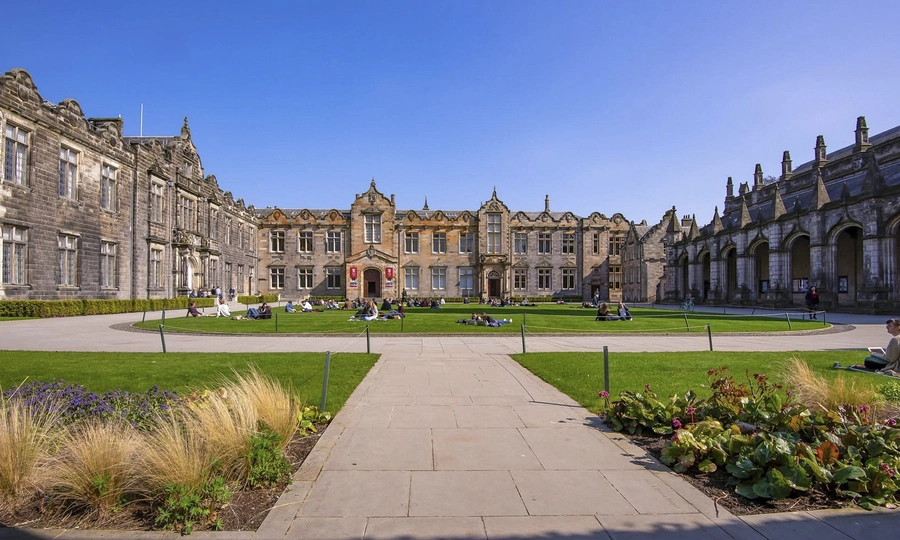
The University of St Andrews has reclaimed the top spot in the U.K.'s university rankings in the Good University Guide 2027 by The Times, while Imperial College London climbed three places to third and was named "University of the Year."
St Andrews moved up one place from last year to claim the top position, supported by strong results across the guide's assessment criteria. It recorded the highest average "entry standards" among the universities in the table.
Last year's winner, the London School of Economics and Political Science (LSE), secured the runner-up spot, followed by Imperial College London in third.
The result means St Andrews has now topped the annual rankings three times in six years.
The Scottish university was No. 1 in 2022, becoming the first university other than Oxford or Cambridge to lead the ranking in the guide's history. It was again the leading university in the U.K. in 2024.
The principal of St Andrews, Dame Sally Mapstone, was quoted in the ranking report as saying: "St Andrews is that rare amalgam of the highest quality of research-led teaching and an extraordinarily gifted and inquisitive international student community. St Andrews is sometimes described as three streets and a good golf course, but the world is here in miniature."
For the 2027 ranking, Oxford fell from fourth to fifth place, while Cambridge remained in fourth place. This marked only the second time in the U.K. university guide's 33-year history that the elite Oxbridge institutions have dropped out of the top three.
The guide attributed their positions partly to weaker results from the National Student Survey.
Imperial College London jumped three places to third and was named "University of the Year 2027."
The London university, which specializes in science, technology, engineering, mathematics, medicine and business, performed particularly strongly in research quality and graduate outcomes. It also recorded gains in teaching quality and student experience, based partly on results from the 2026 National Student Survey.
For the 2027 Good University Guide, "University of the Year" means the guide’s editors selected Imperial as the university that they considered to have shown particularly strong performance across the areas they assessed.
Its president, Hugh Brady, said in the ranking report that: "The students learn where new knowledge comes from, but they also learn how to generate new knowledge themselves. And that’s, I think, increasingly important."
Durham ranked sixth, followed by Warwick, Bath, Strathclyde and Bristol to complete the top 10.
|
2027 Rank |
University |
2026 rank |
|
1 |
St Andrews |
2 |
|
2 |
London School of Economics |
1 |
|
3 |
Imperial College London |
6 |
|
4 |
Cambridge |
4 (tie) |
|
5 |
Oxford |
4 (tie) |
|
6 |
Durham |
3 |
|
7 |
Warwick |
8 |
|
8 |
Bath |
7 |
|
9 |
Strathclyde |
11 |
|
10 |
Bristol |
10 |
The Good University Guide 2027 ranks U.K. universities using a multi-metric scoring system based on performance indicators covering student satisfaction, academic performance and career outcomes.
Student satisfaction is divided into teaching quality, which accounts for 67% of the overall satisfaction score and covers teaching, learning opportunities, assessment and feedback, and academic support; and student experience, which covers organization and management, learning resources and student voice.
Research quality is assessed through the Research Excellence Framework (REF). Entry standards measure the average academic qualifications of students entering each university, using UCAS (Universities and Colleges Admissions Service) tariff points, which are a numerical system used in the U.K. to translate qualifications and grades into points. Universities and colleges can use those points to compare applicants who have different qualifications
Graduate prospects tracks the proportion of graduates entering high-skilled jobs or further study. Completion & continuation rates assess student retention and progress toward degree completion, while good honors measures the proportion of graduates achieving a first-class or upper-second-class (2:1) degree among graduates receiving a classified degree.
 |
|
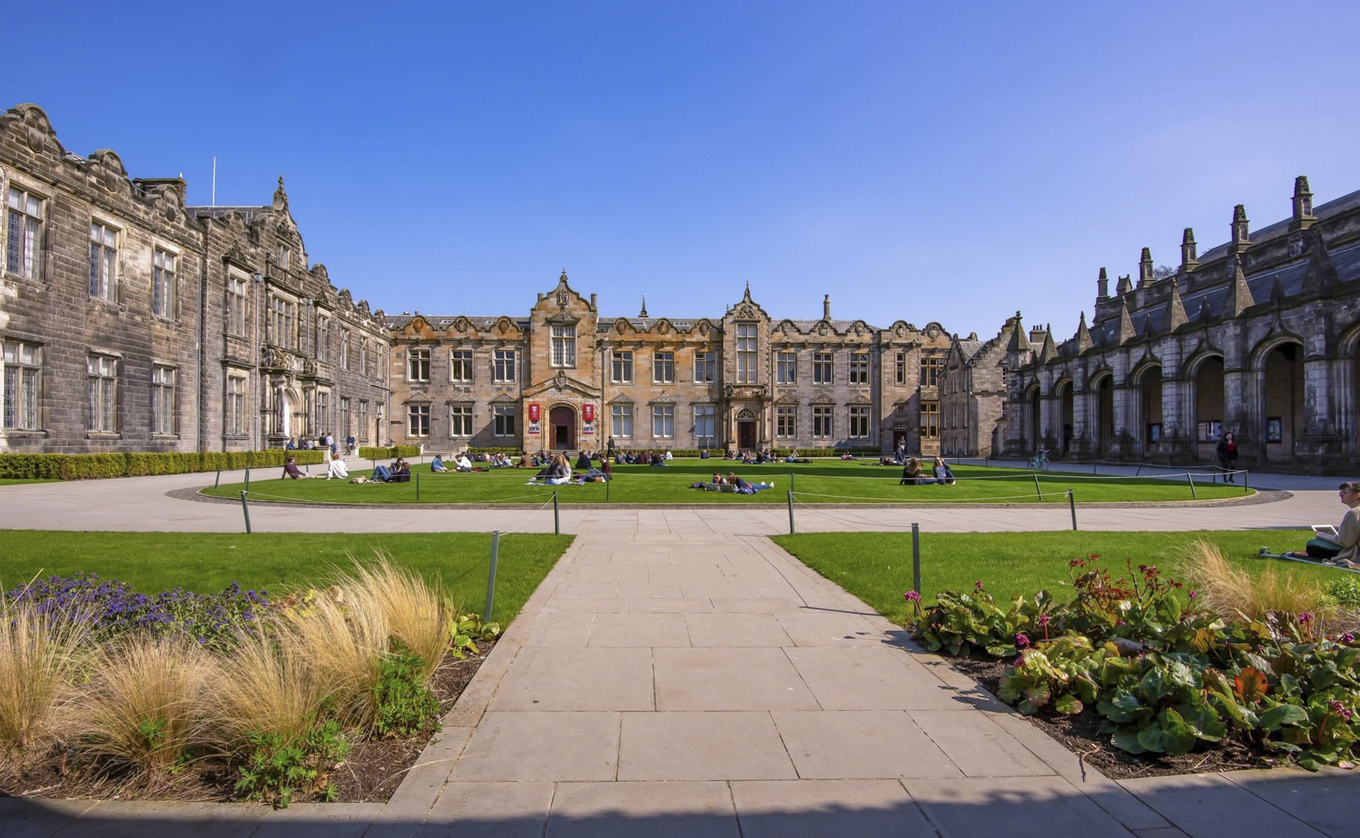
Students relax on the lawn at the University of St Andrews in St Andrews, Scotland, August 2026. Photo from the university's Facebook page |
The rankings come as universities across the U.K. face growing financial pressure. Institutions have introduced cost-cutting measures, while staff redundancies, strikes and marking boycotts have affected campuses.
Seven of the 24 Russell Group universities, including Cambridge, reported financial deficits in the 2024-25 academic year. Imperial's Brady said the institution was financially healthy but not wealthy, crediting staff and alumni support for its position.
Despite concerns over university costs and the employment prospects of graduates, demand for higher education remained strong as the UCAS recorded 695,740 applications for 2026 entry, a 4.6% increase from the previous year and a record high.
The 2027 guide also named universities of the year across different regions and categories. Bangor was named Welsh University of the Year, while Birmingham won the Midlands award. Durham received the North and Northeast title, Manchester the Northwest award, Cambridge the East award, LSE the London award, Oxford the Southeast award, Bristol the Southwest award and Ulster University the Northern Ireland title.
Heriot-Watt University was named Scottish University of the Year for Social Inclusion, while Strathclyde was runner-up for the overall Scottish award.
KioskNews shows a cleaned-up reading view extracted from the publisher’s page — the original always lives on their site, not ours.