How AEM built its next growth engine before the market demanded it



17 Sep 2026 09:23AM
Long before AI accelerated demand for advanced chips, the semiconductor test specialist was investing in the technologies, expertise and customer relationships it believed would shape its next chapter.
Link
Sometimes, the strengths that make a company successful can also make it harder to change. For years, one major customer helped shape AEM Holdings into a leading semiconductor test specialist.
That long-standing relationship gave AEM deep expertise in semiconductor testing – but it also raised a key question: Could those capabilities create opportunities beyond a single customer?
Rather than waiting for growth to stall, AEM decided to answer that question while its core business was still performing strongly.
As CEO Samer Kabbani put it: “The shift towards diversification was not a reaction to a single crisis. It came from asking a harder question: Given the technology we’d built, could we climb up the product value chain and deliver solutions that address the needs of multiple market segments simultaneously?”

“DON’T WAIT FOR A CRISIS TO FORCE A CHANGE. DIVERSIFY WHEN YOUR CORE ENGINE IS STILL ROARING.”
– MR SAMER KABBANI, CEO, AEM HOLDINGS
FROM DEPENDENCE TO DIVERSIFICATION
Diversifying was never going to happen overnight. It required the Singapore-headquartered company to rethink not only who it served, but also how it developed products and worked with customers.
AEM’s long relationship with its anchor customer had helped build the core technologies and engineering expertise that became the foundation of its business. But instead of relying on a single source of growth, the company began applying those capabilities across a broader range of customers.
That meant moving from bespoke solutions designed for a single application to semi-custom platforms that could be adapted for multiple customers while remaining sufficiently differentiated. It also required years of investment in research and development (R&D) before there was any certainty those customers would come.
“Acting on that conviction meant committing the investment and energy to transform the company,” said Mr Kabbani. “When you’ve spent years building deep capability for one customer, your engineering culture, processes and instincts are all calibrated for that relationship. It’s not an incremental adjustment.”
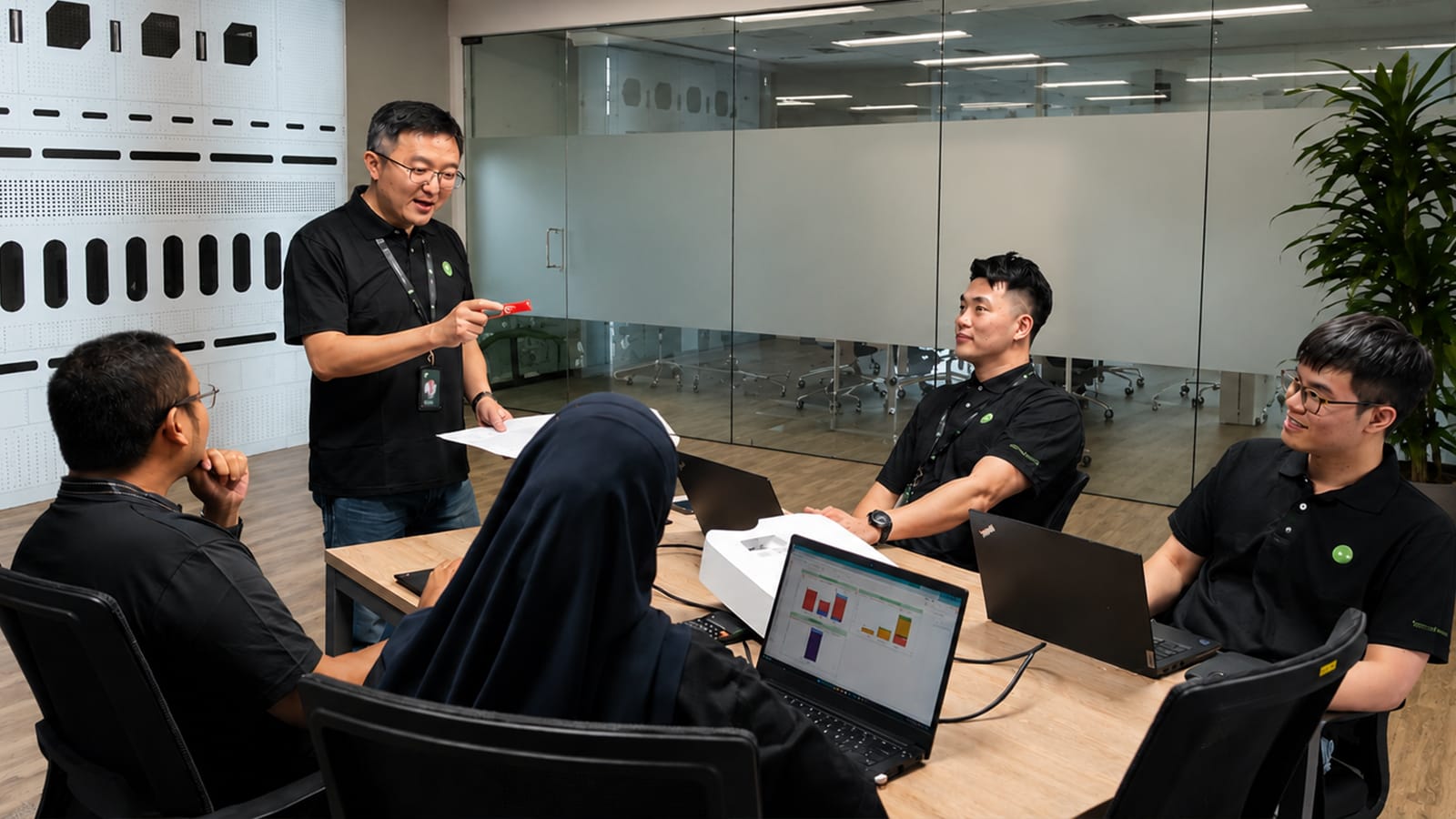
That shift also changed how AEM worked with customers. Rather than developing products in isolation, it began collaborating with customers from the earliest stages to understand their challenges and co-design solutions.
Winning new customers came with a learning curve. “We had to teach them how to work with us on tailored solutions,” he explained. “Sometimes, we’d challenge their requirements and ask, ‘Are you sure that’s the best approach? At scale, it could make the machines far more complex and costly. Maybe there’s a simpler way to achieve the same objective.’”
The same approach underpins AEM’s razor-and-blade model, Mr Kabbani said. Customers invest in the company’s core testing platform – the “razor” – before adding customised test collaterals and instrumentation, or the “blades”, as new chip generations emerge. This allows them to keep using the same platform without replacing entire systems.
“We’re not a one-time equipment sale,” he added. “Our platform adapts alongside customers as they move through successive generations of chips. That reinforces the depth of our customer relationships because we’re embedded in their production cycles over the long term.”
WHEN THE MARKET CAUGHT UP
By the time AI transformed the semiconductor industry, AEM had already spent years building the capabilities it believed customers would eventually need.
As AI chips became increasingly powerful and complex, testing became one of the industry’s most critical stages. A single undetected fault can compromise an entire system, making fast, accurate and high-volume testing essential before chips are deployed in AI servers, PCs and other devices.
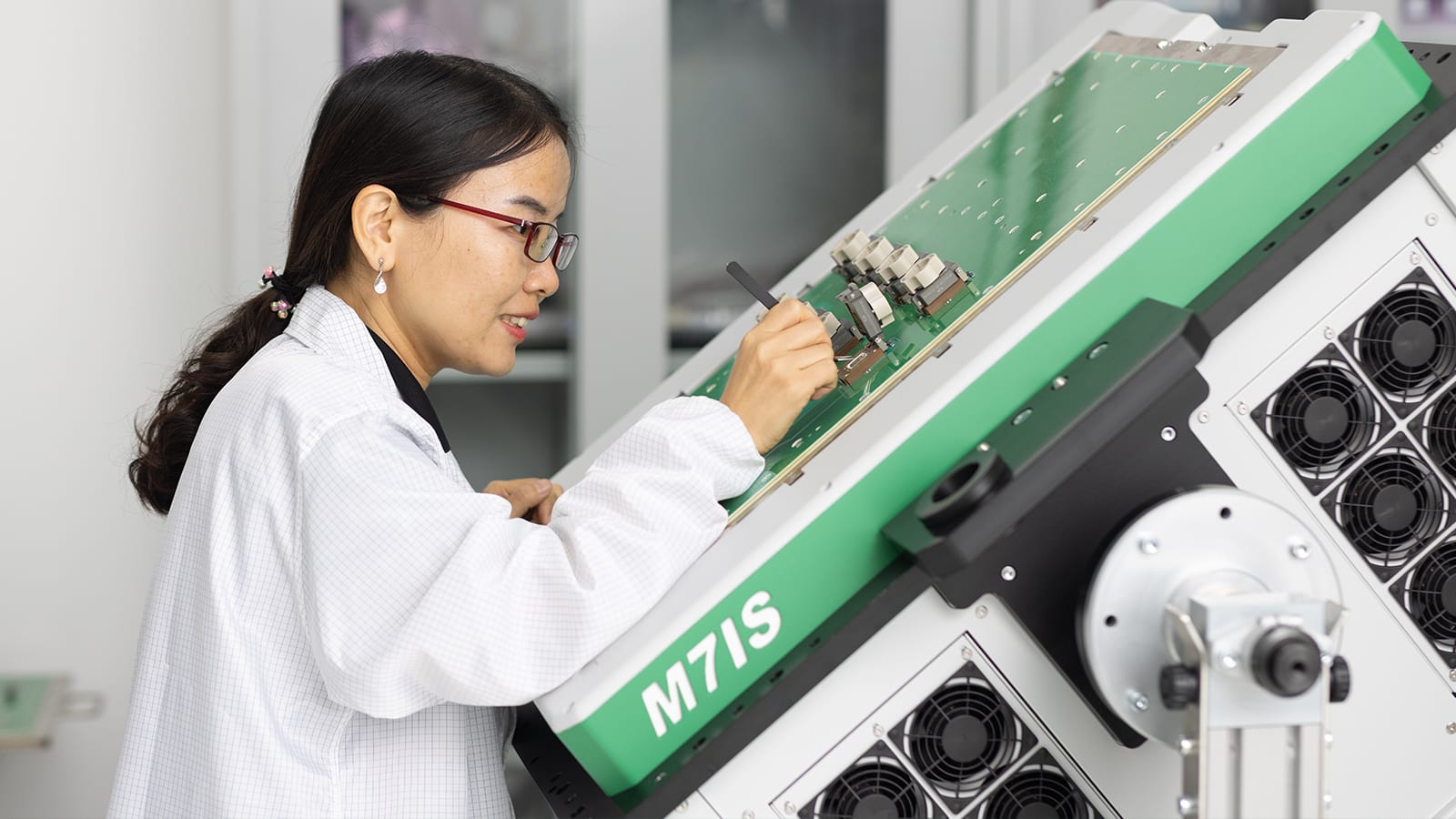
AEM develops specialised testing equipment that verifies increasingly complex chips accurately and efficiently before they reach the market. Central to this are its proprietary precision thermal control technology and strengths in high-parallel testing and application-specific test instrumentation. Developed years before AI became the industry’s defining trend, these capabilities have become increasingly valuable as demand for AI and high-performance computing continues to grow.
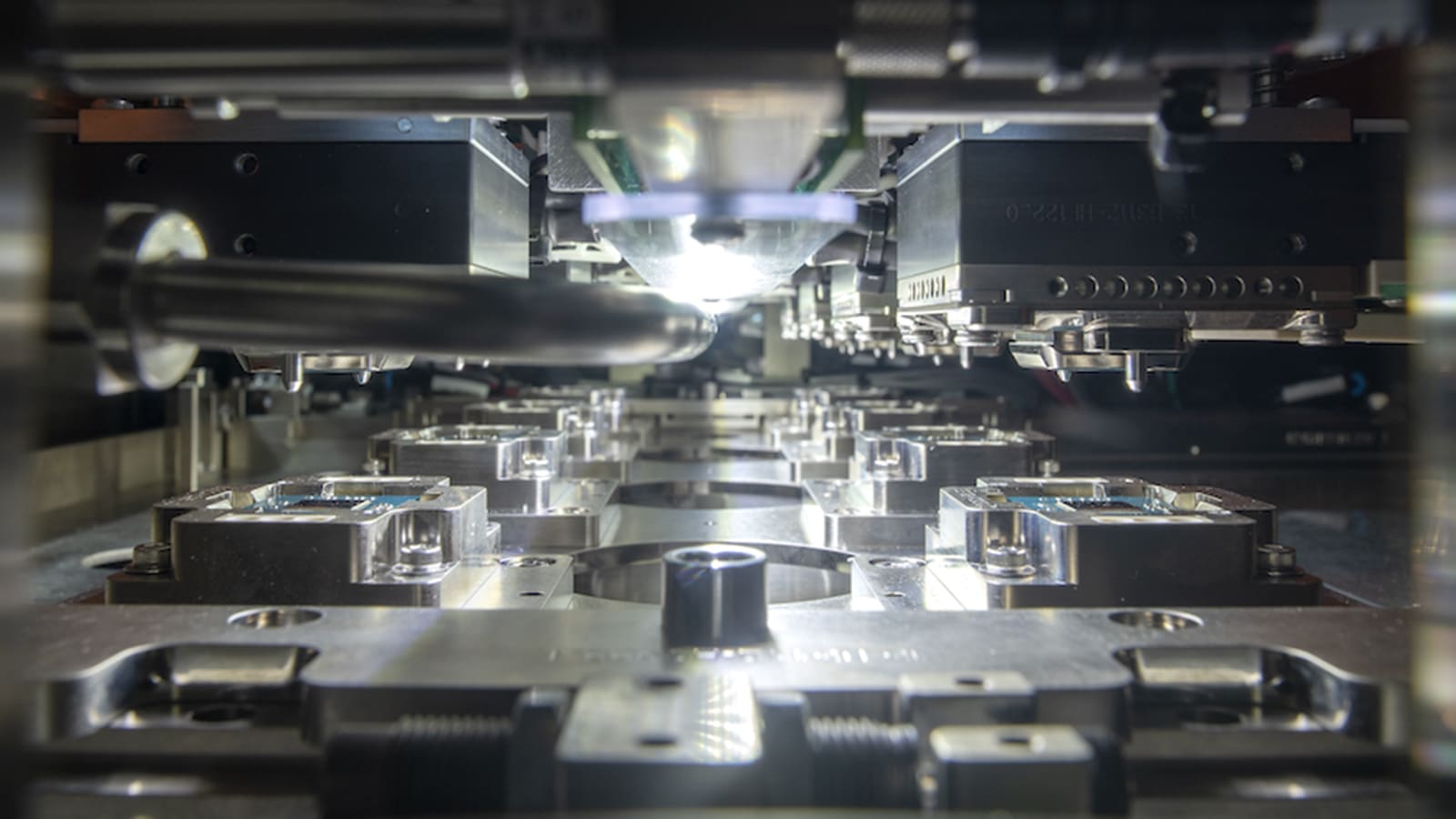
Said Mr Kabbani: “Our DNA was built around high-parallel, high-efficiency solutions. Again, that’s years in the making; it’s not something you just walk into.”
As chip development cycles shortened from years to months, customers needed testing partners capable of keeping pace. “Customers rely on us to launch their next-gen AI chips,” he said. “If your product cannot keep up with the pace and the cadence, you become the bottleneck of the customer’s roadmap rather than the enabler.”
TAKING THE NEXT STEP WITH VALUE UNLOCK
Whether your company is building internal capabilities or embarking on a larger strategic transformation, the SGX and MAS Value Unlock initiative offers two grants to support the journey.
Equip Grant
Best for: Companies looking to build in-house capabilities
Supports: Approved training in corporate strategy, investor relations and financial management
Funding support: Up to 50%, capped at S$15,000 per company
Elevate Grant
Best for: Companies ready to undertake strategic transformation with external advisers
Supports: Professional advisory services in corporate strategy, investor relations and financial management
Funding support: Up to 50%, capped at S$200,000 per company
“STAYING RELEVANT IN A RAPIDLY CHANGING ECONOMY REQUIRES BOARDROOMS TO CHALLENGE BUSINESS MODELS AND EMBRACE STRATEGIC PIVOTS. THROUGH VALUE UNLOCK, COMPANIES CAN SHARPEN THEIR EVOLVING STRATEGY AND HELP INVESTORS RECOGNISE NEW GROWTH ENGINES.”
– MR CHAN KUM KONG, HEAD OF CAPITAL MARKET DEVELOPMENT, SGX GROUP
PROVING THE STRATEGY
Years of investment began to pay off as AEM’s diversification strategy attracted new customers and generated new sources of revenue.
Industry recognition followed. Intel’s Epic Award recognised AEM as a strategic innovation partner, while its alliance with Advanced Semiconductor Engineering (ASE) extends the company’s reach into the global outsourced semiconductor assembly and test ecosystem. Through ASE, AEM can gain access to new customer segments – including hyperscalers – that would have been difficult to reach directly on its own.
The company has continued investing in innovation through its principal R&D hub in San Diego, placing its engineers alongside one of the world’s deepest pools of semiconductor talent and at the forefront of AI chip development. In an industry where new chip generations emerge every six to nine months, that strategic proximity allows AEM to work with customers earlier in the design process.
The transformation also changed how AEM engaged investors. Instead of asking investors to buy into a long-term vision, it could point to a broader technology platform serving multiple customers and semiconductor markets.
“Our team is battle-tested to diversify now. We have some credibility because what we bet on is yielding. Hopefully that gives us the confidence to continue investing and changing the way we react as the market evolves,” said Mr Kabbani.
The lesson is not simply to diversify, he said, but to keep building the next source of growth before the current one begins to slow. “The temptation to protect what’s working is natural. But the companies that build enduring growth are the ones that invest in the next platform while the current one is still performing,” he added.
Published: 17 Sep 2026 Photos: Mediacorp Studio 3, AEM Holdings
DRIVING THE NEXT WAVE OF INNOVATION
Discover how AEM is advancing semiconductor test technologies to support the future of AI and high-performance computing.
KioskNews shows a cleaned-up reading view extracted from the publisher’s page — the original always lives on their site, not ours.