‘We will die’: Ukrainians eat weed to survive in Russian-held city
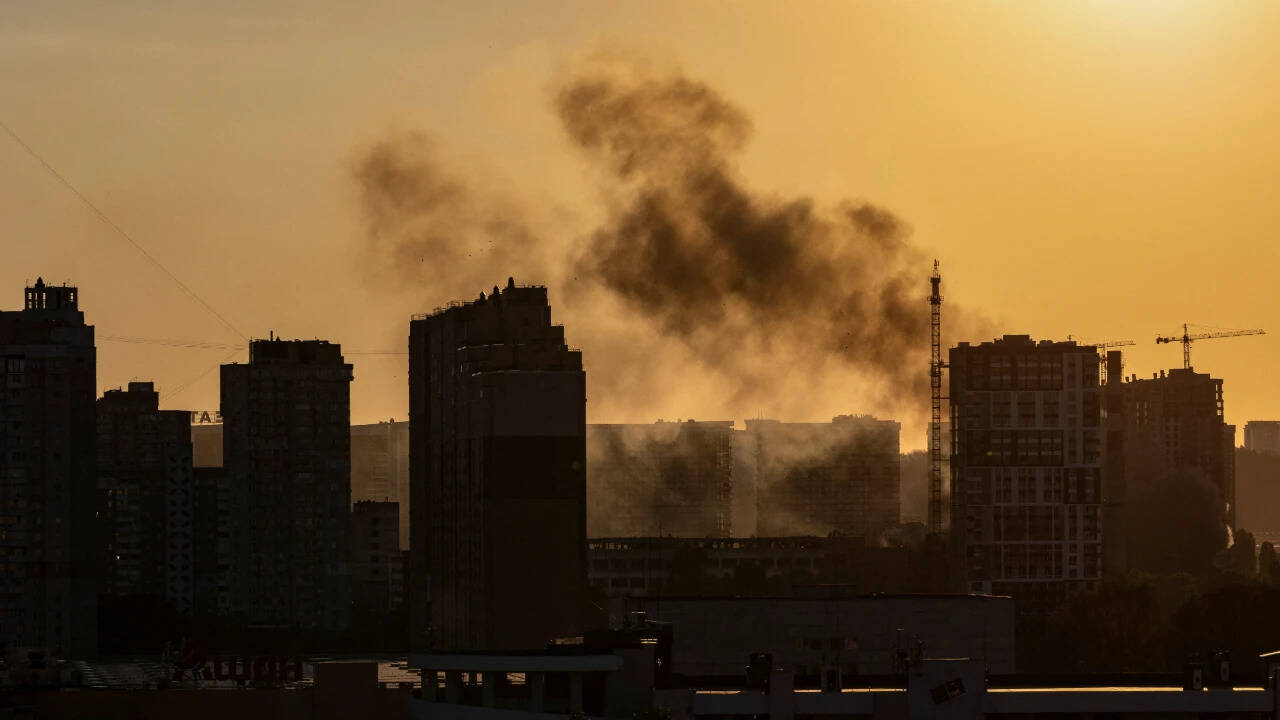
Smoke rises in Kyiv following a Russian jet-powered drone strike
Ukraine’s Russian-occupied city of Oleshky is facing starvation, with around 2,000 civilians, including nearly 50 children, reportedly stranded as food supplies run out and evacuation efforts remain stalled, The Guardian reported.A woman trapped in the city told The Guardian that she had lost more than 40kg since the war began and was struggling to find enough food. “Right now, I’ve got absolutely nothing to eat,” she said, adding that the home where she spent last winter had been destroyed and burned.Oleshky, located across the Dnipro River from the Ukrainian-controlled city of Kherson, has been described by Ukrainians familiar with the situation as a “hell on earth”.Residents survive on one meal a dayFood supplies to Oleshky reportedly began drying up after May as Russian forces expanded minefields and drone coverage around the city, making deliveries increasingly difficult.Residents told The Guardian they were sometimes surviving on just one meal a day — soup without potatoes, made from courgettes grown in former apartment flower boxes, and occasionally supplemented with foraged purslane, an edible weed.
Four tonnes of aid dropped by dronesKherson’s military authorities carried out a large-scale drone operation over the weekend, dropping emergency food, water and medical supplies across Oleshky and nearby villages.According to the Kherson military governor’s office, about four tonnes of food were dropped at 100 locations. However, it remained unclear how much of the aid was intercepted by Russian forces.Ukrainian foreign minister Andrii Sybiha raised the situation in Oleshky at the UN General Assembly this week, warning of a “humanitarian catastrophe” and calling for the immediate evacuation of civilians.A food convoy heading towards Oleshky on September 1 was attacked, with Moscow blaming Ukrainian forces and Kyiv blaming Russian troops.
KioskNews shows a cleaned-up reading view extracted from the publisher’s page — the original always lives on their site, not ours.