'Echoes of Rashi': Exploring R. Shlomo Yitzhaki's ideas and their relevance today

Rashi, Rabbi Shlomo Yitzhaki, lived in France from 1040 to 1105. His commentary transformed the way we study Torah. It was the first comprehensive Hebrew commentary to move systematically, verse by verse, through the Torah, combining close attention to the plain meaning of the text, or pshat, with midrash and the teachings of the Sages.
Rashi’s range was remarkable. Alongside his mastery of Torah and rabbinic literature, his commentary reflects deep linguistic sensitivity and an impressive familiarity with everyday life, including agriculture, commerce, crafts, tools, and trades. He often draws on this practical knowledge to clarify a difficult word, image, or biblical description.
Rashi’s commentary quickly became the foundational commentary on the Torah. For centuries, generations have encountered the Torah through his explanations. Even today, virtually every traditional Chumash – no matter how many additional commentaries it contains – places Rashi alongside the biblical text.
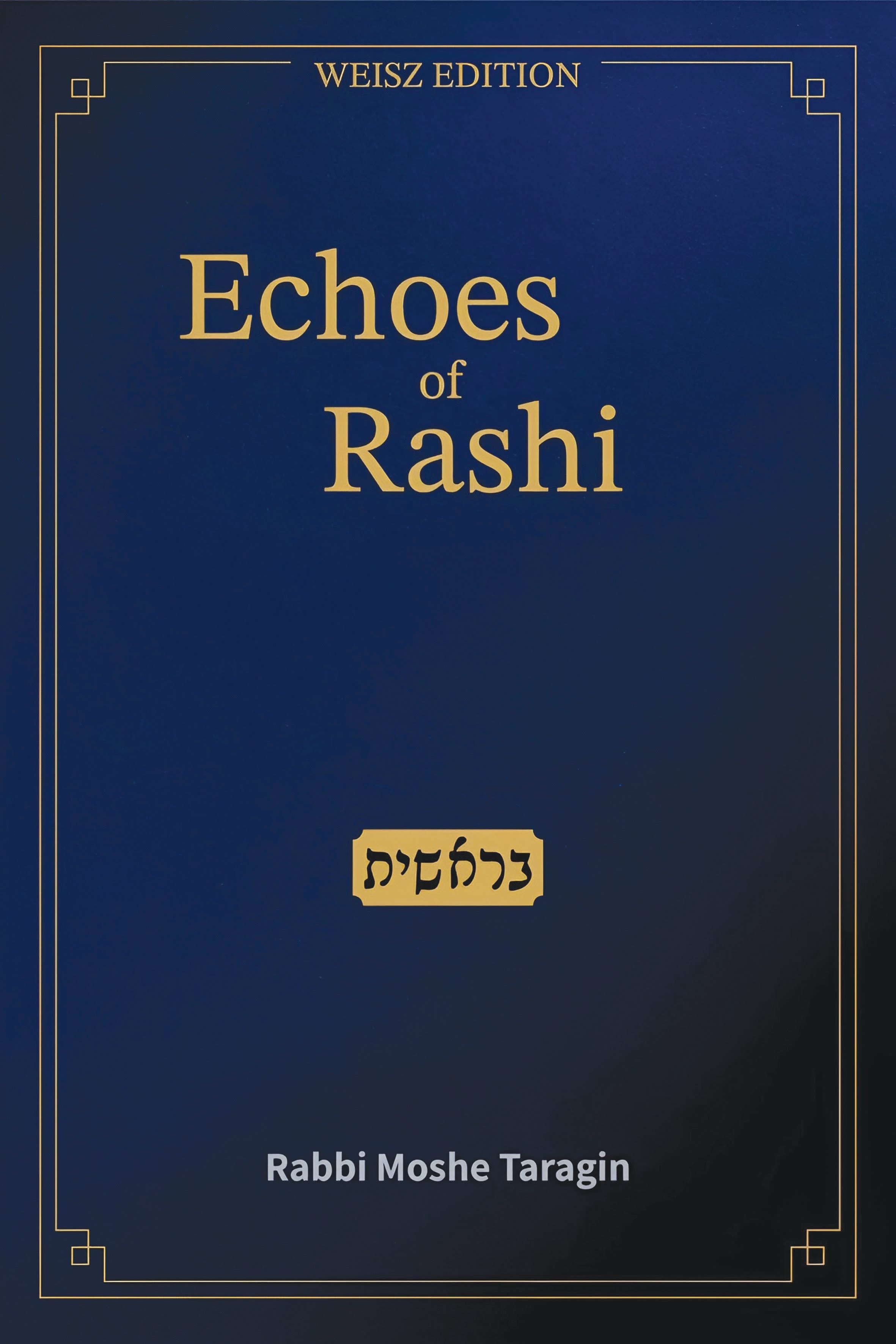
In my new book, Echoes of Rashi: Bereishit, I explore some of the larger ideas that emerge from Rashi’s commentary. These messages are as relevant today as they were in the world of Genesis. Jewish history often moves in recurring patterns; challenges faced by earlier generations return in new forms, and the lessons they learned continue to guide us.
What follows are several of these ideas, each carrying particular relevance to our current condition and the challenges we face.
The trail and the trial
Immediately upon arriving in the Land of Israel, Abraham faces a severe famine. Rashi explains this hardship was a test: would Abraham question the divine command that had brought him to this land, now that his arrival was followed not by blessing but by crisis?
Sometimes, the trail ends but the trials are only beginning.
Herzl imagined the creation of a Jewish homeland would offer Jews refuge from the antisemitism they had endured for centuries. No longer living as guests in foreign lands, Jews would finally possess a country of their own.
Yet, as in the days of Abraham, our return to this land did not end our trials. We have faced relentless violence, hostility, and opposition.
These hardships can lead people to question whether we are truly meant to live here. Abraham teaches the opposite. Faith in the journey does not mean that the trials end when we arrive. Sometimes, arrival itself begins new trials.
For many who have moved to Israel, this story is personal. Aliyah may represent the fulfillment of a lifelong dream of living in our homeland. Yet many discover that the journey to Israel was only the beginning. The trail to Israel leads to trials testing our faith in this land and our commitment to remain here.
A seat filled for a reason
Abraham comes to Hebron to purchase a burial place for Sarah, making the first recorded Jewish acquisition of land in Israel.
To complete the transaction, he must negotiate with Ephron, a newly appointed city judge. Rashi comments that Ephron was elevated to this position on the very day Abraham arrived.
This was no coincidence. Divine providence operates not only through miracles but also through political appointments and public events. The person needed to facilitate Abraham’s purchase was placed in position precisely when Jewish history required him.
The modern return to Israel was likewise shaped by a long chain of political developments. Some stretched back centuries, including the rise of the British Empire, which later played a decisive role in events leading toward Jewish statehood. World War I brought the collapse of the Ottoman Empire and redrew the political map of the Middle East.
Later, the emergence of the US as the dominant global power and American support for Israel created conditions that helped make Jewish sovereignty possible.
Rashi’s comment reminds us that history is shaped not only by people who occupy positions of power, but also by the timing of their arrival. Sometimes a political seat is filled because Jewish history needs the person sitting in it.
Questioning our origins
On the day Isaac was weaned, Abraham hosted a great celebration.
Rashi comments that many women brought their infants to Sarah so that she could nurse them. Skeptics had questioned whether Sarah, at her advanced age, could have given birth to Isaac. Others questioned Isaac’s paternity, since Sarah had recently been taken into the palace of Abimelech. By nursing other children, Sarah demonstrated that her body had miraculously been restored to motherhood.
These questions were not merely personal. If Isaac was not truly the child of Abraham and Sarah, Abraham would have no biological successor. His family would have no future, and the promise of the land would have no one to inherit it. Challenging Isaac’s pedigree was therefore a way of challenging the larger story that began with Abraham.
Our enemies have revived a similar strategy. They do not merely dispute Israeli policies or borders. Some challenge the pedigree of the Jewish people itself: whether we are an ancient nation, whether we had a historic presence in this land, and whether our connection to it stretches back thousands of years.
Rashi reminds us: Denying Jewish pedigree was already a way of denying Jewish continuity and Jewish claims to this land.
A Rainbow-less generation
The iconic rainbow appears after the Flood as the sign of God’s covenant with humanity never to destroy His world.
Rashi explains that its appearance signals that the world is once again vulnerable to divine judgment. The rainbow reminds us that God remains faithful to His covenant and will never again destroy the world through a flood.
Rashi then adds a striking comment. Some generations were so righteous that they did not require the rainbow. Their merit was sufficient to protect them from divine punishment.
Among the generations he mentions is that of Rabbi Shimon bar Yochai, who lived during the harsh Roman persecutions of the second century. It was a generation that endured enormous pressure yet remained committed to preserving Jewish faith and identity.
We may be living through another kind of rainbow-less generation.
In the decades following the Holocaust, the Jewish people rebuilt shattered families and communities, returned to Israel in vast numbers, and established a sovereign Jewish state. More recently, our soldiers and their families have displayed extraordinary courage, sacrifice, and faith.
A generation capable of rebuilding after devastation and defending Jewish life at enormous personal cost possesses a reservoir of merit difficult to measure. Perhaps this is the kind of generation that does not need a rainbow to plead its case.
The home front
After defeating the coalition of kings and rescuing Sodom, Abraham refuses payment from the king of Sodom.
Yet Rashi notes that Abraham insists that those who remained behind to guard the camp and protect the people and possessions should receive their share. They may not have fought on the battlefield, but their contribution was indispensable. Without those who protected what lay behind the front lines, the campaign could not have succeeded.
Our current war has reminded us how essential the home front – the oref – is to national defense. Our cities and civilian population have come under sustained attack, forcing families to display enormous psychological strength and resilience. At the same time, the prolonged mobilization of reservists has placed extraordinary burdens on spouses, children, workplaces, and communities. Many reservists have spent months away from home, while their families have shouldered responsibilities that would normally be shared.
Abraham understood that victory belongs not only to those who fight at the front. It also depends on those who hold everything together behind them. Then as now, the battlefield can succeed only when the home front remains strong.■
The writer is a rabbi and educator at Yeshivat Har Etzion (Gush). Find his latest book, Echoes of Rashi: Bereishit, at mtaraginbooks.com
KioskNews shows a cleaned-up reading view extracted from the publisher’s page — the original always lives on their site, not ours.