5 Horror Movie Scores That Are Just as Legendary as the Movies Themselves

Lloyd 'Happy Trails' Farley: the man, the myth, the legend. What can be said about this amazing - and humble - man that hasn't been said before? Or, more accurately, what can be said in public? Born in Calgary, Alberta, Canada, Lloyd is a master of puns and a humorist, who has authored one pun book to date - Pun and Grimeish Mint - and is working on a second. His time with Collider has allowed Lloyd's passion for writing to explode, with nearly 1,000 articles to his name that have been published on the site, with his favorite articles being the ones that allow for his sense of humor to shine. Lloyd also holds fast to the belief that all of life's problems can be answered by The Simpsons, Star Wars, and/or The Lion King. You can read more about Lloyd on his website, or follow his Facebook page and join the Llama Llegion. Happy trails!
Sign in to your Collider account
The horror movie score is one of the genre's most important elements, building an atmosphere that mirrors what's happening onscreen. When it's not done right, it takes the viewer out of the moment, standing out like a sore thumb and lessening the impact of what the film is trying to achieve, which is to scare the s**t out of you. When it is, it echoes, and enhances, the spirit of the film, like the distorted brass and rasping sounds that reflect the gradual decay of the family in Hereditary; or the Gothic, eerie and decidedly unholy chant of "Ave Satani" in The Omen. But only the truly iconic horror movie scores manage to do the same while taking on a life of their own, entities that are as creepy and well-known out of context as they are with the iconic movies they come from. Here are the five that top the list:
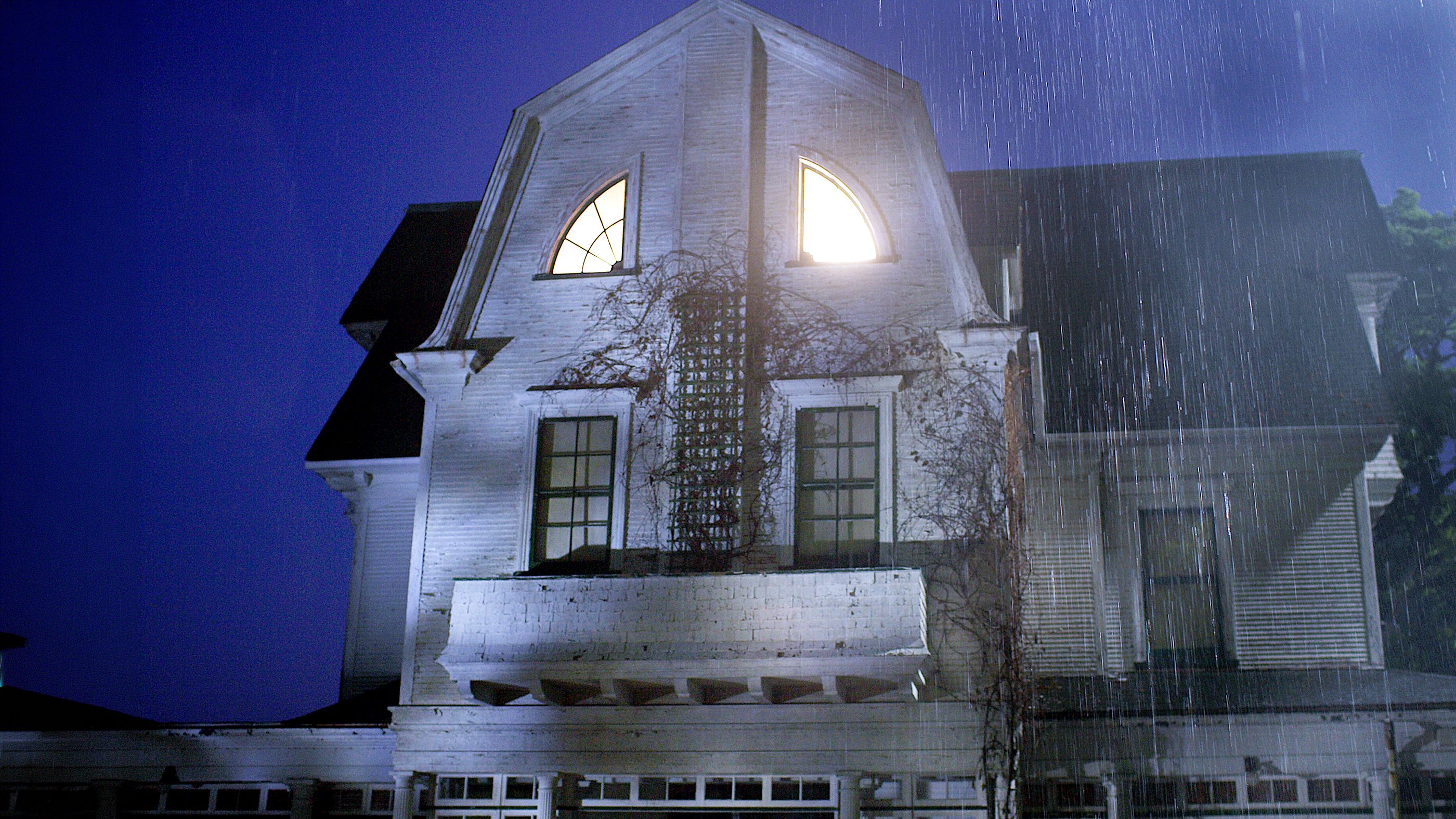
5 'The Amityville Horror'
Stuart Rosenberg, for one, knew the importance of the music score to sell the horror in The Amityville Horror, so he turned to one of the best in the business: Lalo Schifrin. Schifrin is the man behind who crafted the scores for Dirty Harry and Enter the Dragon, among others, and wrote the iconic Mission: Impossible theme. As for his horror movie cred, the man wrote an entire score for The Exorcist, which reportedly was ditched for being too scary.
Of his score for The Amityville Horror, Schifrin explains:
“I got an idea that the house was alive – there was something alive in the house, and I got the idea of doing a nursery rhyme, almost like children’s voices, but more eerie. They were like bricks with which I built a whole house – the Amityville house! It was the bricks of a score, little musical cells.”
The score reflects the dichotomy of the family's perception of the ideal house against the evil inside. It opens with the innocent sound of children singing a lilting lullaby, with their "la la's" accompanied by strings, harp, and simple piano. Then he comes in with the ominous undertone of low, brooding strings and shifts in tone, best described as unsettling, creating the necessary uneasiness that makes the film a success.
4 'Psycho'
Initially, Alfred Hitchcock wanted a light jazz score for his 1960 film Psycho. Thankfully, that went by the wayside in favor of Bernard Herrmann's universally recognized score instead. The film had a low budget, and, as a result, so too did the music. So Herrmann used a minimalist, strings-only ensemble to create the score. Even then, the strings were minimized by the use of mutes, creating an oppressive sense of dread and restraint.
That is, until the infamous shower scene. It's the only time in the film the mutes are removed, with the frantic, shrieking violins mimicking the chaos of the fast editing. Then, when the deed is done, the music slows down again, with the rise and fall of the basses representative of her life slipping away. That sudden change in the score is as jarring as Marion's (Janet Leigh) death so early in the film, a perfect marriage of audio and visual creating an iconic moment that has been referenced time and again. Interestingly, despite the low budget, Herrmann was actually paid double his usual fee (per Film Independent). Well worth it, with even Hitchcock admitting that "thirty-three percent of the effect of Psycho was due to the music."
3 'A Nightmare on Elm Street'
"One, two, Freddy's coming for you. Three, four, better lock your door . . ." That creepy, two-note, tick-tock playground taunt is the most identifiable part of Charles Bernstein's score for A Nightmare on Elm Street. It's the idea of the normal world twisted into something far more sinister, giving off that "something's not quite right" vibe that has been a staple of the franchise since its start in 1984. It's similar to The Amityville Horror in that way, especially with the use of children's voices. And there is nothing creepier than children's voices in horror movie scores. That idea is also perfectly captured by the film's main theme, a ten-note music-box-like melody where its innocence is perverted and distorted, the musical summation of child-murderer Freddy Krueger (Robert Englund), with Bernstein's innovative use of synthesizers adding to its effectiveness.
2 'Jaws'
Arguably the most famous two notes in Hollywood history, director Steven Spielberg initially thought John Williams' Jaws theme was a joke:
“I expected to hear something kind of weird and melodic, something tonal, but eerie . . . What he played me instead, with two fingers on the lower keys, was ‘dun dun, dun dun, dun dun.’ And at first, I began to laugh. He had a great sense of humor, and I thought he was putting me on.”
It wasn't, of course, and of all the films on this list, Williams' iconic Jaws score is the one that is the most vital component of its associated film. As Collider explains, given the issues with the mechanical shark (one of many), the score, for all intents and purposes, became the shark. Right from the beginning, the ominous theme suggests danger, and as it goes faster and faster, the viewer knows that the danger is coming to a head. It firmly links the theme with the shark, so from that point forward, whenever that two-note march starts, you know the shark is there. But the beauty of the film lies in the fact that you don't know where, something that would never have worked as effectively if the shark was visible. Outside the film itself, the score has become a shortcut to establishing menace in other media, like the mock-horror of a candy bar in a crowded pool that's mistaken for a deuce in Caddyshack. Hey, no one said it was exclusive to horror.
1 'Halloween'
John Carpenter had a budget of around $300,000 to make his 1978 film Halloween, which meant cutting corners where he could. That included the film score, but unlike Bernard Herrmann, Carpenter couldn't even afford a small ensemble. So it fell on Carpenter, who had played in bands since college, to come up with something on his own. He booked a synthesizer studio and, with only three days to do the music, came up with the most iconic horror movie score of all time.
It's as minimalist as you can get, just piano and synthesizer repeating the same chords over and over. But everything about it is unsettling. It has a very unconventional 5/4 time signature; a cold, steady and relentless beat, lacking any inflection or personality; and has no definitive closing, denying resolution and creating a growing anxiety in the audience. It feels like it may never end, as unstoppable as the persistent murder machine that is Michael Myers.
KioskNews shows a cleaned-up reading view extracted from the publisher’s page — the original always lives on their site, not ours.