The benefits of microfiber suede grips for rowers with ‘mazdoor ka hath’
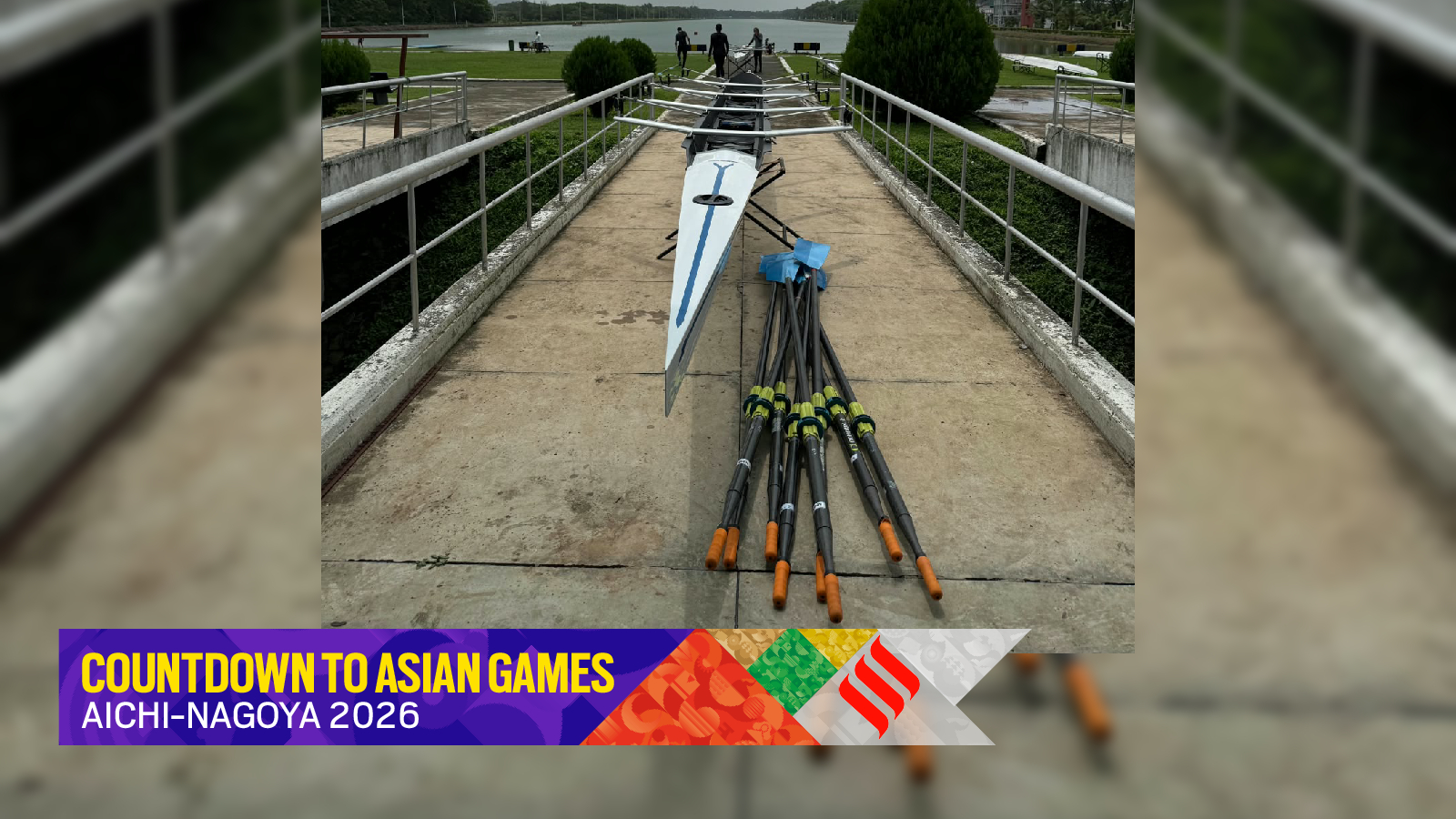
Rowers live with calloused and bloodied palms. However, the introduction of microfiber suede grips with a softer texture has made it easier for rowers. (Special arrangement)
The 27th to 29th North latitudes of India, with towns on the 28th degree specifically from Mansa in Punjab to Sikar and Churu in Rajasthan, to Roorkee in Uttarakhand to Bulandshahr and Bareilly in UP, produce most of the country’s top medalling men’s rowers at Asian Games.
It’s historically observed, and a bit of a snazzy coincidence too. But not so much when you realise they get scouted out in army/lately navy recruitments from that wonder-belt for their strong frames that later churn out rowing champions. It’s also a farming belt. Though, ask any top name, and they will boast of their first calluses, dried out from near-bleeding blisters on hands, when sitting in a boat, wielding the oars.
Rowing’s repetitive friction when settling onto the right rhythm for the stroke, clutching those durable, easy-to-clean green rubber grips at the end of the shaft handle, invariably led to bleeding, especially when training on water for 2-3 hours. Champions of yore from Bajrang Lal Takhar to Arvind-Arjun last Asiad at Hangzhou, would all have their own tales of the crusty skin that could take up to three years to soften back. They wore them like battle scars — even as some of the quietest, no-fuss medals, even gold, increased India’s tally but were gently forgotten as the sport is far from glamorous.
‘Mazdoor ka hath’
“It’s like a farmer’s hand. Ya mazdoor ka hath,” coach and equipment geek at the Army Rowing Node, Subedar Tejas Shirke, explains. It wasn’t that it hurt terribly that was the problem, he says. “The efficiency of the stroke would go down due to blisters,” he says.
Around 2018-19, Vermont-based American oar-makers, Concept2 got researching on adjustable composite grips, and arrived at microfiber suede grips which had a softer texture to replace the rubber-caused aggravations. “The blisters don’t entirely go away. We are rowers after all. But it was the biggest tech change that helped improve efficiency and timings. You could call it skin-friendly,” Shinde says.
Oars are notoriously wand-like. And coaches who go about making adjustments in length, angle of the blade, and tiny hexagonal screws as small as 13 mm in diameter, do it with the wild whacked intuition of Diagon Alley’s wandmaker Olivander. This happens two days before the race, though the tool box and India’s iconic white & blue Fillipi boats, have already reached Nagoya.
Coaches travel with string pendulums dipped into competition waters to measure thickness, gravity, pH and density of the liquid. If water is heavier, a bigger angle is imparted to the blade; for lighter, it’s less, in the 0° to 4° range. Oars essentially work as levers and adjustments for length of the shaft and where the lock should clasp (inboard and outboard), can depend on variables like weather, water density, strength of the rower, what training phase he is in and a coach’s instinct. They decide stiffness of the shaft, even as Indians adopted the latest upgrade on the hatchet shaped blade called ‘Plain Edge’ — smoother, curved top edge and wider tip leading to a softer catch (how much water is moved).
Story continues below this ad
Carved from across a factory floor overlooking Napolean’s Elba retreat in Livorno in Italy, the Fillipi boats are on the higher-cost range of around Rs 19 lakh. Fillipi R&D however is top-grade, and has always delivered Asiad medals for India. The oars, connected with rowlocks to the boats though, come from picturesque Vermont, where the basswood is used as much for old-fashioned rowing handles as handmade acoustic and electric guitars.
Oar technology though has moved on from wood (though Australians still swear by it), to the new carbon fibre ‘Ultralight’ oars that offer greater elasticity.
India’s elite rowers who will contend for gold in men’s Lightweight Doubles Sculls and Quadruple Sculls, have a huddle warcry – “India, Row for Gold.” Nothing less will do after China picked gold last time in double sculls. Given the exhausting nature of the sport, rowers this time, have been working with elite psychologists teaching them to stay calm through the strength crunching stroke. The calluses on hands might not reduce efficiency this time around, tech has ensured.

Shivani Naik is a senior sports journalist and Assistant Editor at The Indian Express. She is widely considered one of the leading voices in Indian Olympic sports journalism, particularly known for her deep expertise in badminton, wrestling, and basketball. Professional Profile Role: Assistant Editor and Columnist at The Indian Express. Specialization: While she covers a variety of sports, she is the primary authority on badminton for the publication. She also writes extensively about tennis, track and field, wrestling, and gymnastics. Writing Style: Her work is characterized by "technical storytelling"—breaking down the biomechanics, tactics, and psychological grit of athletes. She often provides "long reads" that explore the personal journeys of athletes beyond the podium. Key Topics & Recent Coverage (Late 2025) Shivani Naik’s recent articles (as of December 2025) focus on the evolving landscape of Indian sports as athletes prepare for the 2026 Asian Games and beyond: Indian Badminton's "Hulks": She has recently written about a new generation of Indian shuttlers characterized by power and physicality, such as Ayush Shetty and Sathish Karunakaran, marking a shift from the traditionally finesse-based Indian style. PV Sindhu’s Resurgence: A significant portion of her late-2025 work tracks PV Sindhu’s tactical shifts under new coaching, focusing on her "sparkle" and technical tweaks to break out of career slumps. The "Group of Death": In December 2025, she provided detailed tactical previews for Satwiksairaj Rankireddy and Chirag Shetty’s campaign in the BWF World Tour Finals. Tactical Deep Dives: She frequently explores technical trends, such as the rise of "backhand deception" in modern badminton and the importance of court drift management in international arenas. Legacy and History: She often revisits the careers of legends like Saina Nehwal and Syed Modi, providing historical context to current Indian successes. Notable Recent Articles BWF World Tour Finals: Satwik-Chirag have it all to do to get through proverbial Group of Death. (Dec 2025) The age of Hulks in Indian badminton is here. (Dec 2025) Treadmill, Yoganidra and building endurance: The themes that defined the resurgence of Gayatri and Treesa. (Dec 2025) Ayush Shetty beats Kodai Naraoka: Will 20-year-old be the headline act in 2026? (Nov 2025) Modern Cinderella tale – featuring An Se-young and a shoe that fits snugly. (Nov 2025) Other Sports Interests Beyond the court, Shivani is a passionate follower of South African cricket, sometimes writing emotional columns about her irrational support for the Proteas, which started because of love for Graeme Smith's dour and doughty Test playing style despite being a left-hander, and sustained over curiosity over their heartbreaking habit of losing ICC knockouts. You can follow her detailed analysis and columns on her official Indian Express profile page. ... Read More
KioskNews shows a cleaned-up reading view extracted from the publisher’s page — the original always lives on their site, not ours.