Running in the dark? This reflective running gear will help you stay safe
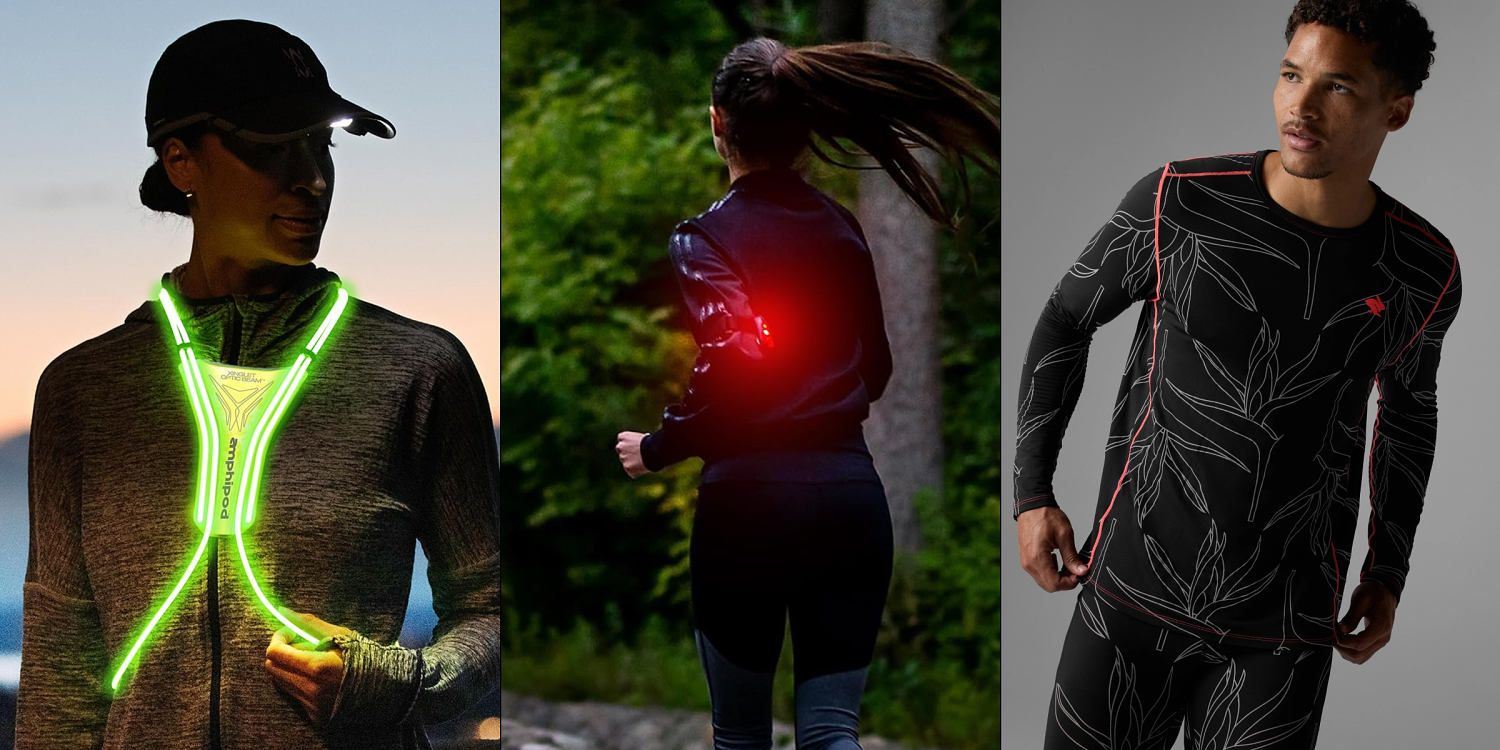
Running before the sun rises or after it sets may be the only time you can get a couple miles in — as a long distance runner myself, believe me, I’ve been there. Especially during the fall and winter when daylight hours are short, that means it’s very dark outside, increasing your risk of not being seen by drivers, cyclists and pedestrians. One of the best ways to stay safe when you head outside is to wear reflective running gear. It increases your visibility from up close and far away, and when you add other accessories like LED lights, it helps you see the path ahead better, too.
Below, I talked to three experts about all the different types of reflective running gear and how to pick the best options for you. They also shared other safety tips for running in low light and total darkness, and broke down the important differences between reflective and fluorescent running gear.
Selected.Our top picks
Want more from NBC Selected? Sign up for our newsletter, The Selection, and shop smarter.
What is reflective running gear?
Reflective running gear is technically made with retroreflective materials that bounce light directly back to its source, making the materials appear bright and more visible, says Dr. Milica McDowell, a doctor of physical therapy and the associate vice president at U.S. Physical Therapy. For example, a running vest made with retroreflective materials bounces a car’s headlights directly back to the driver, making the runner look bright so they’re more visible, says Anwen Davies, a certified personal trainer and fitness expert at Net World Sports.
Retroreflective and reflective materials are technically two different things that vary in how light bounces off them. But “reflective” is how people commonly refer to running gear that makes you more visible in low light and total darkless, so that’s how I’m phrasing it here.
The best reflective running gear, according to experts
Reflective running gear makes you more visible to drivers, cyclists and pedestrians, but one piece of clothing or accessory is often not enough for people to notice you in low light and total darkness. Experts recommend wearing lights too, so I curated a list of both below. You’ll notice that many of the products on this list are neon-colored — that means they’re also fluorescent, which makes you more visible in daylight (learn the difference between reflective and fluorescent here).
Best reflective running vest
McDowell recommends wearing a reflective garment that covers your torso and arms if possible. “I prefer a reflective jacket or vest in order to create as much visibility in one of the largest parts of your body as possible, and it’s at eye-level for most pedestrians, cyclists and drivers,” she says.
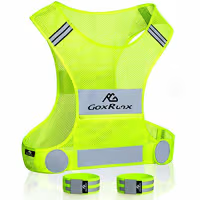
You can put this lightweight mesh vest on top of whatever you’re wearing to be more visible from all angles up to 800 feet away, according to the brand. There’s retroreflective materials on the front and back, and it comes with two adjustable reflective bands you can put on your arms, legs, wrists or ankles. The vest, which is available in small to extra extra large sizes, has an adjustable waistband and a large front zippered pocket to store essentials.
Best LED running vest
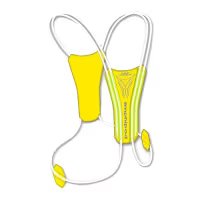
“I value pieces that are simple, lightweight and are visible from all directions such as this light-up vest from Amphipod,” says Jenny Simpson, the chief running officer for Fleet Feet. (Editor’s note: The inclusion of products sold by Fleet Feet in this article was made independently of Simpson.) “I wore it all throughout 2025 when my husband and I did our RUNUSA tour, living out of a van and running in all 50 states.” The vest is made from flexible adjustable, light-up cables and it weighs less than 3 ounces, so it won’t weigh you down. You can choose from eight light modes using a button on the back of the vest, including multiple colors, flashing lights and rainbow patterns. The vest’s battery lasts for up to 12 hours when it’s solid and 23 hours when it’s flashing (it comes with a USB-C charging cable). There’s also extra reflexive details on the sides that you can move around.
Best reflective running belt
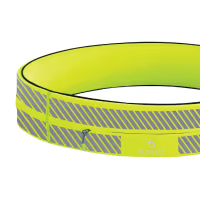
I always wear a belt to store my essentials while running, so I might as well use one that’s reflective to increase my visibility. FlipBelt’s Zipper Running Belt comes in two reflective styles: neon yellow and black. There’s retroreflective material around the entire exterior, helping people see you from the front, sides and back. The belt, which you step into like pants, has a zippered pocket that I put my phone in, and you can access the other storage sleeves from two other access points — that’s how I stuff my gels, electrolyte tablets, hair ties and headphones inside, as well as store my keys with the built-in leash. Even when I run over 15 miles, this belt doesn’t bounce around or move once. Its fabric can get pretty damp with sweat, so I throw it in the washing machine at least once a week. It comes in XXS to XXL sizes.
BETA

We can help you find
Best safety lights for running
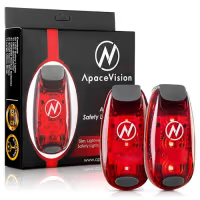
If you don’t want to invest in new clothing or accessories like vests, hats and belts, you should at least clip a LED light to yourself when running in low light or total darkness, experts say. These battery-powered, water-resistant LED safety lights come in a pack of two, so you always have a backup if one dies, especially in cold weather when batteries drain faster, says Davies. They weigh less than an ounce, come in multiple colors and are visible from over 1,000 feet away, according to the brand. The lights have clips that let you attach them to running belts, shirts, sports bra straps or hats, for example, and they come with three straps if you want to wear them around your arms, legs, wrists or ankles. You can choose from three light modes: solid, strobe and flash.
Best headlamp for running
Not only does a headlight make you more visible from the front, but it also illuminates your path. “You’re a lot more vulnerable if you can’t see the terrain ahead,” says Simpson. “Tripping and falling on a dark run invites even greater risk, so your ability to see the ground and what’s up ahead is very important to your safety.”
Amphipod, a brand that Simpson and McDowell recommend, makes this headlight that clips onto any hat’s or visor’s brim. The light sits close to the base of the brim to keep your head comfortable and avoid getting in your way. It weighs less than 2 ounces and doesn’t bounce while you’re moving. There’s three brightness modes, and the light’s battery life lasts up to 6.5 hours, depending on which one you choose. When you plug it in, the light powers up in about two hours with the included USB-C cable.
Best LED beanie
This beanie keeps your head warm in cold weather, and the built-in LED light makes the path ahead of you more visible while helping drivers, cyclists and pedestrians see you from the front up to 30 feet away. The light pops off the hat and has a USB connector on it, letting you recharge it in a USB wall or car plug, a computer or a portable power bank. You can choose from three light modes by pressing the button on the front, and get up to four hours of continuous use on a full battery. The hat comes in over two dozen colors and patterns.
Best reflective running shirt
Rabbit has an impressive collection of reflective clothing for men and women, including this long-sleeve, lightweight thermal shirt. There’s a large pattern across the front and back of the shirt that’s made from retroreflective material, ensuring that people can see you from any angle. The shirt keeps you warm, is stretchy to move with your body and dries quickly as you sweat. It comes in women’s extra small to extra large sizes, and men’s small to extra large sizes. You can pair it with Rabbit’s matching reflective leggings, a jacket and gloves.
How I picked the best reflective running gear
To curate my list of the best reflective running gear, I focused on finding clothing and accessories that make runners the most visible to drivers, cyclists and pedestrians in low light and total darkness. I recommended gear made with large patches of retroreflective materials that cover key parts of the body, and gear that lights up, per experts’ recommendations. I chose products experts use themselves, as well as a few highly rated options that meet their guidance.
How to shop for reflective running gear
While shopping for reflective running gear, experts recommend considering the following factors.
Frequently asked questions
The gear you buy should specifically say it’s made from retroreflective materials, says Davies. These materials have tiny glass spheres, prism-shaped reflectors and/or cube-corner-shaped reflectors embedded into them, which light bounces off of to make you visible to drivers, cyclists and pedestrians.
Prioritize 360-degree visibility, says Simpson — that means being easily seen from every direction: front, back and sides. Look for gear that has retroreflective materials on the largest parts of your body, like your torso and back, says McDowell. These areas are also higher off the ground, so they’re easier for drivers, cyclists and pedestrians to see. Gear that has retroreflective materials on your arms and legs, as well as joints like the wrists, elbows, knees and ankles, is effective, too. It shows action while you’re running, which makes it more eye-catching for people to identify the bright spot they’re seeing as a person, not a stationary object.
The more surface area retroreflective materials cover, the more visible you are, and the faster drivers, cyclists and pedestrians can react to avoid you, says McDowell. Small reflective logos, patterns and shoelaces don’t cut it.
Light- and bright-colored gear blends into darkness less than deep shades like black, grey and navy blue.
Just like with any other running gear you wear, reflective pieces shouldn’t be distracting, disruptive or uncomfortable. “Especially if I’m already running in a low light environment, I need my senses focused and alert, not distracted by bouncing or poorly fit gear,” says Simpson. “I’m more likely to wear something that keeps me safe if I also know it’s not going to slow me down.”
Follow the exact care and cleaning directions specified by the brand that makes your gear. Doing so prevents it from getting cracked, peeled or dull, which makes it less effective. If the retroreflective material on your gear gets damaged, replace it.
How to stay safe while running in low light or total darkness
Wearing reflective running gear and lights aren’t the only safety precautions you should take while running in low light or total darkness. Here are other tips experts recommend.
- Don’t multitask: Running in low light or total darkness is not the time to wear noise-cancelling headphones, listen to music or talk on the phone, says McDowell. Be alert and fully aware of your surroundings at all times: You’re just as responsible for avoiding drivers, cyclists and pedestrians as they are for avoiding you, so eliminate distractions.
- Bring a fully charged phone: You can get directions or call for help if needed, plus your phone can track your location and share it with those you give permission to. Simpson also recommends bringing some form of identification.
- Choose a familiar route, and practice it in the daylight: Save experimenting with a new route for the daylight. When it’s dark out, stick to running in an area you’re familiar with and feel comfortable in. You should do a route in the daylight a few times before trying it in the dark to take note of obstacles and uneven terrain. That said, even a route you’ve done 100 times can be confusing in the dark, and landmarks look different without the sun illuminating them. Try to run in busier areas with bright storefronts, street lights and people around if you’re logging miles in low light or total darkness, says Davies.
- Run facing oncoming traffic: That’s the best way to make sure you see approaching drivers, cyclists and pedestrians, and they see you, says Davies. It’s also safer than ignoring or worrying about what’s behind you.
- Don’t assume drivers, cyclists or pedestrians see you: Just because you see a driver, cyclist or pedestrian doesn’t mean that they see you. If you’re approaching them, slow down, try to make eye contact and be prepared to get out of the way. That becomes even more important if you’re at an intersection or need to cross a road, which are highly vulnerable spots — drivers, cyclists and pedestrians are more likely to expect something coming from ahead or behind.
- Tell someone where you’re going, when you leave and when you expect to be back: That way someone notices if you’re late or don’t return at all, and can send help.
- Run with a buddy: Two pairs of eyes and ears are better than one when it comes to being aware of your surroundings. Also, if you’re both wearing reflective gear and lights, drivers, cyclists and pedestrians are more likely to see you, says Davies.
What’s the difference between reflective and fluorescent running gear?
There’s a big difference between reflective and fluorescent running gear.
- Reflective running gear is made with materials that bounce artificial light directly back to its source, making the gear appear bright. It makes you more visible in darkness.
- Fluorescent running gear comes in specific colors like neon orange, yellow, green and pink, which absorb UV light or daylight and re-emit it as super bright extra-visible light. It makes you more visible in daylight.
Some running gear is reflective and fluorescent, which covers all your bases any time of day or night. Experts say it’s worth investing in these hybrid pieces to give yourself flexibility.
Meet our experts
At NBC Selected, we work with experts who have specialized knowledge and authority based on relevant training and/or experience. We also ensure that all expert advice and recommendations are made independently and with no undisclosed financial conflicts of interest.
- Jenny Simpson is the chief running officer for Fleet Feet. (Editor’s note: The inclusion of products sold by Fleet Feet in this article was made independently of Simpson.)
- Dr. Milica McDowell is a doctor of physical therapy and the associate vice president at U.S. Physical Therapy.
- Anwen Davies is a certified personal trainer and fitness expert at Net World Sports.
Why trust NBC Selected?
I’m a reporter at NBC Selected who has covered health and wellness for over six years. I extensively write about fitness and running, including topics like marathon essentials, women’s running shoes, running shoes with arch support, workout apps and dumbbell workouts. To write this article, I interviewed three experts about reflective running gear, how it works, why it’s important and how to find the best options. I’m also a long-distance runner, so I shared my own experiences about running in low light and total darkness and provided solutions that have worked for me.
Catch up on NBC Selected’s in-depth coverage of tech and tools, wellness and more, and follow us on Facebook, Instagram, X and TikTok to stay up to date.
KioskNews shows a cleaned-up reading view extracted from the publisher’s page — the original always lives on their site, not ours.