8 Essential Adventure Video Games, Ranked
Adventure games have a funny way of colonizing your memory. Years later, you may forget half the plot and still remember exactly how a room felt. The panic of realizing that jump was longer than expected. The little sound that told you a secret was nearby. A horse ride you stretched out because fast travel suddenly seemed like the boring option. That stuff sticks because games get to do something movies cannot. They make you responsible for getting there.
And the really essential ones leave fingerprints all over whatever comes afterward. Sometimes everybody copies the camera. Sometimes it is the combat, traversal, level design, or entire philosophy of exploration. Occasionally the influence gets so widespread that returning to the original feels weirdly familiar until one particular moment reminds you why everybody stole from it in the first place. Biologically speaking, it’s dopamine making you feel a vibe and that’s why we remember these memories so strongly. Let’s dig into which adventure games largely delivered the biggest dopamine hit.
8 'Tomb Raider' (1996)

The first Tomb Raider asks for a level of commitment modern games would probably consider rude. Lara Croft does not magnetically grab every ledge. A jump has to be measured. You back up, line up the run, commit, and occasionally watch Lara sail into a ravine because your geometry was terrible. That stiffness has aged, obviously, but it also gives the exploration a physicality people forget when talking about how revolutionary the game looked in 1996.
And then you walk into the Lost Valley and there is a bloody T-Rex. That still explains the game better than any history lesson could. One minute you are carefully navigating caves in Peru, listening to footsteps and distant animal noises, and the next Tomb Raider casually drops prehistoric nonsense into your afternoon. St. Francis’ Folly turns an enormous vertical chamber into a navigation puzzle. Egypt gets stranger and more hostile. Atlantis eventually goes full biological nightmare. Lara spends huge stretches completely alone, which gives every ruin the feeling that you genuinely found somewhere people were never supposed to return to. Sequels made her bigger. The original made exploring feel dangerous.
7 'Prince of Persia: The Sands of Time' (2003)

The Prince screws everything up himself. That is important. Trying to impress his father, he unleashes the Sands of Time after the Vizier manipulates him into using the Dagger, and almost everyone inside the palace of Azad becomes a sand creature. So Prince of Persia: The Sands of Time is essentially one very athletic idiot spending the rest of the game fixing the catastrophe he helped create. Luckily, running along walls had never felt this good.
Rewinding time changed how failure felt. Miss a pole, botch a jump, get flattened by one of those enormous mechanical traps, and the Prince can simply pull the last few seconds backward and try again. Ubisoft even turns death into part of his storytelling voice. Fall somewhere fatal and he interrupts with some variation of, “No, no, that’s not how it happened.” Farah keeps the game from becoming an endless obstacle course because her relationship with the Prince slowly changes from mutual irritation into genuine trust. Their banter is especially good when both think they are the clever one. Twenty years later, wall-running is everywhere. Very few games ever made it feel this romantic. The Sands of Time just recently has released a face-lift for newer operating systems.
6 'Uncharted 2: Among Thieves' (2009)

Nathan Drake wakes up inside a train carriage hanging off the side of a mountain. Before you know why he is there, the carriage shifts. Then you climb. That opening was Naughty Dog casually announcing that Uncharted 2: Among Thieves had absolutely no intention of behaving like a normal sequel. Hours later, you finally reach the train journey that explains it and discover the opening was only the aftermath of an even crazier sequence. Drake fights his way through carriage after carriage while the landscape changes around him, helicopters attack, signs nearly take his head off, and the whole thing eventually ends exactly where the game began.
The quieter stretch with Tenzin in the Himalayan village is just as important. Drake cannot understand him, Tenzin cannot understand Drake, and somehow their trip into the mountains becomes one of the warmest sections in the series. Nepal gives you rooftop firefights and a collapsing city. Shambhala finally delivers the lost-world payoff the whole adventure has been promising. Chloe, Elena, Sully, Lazarević, Marco Polo, ancient treasure, collapsing architecture. Uncharted 2 basically grabs every Saturday-matinee ingredient within reach and cooks with all of it.
5 'Shadow of the Colossus' (2005)

There are no towns to visit. No merchants desperately waiting to sell Wander an upgraded sword in Shadow of the Colossus. No packs of disposable enemies wandering around so you have something to hit every thirty seconds. Mostly, this game gives you a horse, an enormous forbidden landscape, and sixteen creatures you have been told must die if you want Mono back.
That emptiness becomes the game. You ride Agro across plains for minutes at a time before spotting something so huge that the first question is less “How do I kill it?” and more “Surely the game does not expect me to climb that.” It does. The fifth colossus, Avion, turns a lake into an aerial rodeo once Wander grabs its wing and gets carried into the sky. Phalanx erupts from the desert like a flying building while you chase beneath it on horseback. Every victory is strangely uncomfortable too. The music dies, the giant collapses, black tendrils enter Wander’s body, and another statue in the temple shatters. You keep going because Wander keeps going. The game trusts you to notice what that obsession is doing to him.
4 'The Last of Us' (2013)

Almost everybody is aware of The Last of Us now after its HBO release. Joel and Ellie spend plenty of The Last of Us killing infected people, scavenging drawers, crafting shivs, and trying not to get murdered by other survivors. Yet one of the scenes people remember most involves a giraffe eating leaves. That says a lot. Joel has spent months dragging Ellie across a ruined America because the Fireflies believe her immunity could lead to something bigger. Pittsburgh turns a routine drive into an ambush. Bill’s town is basically one paranoid man’s giant trap system. A hotel basement makes starting a generator feel like the worst decision of your life. Winter strips away any illusion that Ellie is still merely the kid following Joel around. The violence gets ugly enough that those tiny pauses become precious.
Then Ellie climbs a building in Salt Lake City, suddenly runs ahead, and Joel follows expecting trouble. She is staring at giraffes wandering through the abandoned city. You can just stand there and watch them. Nobody needs to explain why the scene hits. After everything these two have survived, beauty appearing without demanding anything from them feels almost suspicious. That is the game at its best. The apocalypse is the setting. Joel and Ellie becoming family is the adventure. This is exactly why the later installments just changed that whole vibe.
3 'Red Dead Redemption 2' (2018)

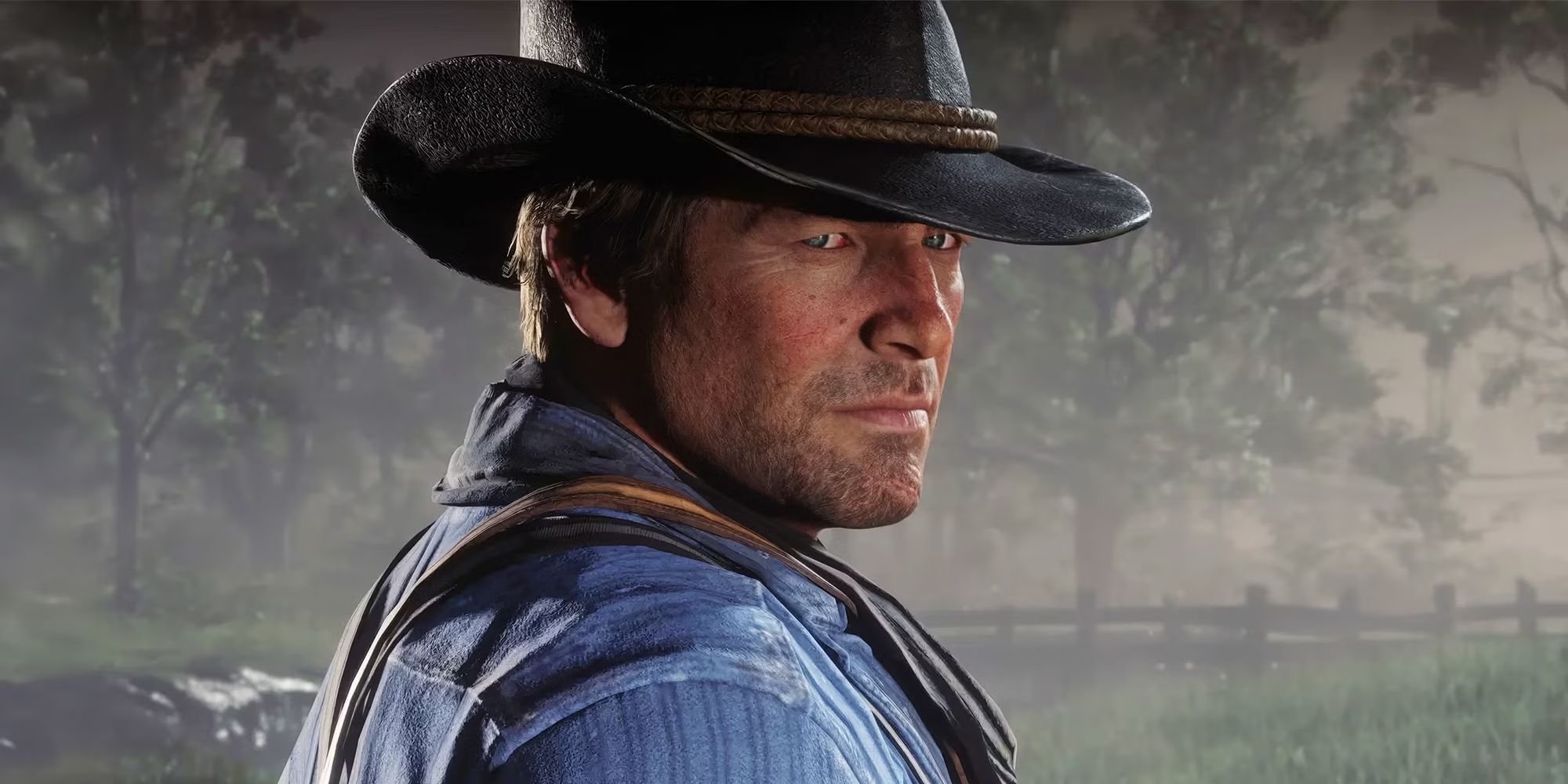
I have lost embarrassing amounts of time in Red Dead Redemption 2 doing absolutely nothing useful. Arthur Morgan wakes up at camp. Coffee. Somebody starts an argument near the fire. The whole game is a vibe. Dutch is giving another speech to whoever is unlucky enough to be standing nearby. My horse needs brushing. There is a stranger somewhere outside Valentine who probably has a completely unnecessary problem. Three real-world hours later, whatever story mission I intended to start remains untouched.
That is the magic trick Rockstar pulled off. Arthur belongs to the Van der Linde gang in 1899, with the age of outlaws closing around people who keep insisting there is still one more score between them and freedom. Dutch’s promises gradually sound different as plans collapse. Arthur writes and sketches in his journal, and those private observations reveal a man far more thoughtful than his job description suggests. Then the game can suddenly snap into huge cinema. The gang walking toward Braithwaite Manor together remains an all-timer because all that slow camp life has taught you exactly who is marching beside Arthur. The world is ridiculously detailed. The people are why you stay in it.
2 'The Legend of Zelda: Ocarina of Time' (1998)

Hyrule Castle Town is cheerful when Link is a child. People dance. Shops are open. Dogs wander around. There is music everywhere. Then Link pulls the Master Sword. Seven years disappear. You walk back into the same town as an adult and it is dead. That transition gave The Legend of Zelda: Ocarina of Time a weight few games had attempted in 1998. The adventure begins with a Kokiri boy leaving the forest for the first time and eventually becomes a story about returning to familiar places after time has damaged them. Lake Hylia is drained. Zora’s Domain is frozen. Castle Town belongs to ReDeads. Even the Forest Temple feels wrong in a fascinating way, full of twisted hallways, disappearing Poe sisters, and music that sounds like the building itself is uncomfortable.
Plenty of its innovations became ordinary videogame language. Z-targeting helped solve 3D combat. Context-sensitive buttons made a controller do far more than its button count suggested. Epona made Hyrule Field feel like somewhere you traveled instead of crossed. Yet the technical achievements are almost beside the point now. Play the Song of Storms inside that windmill and watch an entire generation of players immediately know what happens next.
1 'The Legend of Zelda: Breath of the Wild' (2017)

The first old man you meet gives you a torch. You can use it to light fires. Or hit enemies with it. Or set grass on fire. Or ignore the old man completely, climb a tree, steal his baked apple, wander toward a snowy mountain wildly underprepared, nearly freeze to death, and accidentally discover that cooking peppers might solve the problem. That freedom is The Legend of Zelda: Breath of the Wild. Link wakes after a hundred years to a ruined Hyrule and receives the usual enormous responsibility of stopping Calamity Ganon, but the game practically refuses to nag you about how you get there.
he Great Plateau teaches its rules, hands you four abilities, and then gets out of the way. Metal conducts electricity. Fire creates updrafts. Rain makes cliffs slippery. Trees can become bridges if your first solution to a ravine is chopping one down. A lightning storm can turn the sword on your back into an extremely funny death sentence. And everyone seems to have their own story. Someone shield-surfed down Hebra for an hour. Someone reached Eventide Island too early and suddenly had to survive without their equipment. Someone saw a dragon curling through the sky and abandoned whatever important quest they were doing just to follow it. That is why Breath of the Wild belongs here. It gives you Hyrule, teaches you enough to become dangerous, and then lets curiosity ruin your entire evening.
KioskNews shows a cleaned-up reading view extracted from the publisher’s page — the original always lives on their site, not ours.