Netflix’s New ‘Willy Wonka’ Series Just Broke a 21-Year Record for All the Wrong Reasons

Amanda M. Castro is a Network TV writer at Collider and a New York–based journalist whose work has appeared in Newsweek, where she is an Associate Editor, and The U.S. Sun, where she previously served as a Senior Consumer Reporter.
She specializes in network television coverage, delivering sharp, thoughtful analysis of long-running procedural hits and ambitious new dramas across broadcast TV. At Collider, Amanda explores character arcs, storytelling trends, and the cultural impact of network series that keep audiences tuning in week after week.
Born and raised in Puerto Rico, Amanda is bilingual and holds a degree in Communication, Film, and Media Studies from the University of New Haven.
Some fictional worlds probably shouldn’t become reality competition shows, and Willy Wonka’s Chocolate Factory is one of them. Roald Dahl’s Charlie and the Chocolate Factory is already a story about temptation, greed, entitlement, and the rare virtue of simply being a decent person. Netflix’s Wonka’s The Golden Ticket takes all of that and asks a much simpler question: What if there were $3 million at the end?
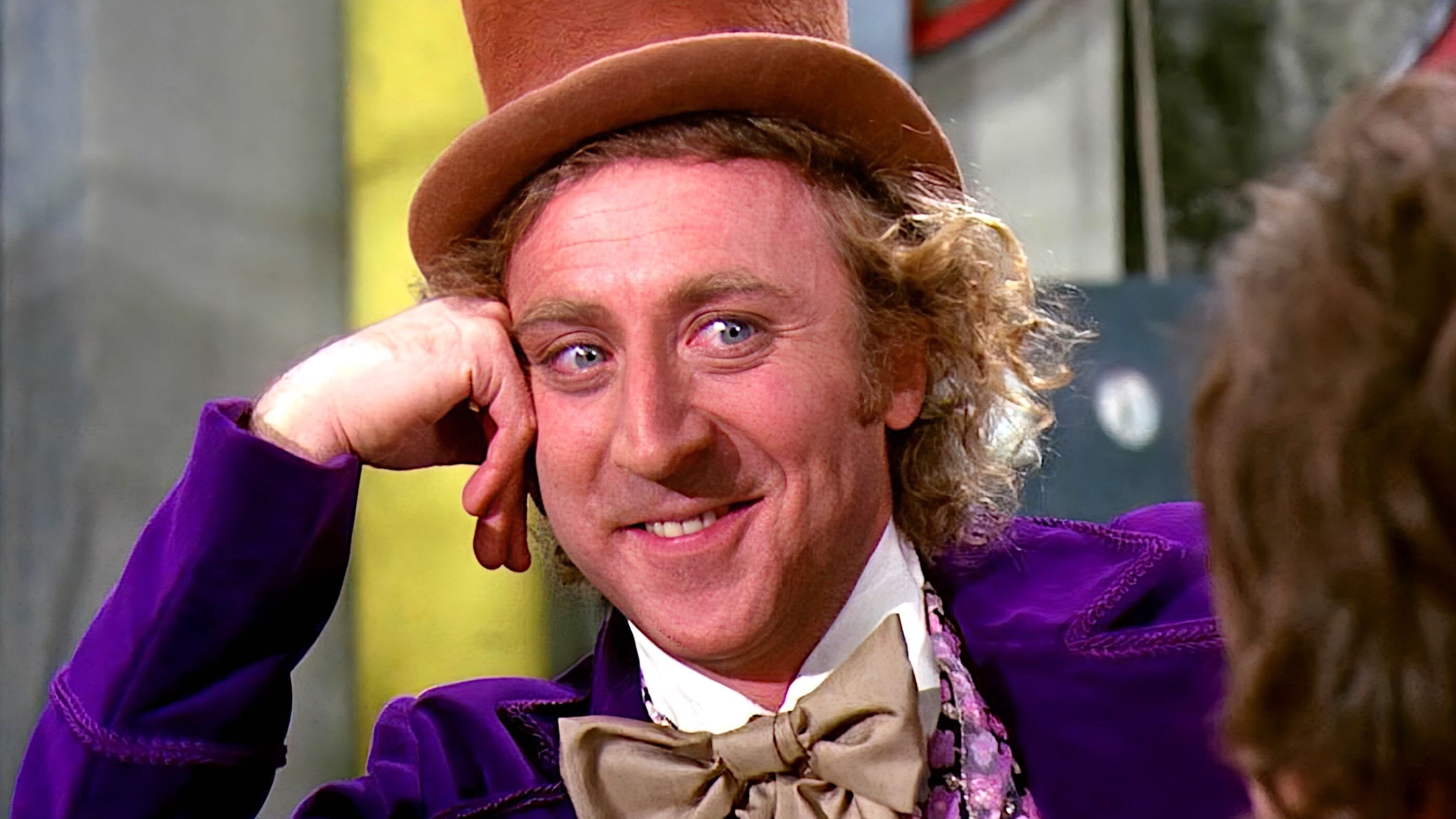
The answer, judging by the show’s Rotten Tomatoes reception, isn't very sweet. Wonka’s The Golden Ticket finished its first season with an 11% critics’ score and a 30% audience score on Rotten Tomatoes at the time of writing, giving it the lowest audience score among the major Willy Wonka adaptations. That puts it below Tim Burton’s much-maligned Charlie and the Chocolate Factory, which currently sits at 51%, while the 1971 Willy Wonka & the Chocolate Factory has an 87% audience score and 2023’s Wonka leads the pack with 90%.
Netflix’s ‘Wonka’s The Golden Ticket’ Turns Charlie Bucket’s Story Into a Money Game

Twelve Golden Ticket holders and their chosen partners enter a painstakingly recreated Chocolate Factory, where they face physical challenges, puzzles, temptations, and eliminations inspired by Dahl’s story. The winner, Gabrielle Wright, ultimately walked away with $3 million, paid over 30 years.
There’s nothing inherently wrong with adapting Wonka into a competition; in fact, the factory itself is spectacular. The production reportedly built an enormous 88,000-square-foot set, complete with a 27,000-gallon chocolate river. The show's physical world is arguably the closest thing it has to the imagination that inspired it.
Dahl’s story isn’t really about winning a prize. Charlie doesn’t become special because he figures out how to beat everyone else; he isn’t the smartest child, the most strategic or the most aggressive. He wins because, when given every opportunity to behave selfishly, he doesn’t. The Golden Ticket gets him into the factory, but his character is what gets him out with Wonka’s ultimate reward.
Netflix’s competition, meanwhile, is built around the exact opposite incentive, as the contestants are there to beat one another for $3 million. The series repeatedly frames its challenges as tests of character. Netflix describes the contestants as being tested “physically, mentally and morally,” and the finale even uses a jury of eliminated players to help determine which finalist deserves to win.
Gene Wilder’s AI Voice Is Nostalgia Without the Magic

Netflix and the Gene Wilder Estate received permission to recreate the late actor’s voice using AI, allowing his version of Wonka to serve as the show’s unseen guide. Wilder’s widow, Karen B. Wilder, said the decision was intended to honor the humor, wonder, and heart he brought to the character.
Wilder’s Wonka worked because he did the work with his pauses, his strange little inflections, and the glint of mischief in his delivery — none of those qualities can be separated from the actor himself. His performance could make a perfectly ordinary sentence sound like Wonka might either hug you or send you tumbling down a chocolate chute.
Instead, the voice becomes an uncanny reminder that you’re watching a modern production trying to borrow credibility from something it didn’t create. Rather than making the factory feel magical, it makes the nostalgia feel engineered, and that’s particularly unfortunate for a show already struggling to establish an identity of its own.
‘Wonka’s The Golden Ticket’ Is Too Much Like Every Other Reality Show

Once the novelty of the Chocolate Factory wears off, Wonka’s The Golden Ticket is still a reality competition, which naturally means alliances, eliminations, strategy, contestants worrying about where they sleep, people sitting around discussing whether they can trust one another, and the machinery of reality television keeps grinding away beneath all the candy-colored production design. A Willy Wonka competition should feel as if somebody opened a door into a child’s imagination and forgot to close it. Instead, Wonka’s The Golden Ticket often feels like a standard reality show with a chocolate river.
The series debuted at No. 2 on Netflix’s English-language TV chart with 4.6 million views in its opening week, putting it alongside Love Is Blind Season 10 and making it one of Netflix’s stronger unscripted launches in recent years. So Netflix may have found exactly what it wanted: a recognizable IP wrapped around a reliable reality-TV format, capable of attracting curious viewers even if critics aren’t buying it. Wonka’s The Golden Ticket is a rather joyless answer to a question nobody really needed to ask. Dahl gave us a story about a poor boy who gets everything because he refuses to become greedy, but Netflix gave us 24 contestants competing for $3 million.
KioskNews shows a cleaned-up reading view extracted from the publisher’s page — the original always lives on their site, not ours.