MLB Lockout 101: In-depth guide to likely work stoppage and what it means for free agency, 2027 season, more
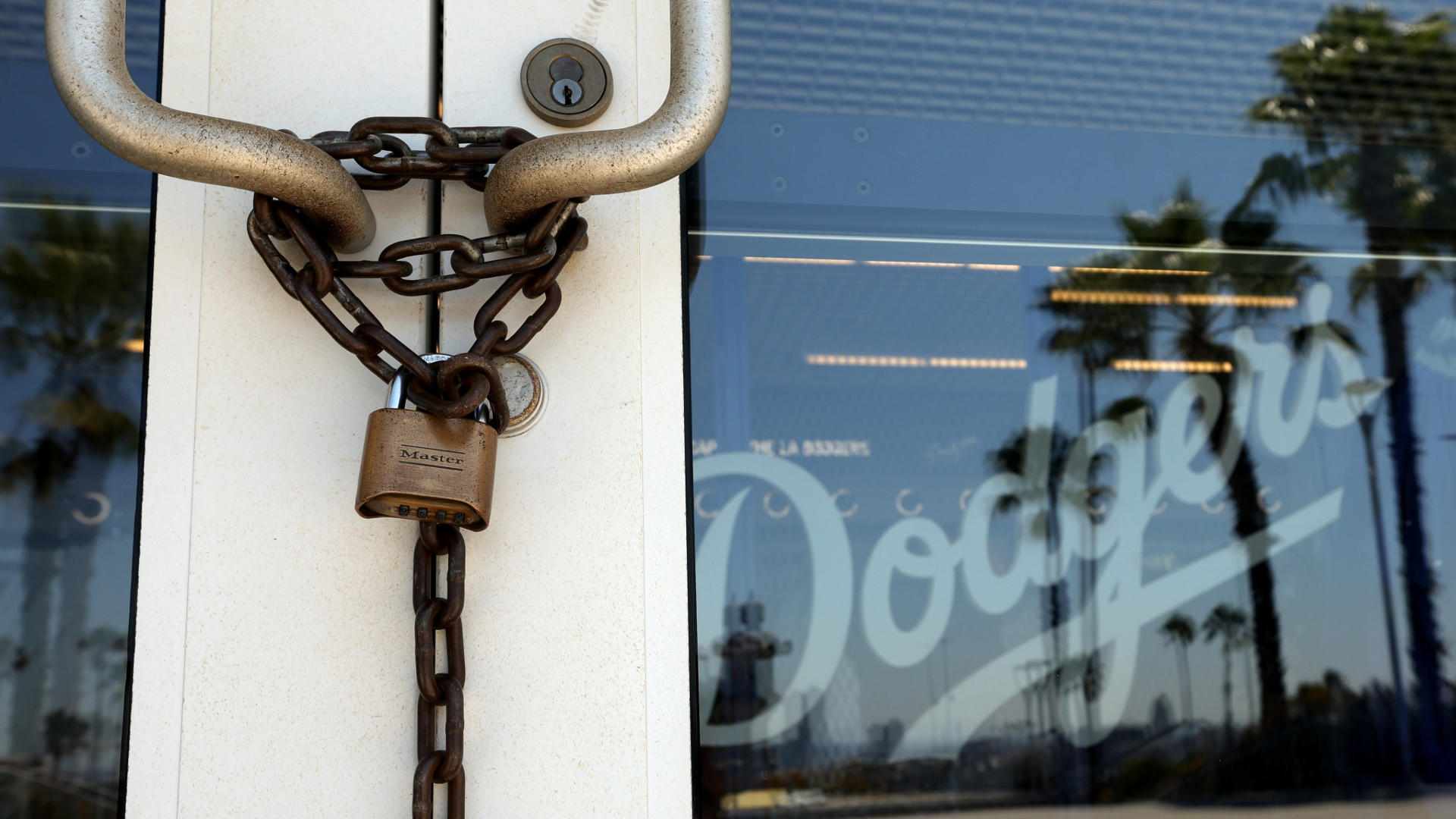
Major League Baseball's players and owners are in the process of negotiating a new collective bargaining agreement, or CBA. The CBA is the accord that governs the working relationship between the players, as represented by their union, the MLBPA, and the clubs. It covers pretty much every aspect of that relationship that you can imagine, all the way from the overarching salary and payroll structure to daily meal money and days off during the season.
Not surprisingly, it's the economic platform of the game that's the toughest to negotiate because that is always, in essence, a fight over money, or how the league's substantial revenues will be divided up between teams and players. That's keenly relevant right now because players and owners are sparring over whether or not MLB will have a cap on salaries moving forward. The owners have renewed their push for a salary cap after not aggressively (or at least not this aggressively) pursuing one since the 1994-95 players' strike.
Matters are such that the owners are expected to implement a lockout of the players after the current CBA expires at 11:59 p.m. ET on Dec. 1 of this year, or a little more than a month after the World Series ends.
MLB CBA negotiations timeline: Where things stand as Dec. 1 expiration creeps closer
Dayn Perry

What is a lockout?
There are two kinds of labor stoppages in MLB: the strike and the lockout. A strike is when the labor side – players as represented by their union, in this instance – puts a halt to operations. A lockout is when the management side – team owners and the commissioner's office doing their bidding, in this instance – initiates the stoppage. In plainspoken terms, a strike is a refusal to work, and a lockout is a refusal to permit work to be done. For those on the outside, the result is the same, in that there's no Major League Baseball during a lockout or strike.
What does a lockout mean?
When a lockout is in force in MLB, as is expected to be the case after this CBA expires, nothing happens on the major-league front. And we do mean nothing.
There's an almost literal element to a lockout in that anyone on the 40-man roster of any MLB club will be locked out of any team facility for the duration of the stoppage. That also means no access to team trainers or team physicians or members of the coaching staff. Beyond that, there's a transaction freeze in place starting the moment the lockout begins (more on that in a moment).
Additionally, MLB is expected to remove player images and videos from the league's official website, MLB.com, and player images and even names would be removed from articles on MLB.com. A league memo acquired by The Athletic also forbids contact between players and anyone on the club side, at least to the greatest extent possible. The latter extends all the way down to a recommendation against sending holiday cards to players who have been locked out.
Bottom line: A lockout means the sport at the highest level is on hold across all fronts until further notice. "Further notice" almost certainly means when a new CBA is agreed to in principle and then ratified by both sides.
How will a lockout affect free agency and the 2026-27 offseason?
As just noted, a lockout means a transaction freeze, which means no players on any 40-man rosters can be traded and no major-league free agents can be signed for as long as the lockout lasts. It's worth noting that in the run-up to the last lockout of 2021-22, we saw a swarm of free agent signings just before the lockout began. Again, there's roughly a month between the end of the World Series and the expiration of the CBA, so there is some calendar available for those looking to make trades or signings (once the five-day exclusive negotiating window closes and qualifying offers are extended) before the freeze sets in. We could see that flurry of moves again, particularly in light of proposed changes to contract structures that would limit lengths and dollar amounts. Would players like Tarik Skubal, who are eyeing mid-nine-figure contracts, want to get their deals done quickly and hope they're grandfathered in?
That said, there's a lot more uncertainty about what the game's financial structure will look like after this CBA negotiation concludes, at least relative to the last time we did this. That may have a chilling effect on the trade and free agent markets leading up to the lockout date. Clubs don't like mass uncertainty when it comes to making major roster decisions, and they may prefer to see what the league's salary and revenue sharing systems will look like for the next half-decade (the term of each CBA these days) before committing to signings and trades.
If the lockout spans a meaningful amount of time, then that means a great deal of usual winter business will be put on hold. The winter meetings and the major-league portion of Rule 5 Draft are typically held in the first half of December, so those could be imperiled. Last time out, the major-league portion of the Rule 5 Draft was indeed canceled, although the November Rule 5 protection deadline had already passed. If the lockout stretches into January, then the exchange of arbitration figures between eligible players and their teams will be delayed. Get well into late January and early February without an agreement, and arbitration hearings and the spring training schedule could be shortened or imperiled altogether. Needless to say, local businesses and elected officials in Florida and Arizona would very much not like that. That, though, could be the least of our worries.
Will this affect the 2027 season?
It very well might. It's too soon to say, but there's the real potential for disruption and, perish the thought, maybe even cancellation of the 2027 season. The latter is of course the worst-case scenario, and there's no reason to think there's a strong threat of that possibility, at least this far out. During the last lockout, though, the two sides weren't fighting over quite as much territory, and we very nearly lost games from the regular-season schedule. Lest anyone forget, the last time the owners vigorously pushed for a salary cap, we wound up losing the World Series.
There is a wrinkle of note that may make a worst-case scenario less likely. If the lockout drags on long enough to cancel 60 or more games from the 2027 MLB season, then the fallout could be significant. The Athletic recently reported that if the lockout extends into late May or so and costs at least 60 games, then most of the league's national broadcast and streaming contracts would be extended for another year, through 2029. That matters because Manfred and the league hope to bundle and centralize team streaming rights and share those revenues equally, and the current timeline would theoretically allow that to happen at the same time the national contracts are up for renegotiation in 2028. Tacking on another year to those national contracts would push back the significant windfall that owners and the league are expecting from that new media rights structure. This amounts to a major incentive, at least on the league side, to agree to a new CBA before June arrives.
And what about the minor leaguers and their 2027 season?
Just players on the 40-player roster will be affected by the lockout, as mentioned. While that includes some minor leaguers, the vast majority of minor-league players are not on the 40 and thus will not be impacted. Minor leaguers now have their own CBA independent of MLB players, and that CBA is still in force. Thus, they're not being locked out. The minor-league season will proceed as normal, albeit minus those prospects on their respective 40s, just as it did during the 2021-22 lockout. So, yes, there will be affiliated professional baseball going on even if the lockout stretches into the 2027 regular season.
Why are we having a lockout in MLB?
To hear commissioner Rob Manfred tell it, the lockout is designed to hasten negotiations between the two sides and speed up the process of forging a new CBA that, assuming it arrives in time, will cover the 2027-31 MLB seasons. Manfred cited this very reason leading up to the lockout of 2021-22, and during the drumbeat phase of this approaching lockout, he said this:
"In a bizarre way, it's actually a positive. There is leverage associated with an offseason lockout, and the process of collective bargaining under the NLRA (National Labor Relations Act) works based on leverage. The great thing about offseason lockouts is the leverage that exists gets applied between the bargaining parties."
After implementing the 2021-22 lockout, Manfred said the drastic decision was designed to "jumpstart the negotiations and get us to an agreement that will allow the season to start on time."
Actions, though, hold sway over words, and after locking out the players, MLB owners didn't make their first CBA proposal to the players for another six weeks or so. In reality, the purpose of a lockout is to preempt a strike. The union can time a strike so as to exert maximum leverage and apply maximum pressure on ownership, say, during the stretch drive or soon after Opening Day or just in advance of the playoffs. From a fan and observer standpoint, though, at least this gets the clock started before games hang directly in the balance.
Has this happened before?
Yes. The forthcoming lockout will be the 10th labor stoppage in modern MLB history – five strikes and, soon, five lockouts. Here's a quick look at the nine lockouts and strikes that have already happened:
| MLB work stoppage | Dates |
|---|---|
1972 strike | April 1-13, 1972 |
1973 lockout | Feb. 8-25, 1973 |
1976 lockout | March 1-17, 1976 |
1980 strike | April 1-8, 1980 |
1981 strike | June 12 - July 31, 1981 |
1985 strike | Aug. 6-7, 1985 |
1990 lockout | Feb. 15 - March 18, 1990 |
1994-95 strike | Aug. 12, 1994 - March 31, 1995 |
2021-22 lockout | Dec. 2, 2021 - March 10, 2022 |
As you can see, there are occasions in which the stoppage is lengthy and disruptive, and in other instances they barely register. Given the complex nature of the current negotiation, the expectation is that the upcoming lockout won't be resolved quickly. There is, though, some runway between "immediate resolution" and "2027 season greatly harmed."
What are the key issues that must be resolved?
It's the salary cap, first and foremost. MLB has coveted a capped system for decades, but for the MLBPA, the strongest union in sports, a cap is a complete nonstarter. If the stoppage turns into a war, then it will be because owners continue pushing for a cap and players continue to resist. Let it be known that despite the public narrative, the main advantage of a salary cap for owners is not that it will promote competitive balance, but rather that a payroll cap figures to increase franchise values.
Otherwise, changes to the way the league shares local revenues are also up for negotiation. MLB already shares local revenues at significant levels, but Manfred and owners want to share them more equally among teams, perhaps similar to what the NFL does. The good news is that the union has already shown a willingness to discuss such changes and indeed has proposed something similar. That's common ground on a negotiation that figures to need as much of that as possible. As well, increasing the sharing of local revenues, especially local broadcast revenues, would help achieve what the league claims a cap would achieve and do so without a 1994-95 scale of work stoppage.
Given the all-encompassing nature of the CBA, many other issues will need to be sorted out. Those may include the length of the regular season, postseason format, the minimum salary, any changes to free agency and salary arbitration, the implementation of an international draft, retention of the qualifying offer system, active roster sizes, draft bonus pools and eligibility, and -- if retained -- the structure of the Competitive Balance Tax system. That's not an exhaustive list, and all of it has to be hammered out, at least in terms broadly agreeable to both sides, for the lockout to end. For now, though, the league hasn't moved off its demand for a cap, and until that changes -- or until the union acquiesces (highly unlikely) -- that issue will determine how long the lockout lasts.
Is there any reason to hope the lockout will end before the 2027 season is damaged?
Yes, there is. Once we get into spring training and beyond, any continued shutdown costs clubs and players money. MLB owners have a significantly larger war chest than the players do, but neither side relishes missed broadcast and gate revenues or paychecks. As detailed above, there's heavy incentive to get this resolved before the 60-game mark of the regular season because of broadcast contracts. Along similar lines, with attendance continuing to rise and revenues also increasing each year, the game is in a relatively healthy spot. Pace-of-play initiatives are broadly popular among paying customers, as is the implementation of the ABS challenge system. Expansion to 32 teams is probably also on the horizon. All of that adds up to a potentially lucrative glut of national broadcast contracts, and a lockout that cuts the 2027 season to ribbons would do great harm to what may be MLB's most important business-side objective of all right now. The 1994-95 strike also still provides a roadmap to how much damage the "nuclear" outcome can do to the sport.
Every labor stoppage is a skirmish over money, but the prospect of losing a hunk of the money they're fighting over can reveal shared interests and the foundations of compromise. Therein lies the hope for those of us on the outside.
KioskNews shows a cleaned-up reading view extracted from the publisher’s page — the original always lives on their site, not ours.