CONSTITUTION @ 30: The scales of justice shift: The women who made Constitutional Court history
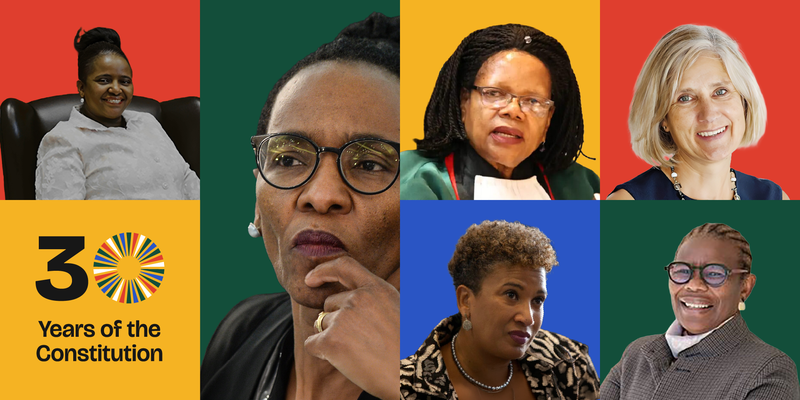
When South Africa’s Constitutional Court was established in 1994, just two of its 11 founding judges were women: Yvonne Mokgoro and Kate O’Regan.
Thirty-two years later, the country’s highest court crossed a historic threshold when women became the majority on its permanent Bench for the first time.
The appointments of justices Nambitha Dambuza-Mayosi and Katharine Savage in May 2026 brought the number of women to six, led by Chief Justice Mandisa Maya, the first woman to occupy South Africa’s highest judicial office.
The majority was short-lived. Justice Zukisa Tshiqi retired at the end of May, leaving five women among 10 permanent judges.
Nevertheless, the milestone represents a remarkable transformation of an institution entrusted with defending the constitutional principles of equality, dignity and freedom.
Their journeys to the Bench are as varied as the judgments they have delivered – from matrimonial-property rights and parental leave to disability rights, professional freedom and government accountability.
Mandisa Maya: Breaking judicial barriers
Born in St Cuthberts near Tsolo in the Eastern Cape in 1964, Mandisa Maya began her legal career as a court interpreter and prosecutor in Mthatha.
She studied at the University of Transkei and the University of Natal before obtaining a master’s degree from Duke University in the United States on a Fulbright Scholarship.
Her career has been characterised by a succession of firsts.

In 2017, she became the first woman president of the Supreme Court of Appeal. In September 2024, she became South Africa’s first female chief justice.
Her judicial work has addressed constitutional accountability, electoral law and the exercise of public power.
In a 2023 Constitutional Court judgment concerning independent candidates, Maya examined the constitutional implications of electoral reforms allowing individuals to contest national and provincial elections without belonging to political parties.
She has also championed women’s advancement in the judiciary through the International Association of Women Judges.
Nonkosi Mhlantla: Justice beyond the printed page
Born in Port Elizabeth, now Gqeberha, in 1964, Nonkosi Mhlantla studied law at the University of the North before establishing her own legal practice.
She joined the Eastern Cape Division of the High Court in 2002, the Supreme Court of Appeal in 2009 and the Constitutional Court in 2015.
Her judgments have addressed criminal justice, equality and the interpretation of legislation affecting vulnerable communities.
In May 2025, Mhlantla authored the judgment in Blind SA v President of the Republic of South Africa.
The case concerned the rights of blind and print-disabled people to access books and other copyrighted material in formats they could use.
The court granted interim constitutional protection while Parliament worked towards legislative reform.
The judgment demonstrated how technical copyright provisions could create barriers to education, information and participation in society.
Leona Theron: From Wentworth to the apex court
Raised in the working-class Durban community of Wentworth, Leona Theron studied law at the University of Natal before completing a master’s degree at Georgetown University in the United States.
In 1999, aged 32, she became one of South Africa’s youngest High Court judges.
She joined the Constitutional Court in 2017, becoming its first coloured woman justice.
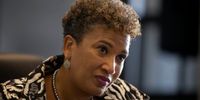
Her judicial career has encompassed criminal procedure, administrative fairness and constitutional rights.
In Mutsila v Municipal Gratuity Fund, decided in August 2025, Theron authored a unanimous judgment concerning the distribution of pension death benefits.
The case arose after a municipal employee died in a workplace accident, leaving a widow and children whose financial security depended partly on the pension fund’s decisions.
The court examined the legal obligations governing the investigation of dependants and allocation of benefits.
The judgment illustrated how statutory interpretation can have immediate consequences for families confronting bereavement and financial hardship.
Zukisa Tshiqi: Challenging apartheid’s legacy
Born in the Eastern Cape in 1961, Zukisa Tshiqi studied law at the University of the Witwatersrand.
Before entering private practice, she worked as a legal coordinator for the South African Council of Churches during the final years of apartheid.
She subsequently practised as an attorney and served as a senior commissioner at the Commission for Conciliation, Mediation and Arbitration.
Appointed to the High Court in 2005 and Supreme Court of Appeal in 2009, she joined the Constitutional Court in 2019.
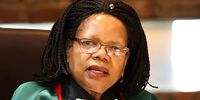
One of her significant judgments was Sithole v Sithole in 2021.
The case challenged apartheid-era matrimonial-property legislation that discriminated against black women married before 1988.
The court declared the discriminatory provisions unconstitutional, strengthening women’s matrimonial-property rights.
Tshiqi also authored the landmark 2025 Van Wyk judgment, which found unequal parental-leave provisions unconstitutional and established a framework allowing parents to share leave.
She retired in May 2026 after more than two decades on the Bench.
Nambitha Dambuza-Mayosi: Equality in marriage
Born in King William’s Town, now Qonce, in the Eastern Cape in October 1964, Nambitha Christabel Dambuza-Mayosi obtained her BProc and LLB degrees from the University of Natal before completing an LLM at Tulane University in New Orleans.
She practised as an attorney from 1992, became a permanent Eastern Cape Division of the High Court judge in 2005 and joined the Supreme Court of Appeal in 2015, later serving as acting deputy president.
Appointed to the Constitutional Court in May 2026, she brought extensive experience in commercial, competition and constitutional law.

In October, she authored the unanimous judgment in GD v Minister of Home Affairs, declaring section 7(7)(c) of the Divorce Act unconstitutional.
The provision discriminated between women married before and after November 1984 under certain matrimonial-property arrangements.
The ruling addressed inequalities affecting women’s financial interests when marriages end.
Katharine Savage: Protecting professional freedom
Born in Johannesburg in January 1968, Katharine Mary Savage matriculated at Westerford High School in Cape Town before obtaining BA and LLB degrees from the University of Cape Town.
She subsequently earned an LLM, summa cum laude, from the University of Notre Dame in the United States.
Her early career included mediation work during South Africa’s first democratic elections, constitutional litigation at the Legal Resources Centre and service as a CCMA commissioner.

She became a Western Cape High Court judge in 2015 and served in the Labour Appeal Court before joining the Constitutional Court in May 2026.
That month, Savage authored the unanimous judgment in Solidarity Trade Union v Minister of Health.
The court struck down provisions of the National Health Act requiring healthcare practitioners to obtain certificates of need, finding that they irrationally and unjustifiably restricted constitutional freedom to choose a profession.
More than a numerical milestone
Section 174(2) of the Constitution requires consideration of the need for the judiciary to reflect South Africa’s racial and gender composition.
The emergence of a female-majority Constitutional Court, however briefly, marked an important milestone in that transformation.
More than three decades after Mokgoro and O’Regan took their places on the founding Bench, women have moved from a small minority to the centre of South Africa’s constitutional jurisprudence. DM

This story is part of a series marking 30 years since the signing of the Constitution. The series has been made possible, in part, by the support of the Friedrich Naumann Foundation.
KioskNews shows a cleaned-up reading view extracted from the publisher’s page — the original always lives on their site, not ours.