Mount Scopus buys a dog park to expand its Caulfield ‘mega campus’
A prominent Melbourne private school with plans for a “mega campus” will expand further after securing an additional 2.5 hectares in a land deal locals fear will diminish public amenity.
Mount Scopus Memorial College announced the purchase of two additional parcels of land in Caulfield, in Melbourne’s south-east, on Wednesday at a gala event attended by Acting Prime Minister Richard Marles and Shadow Treasurer Tim Wilson.
The college, the state’s largest Jewish school, had already secured a 7.5-hectare parcel of land on the western side of Caulfield Racecourse, which it purchased for $195 million from the cash-strapped Melbourne Racing Club in 2024.
The school had until next month to exercise its two-year option on the land, which would then lead to a full contract with a one-year settlement.
At a masterplan launch on Wednesday, the college’s Project Generation chair David Gold confirmed the college would buy the site.
But it was also announced the college had purchased two additional sites adjacent to the racecourse “at a nominal additional cost”, taking the overall footprint to 10 hectares.
Gold said it would be used for The Centre for Jewish Life, and include the college, a sports and aquatics centre, 1800-seat performing arts centre and retail precinct with cafes and restaurants available for community use outside school hours.
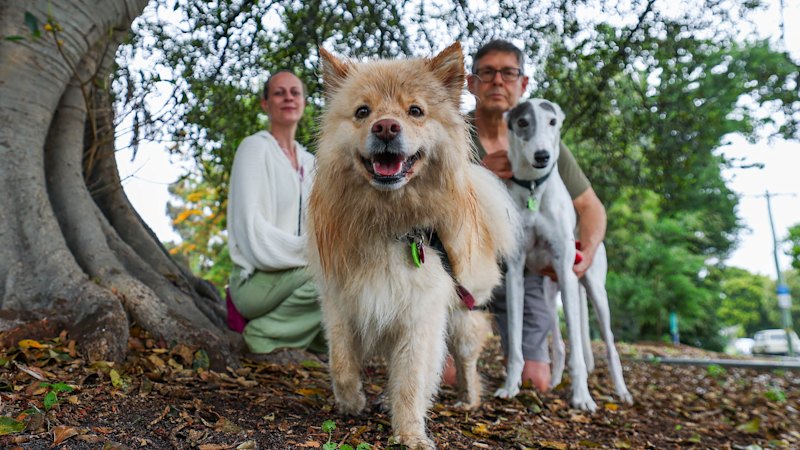
One of the additional sites purchased from the state government is known as Pawfield Park, a fenced off-leash dog park on the western side of the racecourse managed by Glen Eira Council.
The park hosts a number of mature trees, including a decades-old Moreton Bay fig, which Glen Eira Council chief executive Lucy Roffey said met the size thresholds for protection under local laws.
At a council meeting in March, residents asked the council to protect the tree, along with other mature trees on the site, given their role as a source of food and shelter for wildlife.
Krystyna Duszniak, a dog owner and member of the Glen Eira Climate Action Group, said her main concern was not the dog park but the potential loss of roughly 70 mature trees at the park including river red gums, lemon-scented gums and black wattle trees which host a resident population of tawny frogmouths.
She said seasonal visitors to the park include yellow-tailed black cockatoos which come to feast on pine cones, while frequent visitors included fruit bats, sulphur-crested cockatoos and rainbow lorikeets.
“It’s like an urban oasis,” she said.
“You can go there at night, in the heat and in the rain, and you will get shelter from the trees. You hear the flying foxes and see the tawny frogmouths, and you know you are in a special place.”
Duszniak said while she understood the importance of the development to Melbourne’s Jewish community, she hoped that the significance of the trees would be considered in development plans.
“A land swap will not address the issue of the loss of these trees,” she said.
“Especially precious trees like these that have literally taken decades to grow.”
Fellow action group member Tam de Silva said losing 2.5 hectares of open space was significant in a municipality with limited green space.
“Some people might say ‘but it’s close to Caulfield Racecourse’, but there aren’t any trees on the racecourse, and it’s not open all the time either,” she said.
Gold said the school was committed to keeping the park open for as long as practicable and would give residents notice of its closure.
“There is also a separate fenced off-leash dog park inside the Caulfield Racecourse Reserve, less than 200 metres away,” he said.
Roffey said the council wanted the value of the land sale to be made public, so an equivalent amount could be reinvested into a replacement open space.
“Glen Eira has the least open space per person of any municipality in Victoria, which is why it is vital that Pawfield Park is replaced with at least an equivalent amount of publicly accessible open space,” she said.
The co-educational private Jewish school has engaged New York-based architect Daniel Libeskind to work on the project.
Libeskind, who was in Melbourne for the announcement, was behind Berlin’s Jewish Museum and the masterplan for rebuilding the World Trade Centre after the September 11 terrorist attacks.
There are currently more than 1100 students enrolled across Mount Scopus’ three campuses in Burwood, Caulfield South and St Kilda East.
Annual tuition fees for students in Years 9 to 11 this year are $45,320 and $44,095 for Year 12 students.
The new Caulfield “mega campus” will consolidate the school’s three campuses and end a decade-long search for a new site.
Each of the three campuses will be sold following the move to Caulfield which will serve students from early learning to year 12. Students’ transition to the site will occur in stages from 2030.
The college estimates that relocating to Caulfield will mean more than 95 per cent of students will live within five kilometres of their school.
KioskNews shows a cleaned-up reading view extracted from the publisher’s page — the original always lives on their site, not ours.