Contempt of court: Why defying a judge’s order is not always contempt
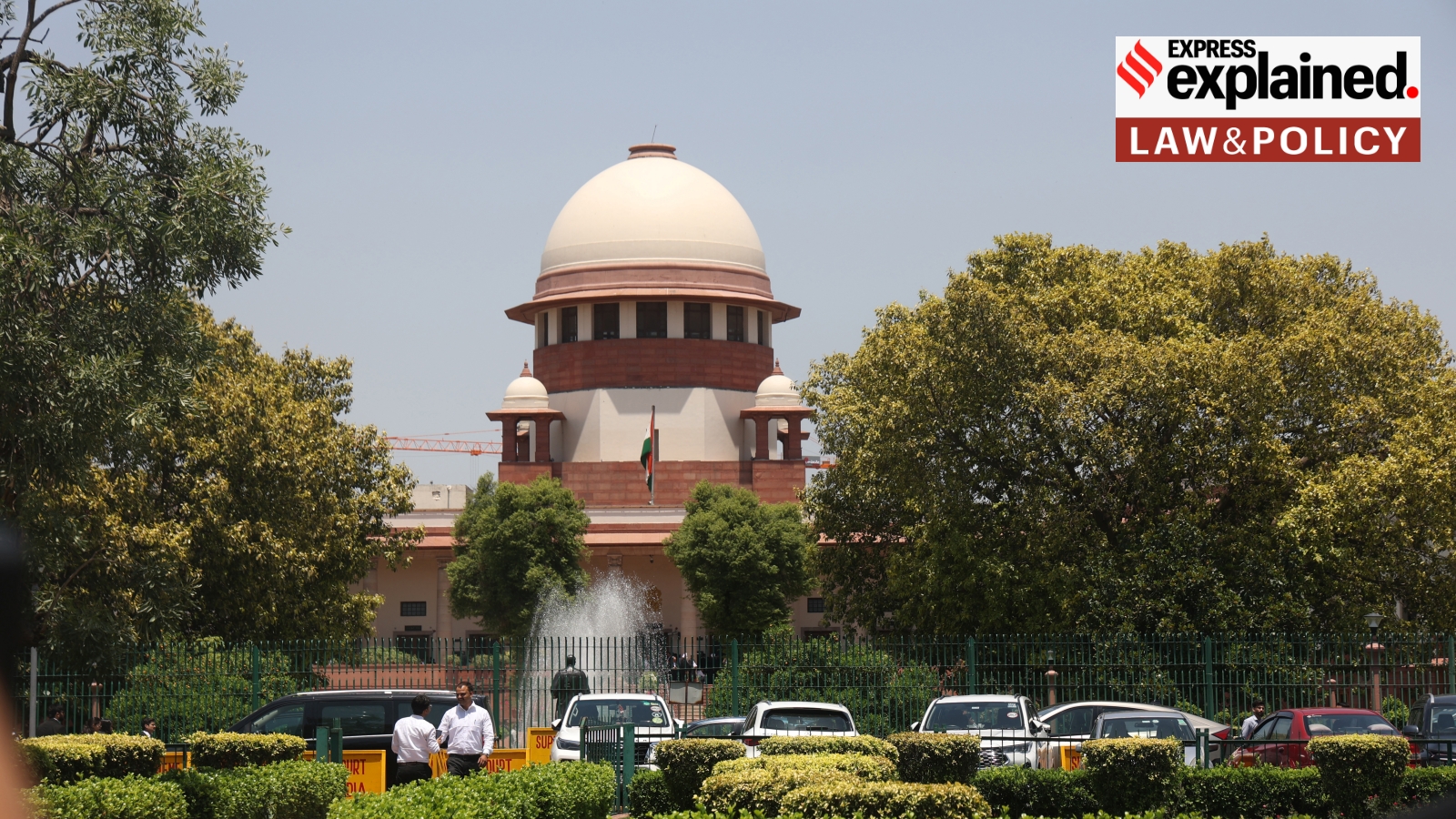
The Supreme Court on Monday came down heavily on an additional sessions judge in Bihar who had convicted his district’s police chief of contempt of court. The bench, headed by Chief Justice of India Surya Kant and also comprising Justices Joymalya Bagchi and V Mohana, in oral observations told the judge to stop acting like “Bahubali” and, in a lighter vein, compared him to Robin Hood and Don Quixote, while questioning his reading of the provision he had relied on.
The judge had relied on Section 384 of the Bharatiya Nagarik Suraksha Sanhita (BNSS), which replaced Section 345 of the Code of Criminal Procedure. The provision gives powers of contempt for offences “committed in the view or presence” of any Civil, Criminal or Revenue Court.
What is the law on contempt? And why is not following a district judge’s orders not contempt?
The case
The 4th Additional Sessions Judge at Sasaram in Rohtas had found the Superintendent of Police guilty of wilfully failing to carry out the court’s directions, convicted him under Section 384 of the BNSS and fined him Rs 1. The judge directed the registration of an FIR for perjury against the victim in a kidnapping case.
The police officer had challenged the Sessions Judge’s ruling before the Patna High Court. The High Court stayed any further action while castigating the judge, which prompted him to move the Supreme Court against the remarks.
In the Supreme Court hearing Monday, Justice Bagchi observed that failure to comply with a judge’s direction is not a crime committed “in the face of the court”. If the judge believed police were defying his orders, he said, the matter should have been left to the High Court.
The top court was essentially drawing out the lines that run through contempt law, which deals with different kinds of contempt through different procedures and forums.
Constitutional courts
Story continues below this ad
Punishing for its contempt is a power that flows to courts from the Constitution itself. Articles 129 and 215 make the Supreme Court and the High Courts “courts of record” with the power to punish contempt of themselves. Contempt of courts is also a “reasonable restriction” or a facet of speech that is exempted from the right to free speech.
The primary statute that governs how this Constitutional power is exercised is the Contempt of Courts Act, 1971. The offences under this statute can be broadly categorised as civil and criminal contempt.
Civil contempt is defined as wilful disobedience of a court’s judgment, decree, direction or order, or wilful breach of an undertaking given to a court. For example, Vijay Mallya was held guilty of contempt by the Supreme Court in 2017 for transferring $40 million to his children despite the court ordering him not to do so. In July 2022, it sentenced him to four months in jail and a Rs 2,000 fine, and directed that the money be returned with 8% interest. The order could not be implemented because Mallya never returned to India.
Criminal contempt covers publications or acts that scandalise or lower the authority of a court, interfere with judicial proceedings, or obstruct the administration of justice. In 2020, the Supreme Court began proceedings on its own over two tweets by advocate Prashant Bhushan about the court and the Chief Justice. It held him guilty and fined him Re 1, with three months in jail and a three-year bar from practice if he did not pay.
Story continues below this ad
In 2017, a seven-judge bench had sentenced Justice C S Karnan of the Calcutta High Court to six months in prison, a day after he ordered eight Supreme Court judges to be jailed. He became the first sitting High Court judge to receive a prison sentence for contempt.
There is also contempt as an offence in the penal code, which is more commonly used in district courts.
Contempt ‘in the face’ of the court
When the misconduct takes place inside the courtroom, a faster procedure applies. The Supreme Court and High Courts deal with it under Section 14 of the 1971 Act. Trial courts have the narrower power under Section 384 of the BNSS, the provision used in Rohtas. It covers five offences, including refusing to answer questions and intentionally insulting or interrupting a judge. It allows a fine of up to Rs 1,000, imposed before the court rises that day.
In August 2025, a judge at Delhi’s Tis Hazari courts fined a surgeon facing a murder trial Rs 2,000 for intentionally interrupting proceedings. He had thrown rice on the courtroom floor, which halted the hearing while it was cleaned up and left lawyers suspecting black magic.
Story continues below this ad
However, the decision on whether to act on such conduct largely depends on the judge involved. In October 2025, an advocate tried to throw a shoe at then Chief Justice B R Gavai in court. The Attorney General gave the consent the law requires before a private party can seek criminal contempt action in the Supreme Court. However, a bench of Justices Surya Kant and Bagchi declined to pursue the case, noting that the CJI himself had chosen to ignore the incident.
KioskNews shows a cleaned-up reading view extracted from the publisher’s page — the original always lives on their site, not ours.