American, Israeli Jews report stronger bonds despite challenges of recent years, survey finds
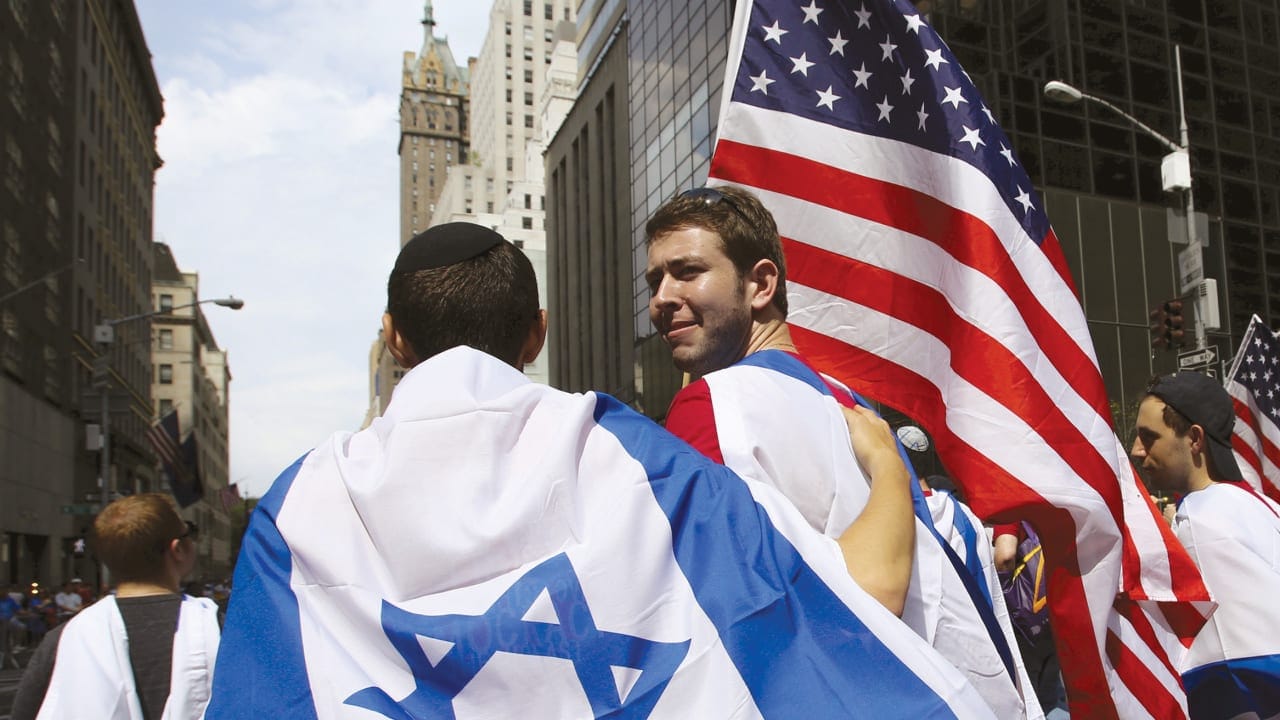
A new survey commissioned by the Jewish Federations of North America (JFNA) has revealed that a large majority of American and Israeli Jews feel a deep and growing sense of shared connection, defying prevailing narratives of a widening chasm between the two communities.
Mimi Kravetz, chief impact and growth officer at JFNA, told The Jerusalem Post, “Over the last three years, a surge in Jewish engagement here at home has come alongside a rising sense of connection to Jews in Israel too.”
“Now there’s an opportunity to strengthen those connections using the kind of relationship-building strategies our data show work, including travel, shlichut [emissary work], and community partnerships that our communities have invested in for decades,” Kravetz told the Post.
Writing in a JTA op-ed on Monday, Kravetz and Rebecca Caspi, senior vice president for Israel and overseas and director general of JFNA’s Israel Office, shared the survey's findings, noting that the survey forms the first part of a two-part analysis exploring where the two communities are aligned and where they differ. “Part two will address where American and Israeli Jews see things differently, and why.”
Caspi and Kravetz pointed out that the last three years have been historic for both communities, marked by the trauma of October 7 and ensuing wars in Israel alongside a dramatic rise in security threats, antisemitism, and attacks on Zionism faced by American Jews at home. While it would be understandable if these separate challenges drove the two populations apart, the data reveals that they actually feel closer to one another than they have in years.

JFNA surveys over 4,000 American, Israeli Jews on shared identity and connection
The findings are detailed in the 2026 JFNA Bilateral Relationship Between American and Israeli Jews research initiative published on the Berman Jewish DataBank, which examined attitudes on peoplehood through two separate national surveys conducted earlier this year. The research comprised a national survey of 2,836 adult Jewish Americans conducted by Burson via text-message recruitment between May 4 and May 27, and a parallel survey of 1,323 Israeli Jewish adults conducted by Shmuel Rosner utilizing the Madad Israeli panel and a haredi (ultra-Orthodox) panel between May and June.
The study explored how both populations view their bilateral relationship, tracking a noticeable rise in what the report termed the “rise in peoplehood” since previous major assessments. According to the survey data, 75 percent of Israeli Jews reported feeling “a lot” or “some” commonality with Jews in the United States. On the American side, 72 percent of respondents reported feeling a similar connection with Israeli Jews, rising significantly from 59 percent in a 2020 Pew Research Center survey, with those reporting they have “a lot” in common jumping from 19 percent to 29 percent.
This strengthening bond is also reflected in how members of both communities characterize their relationship through family metaphors. Among American Jews, the share describing Israelis as extended family or part of their community climbed from 46 percent in 2021 to 62 percent, while those feeling no real connection dropped by more than half from 28 percent to 13 percent. Similarly, the proportion of Israeli Jews categorizing American Jews as extended family or part of their community rose from 45 percent to 53 percent, while those reporting nothing in common dropped from 14 percent to 10 percent.
When asked whether Jews around the world, regardless of where they live, share a common fate and must act accordingly, 78 percent of Israeli Jews and 56 percent of Jewish Americans agreed. Furthermore, strong majorities in both countries rejected the notion that diaspora life is a problem to be solved, with 72 percent of American Jews and 72 percent of Israeli Jews affirming that the Jewish Diaspora is a legitimate form of Jewish life.
The research highlighted that this connection translates directly into action, particularly through philanthropic support following the events of October 7, 2025. The Jewish federation system raised $908 million through its Israel Emergency Campaign to fund recovery efforts on the ground. 79 percent of Israeli respondents and 67 percent of American respondents agreed that American Jewish philanthropy remains important to Israeli society, while 68 percent of Israelis stated that post-October 7 giving made them feel Diaspora Jews genuinely care about Israel.
Travel to Israel strengthens American Jews' sense of shared identity
Beyond broad sentiment, the data demonstrates that physical presence and direct engagement dramatically multiply feelings of commonality between the two populations. Among American Jews, travel frequency correlates directly with a stronger sense of shared identity; those who have traveled to Israel once are 1.7 times as likely to feel real commonality with Israeli Jews, those who have traveled more than once are 3.8 times more likely, and those who have lived in Israel are 11.2 times more likely.
A similar dynamic exists on the Israeli side, where casual tourism does not significantly shift connection levels, but deeper immersion does. Israelis who participate in Jewish communal life while visiting the US are 2.8 times as likely to feel a sense of peoplehood, and those who serve as emissaries, work at summer camps, or live inside an active American Jewish community are 2.6 times as likely. Overall, 87 percent of Israeli Jews with real, engaged contact with American Jews feel commonality, compared to just 52 percent among those with no contact.
When American Jews were asked in open-ended discussions why they feel connected to Israel, the responses revealed a consistent set of core motivations. Respondents frequently pointed to seeing Israel as a safe place for Jews, viewing it as the historical homeland where Jewish identity began, and maintaining a belief that Jews are responsible for one another alongside religious or biblical ties. Others highlighted feeling more whole in Israel, recognizing the necessity created by the Holocaust, viewing Israel as part of their own culture, and taking personal pride in Israelis themselves.
Caspi and Kravetz noted that this reawakening of shared peoplehood directly corroborates findings from a separate, comprehensive study conducted by JFNA that tracked trends in Jewish life in the United States. That separate survey revealed that heightened community engagement, known as the “Surge,” had evolved into a sustained behavioral shift rather than a temporary reaction.
Specifically, the research showed that 38 percent of the American Jewish community is part of the Surge and has maintained an active increase in participation across three distinct areas: communal involvement like attending synagogues or joining advocacy groups, educational exploration, and social connection such as hosting private Shabbat dinners or participating in workplace affinity groups.
“We are in another challenging season for the Jewish people,” Caspi and Kravetz said. “It would be easy to conclude that we have more differences than we have commonalities, and to approach discussions from a place of distance and division. But there is an opportunity in this tense moment to recognize our deep sense that we are one community.”
JFNA urges greater investment in travel and community programs to strengthen Jewish ties
Regarding their recommendations for moving forward, Caspi and Kravetz stated, “Our data confirm that today we feel closer than ever, and we recognize that our lives are shaping each other’s. Perhaps even more importantly, our data show what we can do to strengthen and perpetuate this trend. We need to keep investing in things we know build a connection: more travel, more Israeli emissaries in North American communities, and more programs that put people in real contact.”
“And we need to scale innovation that will enable shared volunteer projects, philanthropic partnerships across both communities, stronger business and professional ties, and digital opportunities to learn from one another. These opportunities can ensure impact when travel is impractical, reach those who are less engaged, and ensure that this sense of connection to and understanding of Jews across the world is accessible to everyone in our greater Jewish family and community,” Caspi and Kravetz said.
KioskNews shows a cleaned-up reading view extracted from the publisher’s page — the original always lives on their site, not ours.