Bullock slams sluggish businesses and hidebound bureaucracy for nation’s work woes
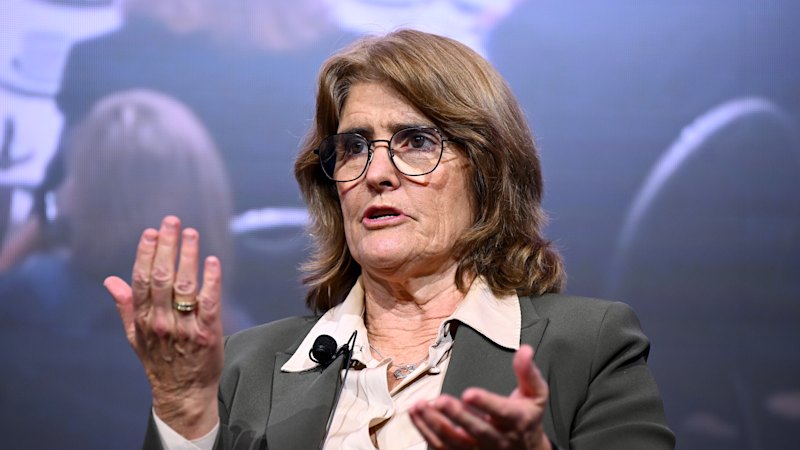
Reserve Bank governor Michele Bullock says Australian businesses have become less dynamic over the past decade and called on corporate leaders to “step up to the plate” and contribute more to lifting the nation’s productivity.
In her final public comments before the bank’s board considers interest rate settings next week, Bullock said that managing inflation had been made more difficult by a recent series of economic shocks that pushed up prices, including tariff hikes, the Ukraine war and conflict in the Middle East.
“I think it is just pretty much the world we’re living in now,” she said at a Committee for the Economic Development of Australia event in Sydney on Tuesday.
Bullock warned that inflationary risks flagged earlier by the RBA appeared to be “materialising”, especially the effects of elevated fuel prices sparked by the Middle East conflict.
On Tuesday, bond futures traded on financial markets had priced in an 88 per cent chance that the RBA would lift interest rates by 0.25 of a percentage point next week.
Speaking a day after the publication of long-range forecasts in the federal government’s Intergenerational Report, Bullock said that productivity in Australia needed to “grow much more strongly”.
The report assumed long-term labour productivity growth of 1.2 per cent a year, but many experts say that figure is unrealistic given the much lower rate of productivity growth over the past decade.
However, Bullock said the Intergenerational Report’s prediction was a “call to action” to boost productivity.
“That’s the way I would like to think about it,” she said.
Bullock said there were many things governments could do to lift productivity, including the reduction of red tape, rewarding innovation and making it easier for businesses to invest.
However, she emphasised the role of business, saying it must “step up to the plate as well” to assist with the productivity push.
“Over the last decade or so, Australian businesses just seem to have become less dynamic,” she said. “And even those businesses that were at the frontier are not quite as close to the frontier as they used to be. So there is something about businesses where they’re not investing enough, they’re not looking for ways to combine labour and capital in ways to increase productivity.”
One important way to “spur on” productivity improvement is to promote greater competition, she said.
Bullock labelled the introduction of artificial intelligence as the “great white hope to improve productivity”, but said there were few signs that it had had much effect yet.
Financial expert David Koch wrote to Bullock asking her to explain, should rates rise again, why home borrowers would be forced to pay more when spending by state and federal governments had been a big factor driving up inflation.
“A meaningful slice of the inflation your board is trying to contain is not being generated in a shopping centre. It is being set in a cabinet room,” Koch wrote.
When Bullock was asked about the disproportionate effect that higher rates have on the roughly one third of households with a mortgage, she said there were many other ways interest rates affected the economy.
Bullock said that interest rates work “through all sorts of mechanisms in the economy”, not just the disposable income available to home borrowers.
Last month, the unemployment rate rose to 4.5 per cent, which was equal highest for the past five years.
But Bullock said an unemployment rate “between 4.5 and 5” per cent would probably be needed to “ease” inflationary pressures.
“The whole point about inflation being too high at the moment is that it’s reflecting the fact that the demand side of the economy is outstripping the ability of the economy to supply the goods and services, and one evidence of that is that the labour market looks tight,” she said.
Cut through the noise of federal politics with news, views and expert analysis. Subscribers can sign up to our weekly Inside Politics newsletter.

KioskNews shows a cleaned-up reading view extracted from the publisher’s page — the original always lives on their site, not ours.