IN MEMORIAM: Phumzile Mlambo-Ngcuka and Bulelani Ngcuka’s careers were intertwined, with painful consequences
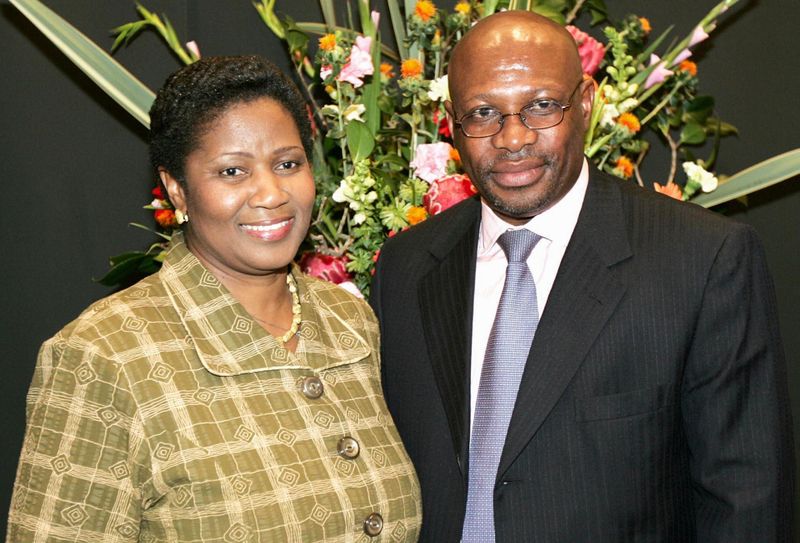
When it comes to the lives of powerful couples, there is always a conflict between going to the extreme and representing them as individuals with their own agency, or presenting them as a partnership, thus acknowledging the roles they each played in their respective journeys.
South Africa has no shortage of these, some more powerful or prominent than others: among Robben Island families, struggle veterans, business communities, the sporting fraternity and the arts.
The temptation in the modern world is that pairing a couple when one of them is a woman somehow removes agency from one of them. But some can just never escape it, for better or for worse. The partnership of Phumzile Mlambo-Ngcuka and Bulelani Ngcuka is a case in point.
Right up until she died at the weekend, there was never any question about their careers being intertwined, mostly to their detriment. There was never a sense that his star rose because he was attached to her, or that her powerful positions benefited him. Instead, their union was turned into a liability for both as they were targeted as a pair for much of their working life.
(Photo: Gallo Images / Alet Pretorius / Media24 Pty Ltd [newspapers])
To understand the bond, it is perhaps useful to go back to the anti-apartheid activist young couple who were married back in 1985. The couple’s 1981 wedding plans were scuppered by Bulelani’s three-year imprisonment that year.
The rescheduled wedding was then further dealt a blow when their mentor and chief wedding organiser Victoria Mxenge was brutally assassinated in Umlazi, Durban, in August 1985. They were unable to postpone their wedding because cultural strictures determine that such ceremonies cannot be postponed.
In the memoir, Bulelani Ngcuka: The Sting in the Tale, by long-term comrade, friend and ex-colleague Marion Sparg, the couple describe how they were then forced to get married in a pared-down ceremony during the mourning period and in the middle of the violent maelstrom in Durban townships that followed Mxenge’s assassination.
“The wedding took place in Clermont, in Phumzile’s church. It all went well until, as we were leaving, police arrived and threw tear gas into the hall. So instead of the usual confetti, I had tear gas at my wedding, thanks to the security police,” Ngcuka told Sparg.
From exile to deputy president
From there, it was to be a life of exile for the hounded couple, a life which took them to the United Nations nerve centre of Geneva. Settling back in South Africa in the aftermath of the unbanning of liberation movements entailed re-establishing the ANC’s presence in their newly-found home in the Western Cape, where Phumzile was working as a director for the World University Services and later for Team, the women’s development NGO, while Bulelani had been recruited by iconic struggle lawyer Dullah Omar.
Those were heady days, which also involved re-integrating returning combatants and prisoners into society and party structures. All this while apartheid’s repressive machinery was still highly operational.
Democracy was to dawn in 1994, and both would be sworn into the legislature, with Phumzile chairing the Public Service portfolio committee and later moving to be deputy trade and industry minister, and Bulelani heading the Senate chamber of Parliament (now the National Council of Provinces). Their paths would diverge towards the turn of the century when Bulelani, under much duress, became South Africa’s first National Director of Public Prosecutions, and Phumzile moved into the full Cabinet as minister of minerals and energy.
Much of this week’s celebration of Mlambo-Ngcuka’s legacy was of the three-and-a-bit years as the nation’s deputy president, the first woman to achieve this milestone. But it was really her stewardship of the mining industry’s transformation that she should get that bright and imposing feather in the cap.
This was an industry that was a citadel of the apartheid economy, benefiting in the worst way from its laws, while the mainly English barons could point to the Afrikaner establishment as the architects and implementers of the system.
In post-apartheid South Africa, the industry had been making tentative steps towards transformation, letting go of some assets and enabling the emergence of some major black players. But there was no real movement toward greater inclusion, much to the chagrin of the Thabo Mbeki administration. A fire had to be lit.
Then came along this black woman, tasked with dragging the industry, kicking and screaming, into a properly transformed era. After intense engagements, a draft mining charter was put together, which properly spooked the titans of industry. A damaging strategic leak of the draft, which proposed 51% black ownership or control of mining assets within a decade, as well as ambitious management targets, sent the sector’s stocks crashing.
It was one of the biggest crises in the industry since the 1987 mineworkers’ strike. A scramble of high-level meetings between government and the industry calmed the waters and created an environment for more rational conversation about the future of the industry.
The final version set, among others, a target of 26% and other inclusion strategies, and was the foundation of today’s mining transformation platform. Albeit still contested, it more than moved the needle in getting the previously disadvantaged into this sector. There were many other bruising battles with this industry, but when she left, she had the full respect of all the captains.
Even to this day, when industry players refer to the halcyon days of their interactions with the ministry and the department, they point to that relationship, forged in the furnace of those difficult negotiations. All subsequent ones are judged according to the business they could do with the minister, who was no rollover, but at the same time not a bull in a china shop. When the mining sector considers the frigid relationship, which has led to severe underperformance of the sector, it is nostalgic for that time.
‘The elephant in the room’
While Phumzile was battling it on the minerals reform front, other severe headwinds were heading the way of the family. The NDPP job was always going to be a series of firestorms. The first of these was the Arms Deal investigation. A report by Ngcuka’s NPA, the Office of the Public Protector and the Auditor General’s Office that found no evidence of corruption in the primary acquisition contract was deemed a whitewash by opposition parties, anti-arms campaigners and some within the ANC.
Inevitably, the links between him and Phumzile were thrown into the mix. He was protecting the government because his wife served at the pleasure of the president.
As he recalled to Sparg in the Sting in the Tale memoir, he told a press conference at the time that, “I know that I am the elephant in the room. I’m told I sleep with Cabinet, and I will therefore sweep this whole matter under the carpet. Do I sleep with Cabinet? Yes, I do. My wife is in Cabinet. Let us deal with that matter now. It does not compromise my integrity.”
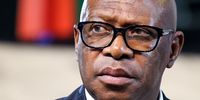
This thread would also follow Phumzile into her appointment as deputy president. No need to go much into it here, as it is all part of our collective memory that the Scorpions elite unit – which fell under the NPA – spearheaded the investigations into Jacob Zuma, French arms company Thales and Zuma’s sugar daddy Schabir Shaik, among many powerful individuals and entities that planted the corrupt seeds for the wildly weedy garden that is South Africa today.
The probe into Zuma’s multiple corruptible relationships was deemed by Mbeki’s proliferating rivals as a political investigation aimed at pushing the only man who could stand in the way of his “neo-liberal” vision for the ANC and the country. Ngcuka was just a statutorily weaponised pawn in Mbeki’s game.
The attacks came from a range of corrupt forces and individuals who had come into the Scorpions’ crosshairs and had common purpose. Because of his political weight, Zuma became the fulcrum of this fightback. There would be those spurious accusations of Ngcuka having been an apartheid spy, sleeping with underage girls and hiding money in foreign accounts.
It was relentless, and it took a massive toll on his spouse, who also had to sit with some of the accusers – including the then deputy president – in Cabinet and in the NEC.
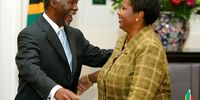
It was that investigation and Shaik’s 2 June 2005 conviction that led to Zuma’s 14 June sacking as deputy and Mlambo-Ngcuka’s appointment to the number two position on 22 June of that year. Mbeki’s tapping her for the job confirmed all the warped conspiracy theories.
Zuma had been done a dirty by Mbeki and Mlambo-Ngcuka’s husband in order to make sure the president would have a handy puppet by his side at the Union Buildings. Out the window were all her strengths and stellar record. She was a woman who was being used by two powerful men in her life.
The bloodthirsty pack piled in with attacks, even prompting then staunch Zuma ally Zwelinzima Vavi to appeal to his Cosatu comrades to publicly come to her defence. A particularly low moment was her being booed at an official Women’s Day event where she was officiating, such was the anger about what Mbeki and Bulelani had done to the man from Nkandla.

The Polokwane moment
In office, she brushed aside the political noise and ploughed ahead with the Accelerated and Shared Growth Initiative South Africa (Asgisa) policy, the designated responsibility that was meant to be key to getting growth to 6% by 2010 and slashing unemployment and poverty in half by 2014.
Coupled with this was the Joint Initiative for Priority Skills Acquisition (Jipsa), a cross-society strategy to deal with the skills gaps that might inhibit Asgisa. Anyone watching those will tell you that while there were plenty of the usual issues associated with government programmes, under her energetic driving and team facilitation, a good gust was blowing in the right direction.

Then Polokwane happened in December 2007. The September 2008 ouster of Mbeki followed. Mbeki’s core followed him out of Cabinet. Out of Cabinet, many of these long-term ANC veterans (including Mlambo-Ngcuka) and many others of like mind sought to create an alternative to the now-vulgarised erstwhile liberation movement.
The Congress of the People (Cope) experiment began with much hope, but quickly disintegrated in the face of infighting and sinister destabilisation by an ANC that feared the upstart growing into anything viable. She didn’t last long in the fractious party and was in political limbo for a while.
Her familial ties would come back to her when, in a nod to her leadership, she was recruited by the United Nations to be an under secretary-general heading the newly established UN Women. Instead of celebrating the tapping of one of our own for such a massive task, the Zuma government sought to sabotage what it saw in her: an old enemy of the sitting president.
In a rather weird move and a sign of those toxic times, it wrote to the UN to object to the appointment. Secretary-General Ban Ki-moon wisely ignored the petulance and went ahead. She breathed life into the organisation, mobilising tens of billions for its work on women’s empowerment and gender equality, and also initiating programmes that made it a central pillar of the UN’s work.
Other major roles were added to her international work, making her one of South Africa’s most powerful figures on the international stage. Still, back home she was persona non grata.

It was only after the end of her term in 2021 when this former teacher was back home running the Umlambo Foundation that focuses on her passion – education – that the new government of Cyril Ramaphosa tapped into her skills and standing. She was roped into the talks to end the Ethiopian civil war, resulting in the Pretoria Accord of 2022.
A futile attempt to return to politics before the ANC’s 2022 national conference was stillborn. Having rejoined the party she had abandoned during the Zuma years, she was nominated for the ANC’s deputy presidency. This faced strong resistance from her old foes, who questioned her defection to Cope, but were really driven by those old grievances against her husband dating back to the early 2000s.
In truth, it was an affirmation she did not need. She was already Phumzile Mlambo-Ngcuka, a trailblazer and a global statesperson.
On Saturday, when she is laid to rest in Middledrift, Eastern Cape, the tears will not be the result of confetti from a tear gas canister. They will be from a nation mourning someone that many regard as one of the best presidents we never had. DM
KioskNews shows a cleaned-up reading view extracted from the publisher’s page — the original always lives on their site, not ours.