How Ukraine is using AI to track and destroy Russian forces
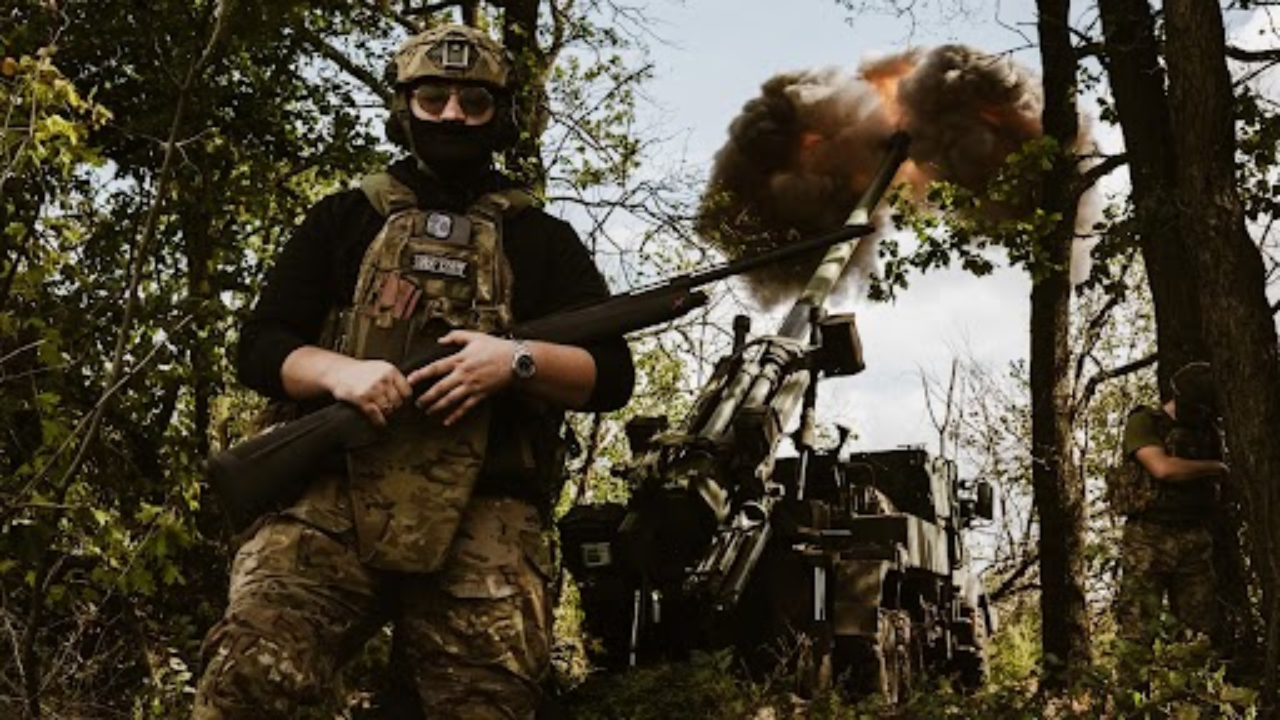
A Ukrainian soldier guards a French Caesar gun against drones. (Image credit: Ukrainian defence ministry)
The kinetic conflict underway in eastern Ukraine has for long demonstrated how wars in the future will be fought. The conflict, which is nearing the five-year mark, has upended the long-held view that wars of the 21st century will be short but intense affairs.
The conflict has also demonstrated how unmanned systems in air, land and sea will shape conflicts that are yet to come. One important lesson from this conflict is how to carefully form and curate an ever-developing combat picture, which is sourced from thousands of data collection points, such as drones, sensors and humans alike. As is the case everywhere else in combat too, information is king. Correct and timely information is key to winning engagements, for centuries generals and tacticians alike have been hampered by the fog of war.
In modern conflict with resources available from human intelligence to satellites high up in space, this fog has greatly reduced, and with new combat management systems, ever-increasing clarity is available to decision makers at all levels.Ukraine’s DELTA battlefield management system has evolved from a digital mapping tool into an integrated network connecting reconnaissance, intelligence and military operations.
Developed in 2016 by the volunteer organisation Aerorozvidka, which was experimenting with drones and digital reconnaissance in eastern Ukraine, DELTA was designed to give commanders a common operational picture by combining information from multiple sources.According to the Zurich based Swiss Center for Security Studies, the system received support through the NATO-Ukraine Command, Control, Communications and Computers Trust Fund and was first deployed on a major scale during the defence of Kyiv in February-March 2022.
Ukrainian units used it to share information on Russian troop movements, drone video feeds, satellite imagery, surveillance camera footage and intelligence from civilian sources.
Starlink connectivity enabled frontline units to transmit information to headquarters, allowing commanders to monitor developments and coordinate responses.DELTA has since expanded beyond digital mapping, according to the Center for Strategic and International Studies (CSIS), its applications include mission control for scheduling and coordinating drone missions, Vezha for streaming and analysing UAV footage, and Delta Tube for accessing live video feeds.
Its integration with the Avengers artificial intelligence platform allows the analysis of multiple drone feeds and the identification and classification of objects.The French Institute of International Relations (IFRI), in a 2026 study, notes that DELTA received formal authorisation from Ukraine’s defence ministry in 2023, helping it develop into a wider digital ecosystem. Its components now include monitor for situational awareness, target Hub for target management and element for encrypted communications.
The system is intended to process information from drones, satellites, radar, acoustic sensors and intelligence units, helping commanders prioritise targets and coordinate strikes.An Atlantic Council study also published in 2026 cited claims that integrating intelligence through DELTA had reduced the time between target detection and engagement from around 72 hours to approximately two minutes. The figure is an attributed operational claim and should not be treated as a universal measure.
DELTA has also been tested with Poland’s TOPAZ artillery command system and during NATO’s CWIX interoperability exercises in 2024.Alongside DELTA, Ukraine is developing ODIN, an artificial intelligence-based system created by officers from its military institute of telecommunications and information technologies. Presented at the NATO TIDE Hackathon in March 2026, the prototype combines intelligence from different sources, prioritises targets and generates possible courses of action, including kinetic, non-kinetic and cyber options.
However, there is no independent evidence that ODIN has been widely deployed or integrated with DELTA. While DELTA has become an established part of Ukraine’s digital battlefield architecture, ODIN remains at the prototype stage. Together, the developments underline Ukraine’s effort to connect sensors, intelligence, command systems and weapons into a network that can shorten the time between detecting an enemy and engaging it.
KioskNews shows a cleaned-up reading view extracted from the publisher’s page — the original always lives on their site, not ours.