Uniqlo sees profits soar in China despite Beijing-Tokyo tensions
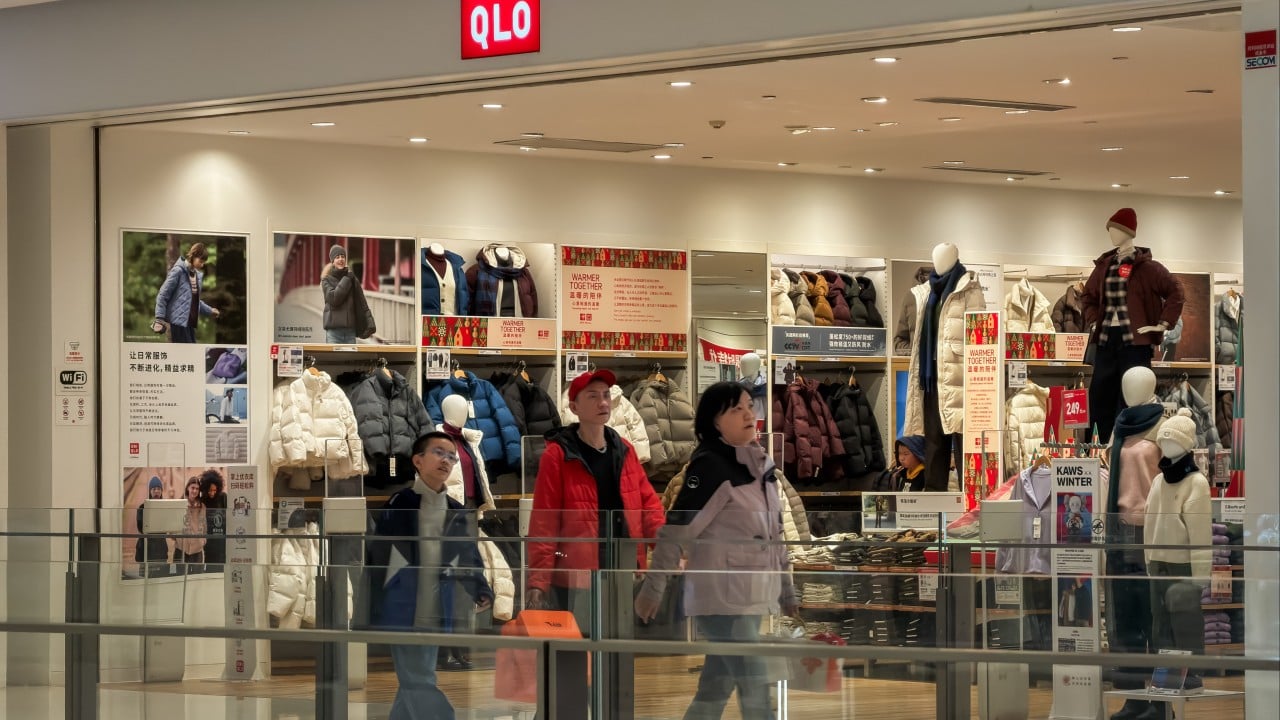
Fast Retailing, the parent company of Japanese clothing retailer Uniqlo, has defied the ongoing political tensions between Beijing and Tokyo and soft consumer sentiment in China to log a rebound in sales and profits on the Chinese mainland.
The Japanese firm said the 2026 financial year, which ended in August, had been a period in which its mainland China business had “made steady progress, with encouraging steps indicating a return to growth”, according to its annual report released on Thursday.
The company’s full-year revenue on the Chinese mainland climbed 3 per cent year on year in local currency terms, while business profits rose by roughly 18 per cent. Hong Kong and Taiwan also saw increases in full-year revenue and profit over the period, the group said.
The improved performance was partly driven by ongoing structural reforms, with Uniqlo rolling out a revamp of its store network in mainland China with a focus on refined site selection and higher operational efficiency, the company said. The chain has opened more large-format stores and closed many smaller underperforming outlets.
The Greater China region – covering mainland China, Hong Kong and Taiwan – constitutes the group’s second-largest market globally after Japan. The region’s total sales hit 724 billion Japanese yen (US$4.6 billion) over the same period, up 11.3 per cent year on year, while profit came in at 112 billion Japanese yen, up 24.6 per cent.
Fast Retailing’s Hong Kong-listed shares have risen 34 per cent so far this year and closed at HK$37.30 on Thursday morning, up 0.81 per cent from Wednesday. Trading of its Hong Kong depositary receipts on the Hong Kong stock exchange was suspended from 1pm on Thursday at the company’s request, and will resume on Friday.
The upbeat market reaction comes even as political tensions between Japan and China weigh on bilateral economic ties.
Beijing issued a travel advisory in November urging citizens to avoid travelling to Japan, after Japanese Prime Minister Sanae Takaichi indicated that Tokyo could intervene in the event of an armed conflict in the Taiwan Strait.
The move triggered a wave of flight cancellations between the two countries and a plunge in Chinese tourism to Japan. Once a top destination for Chinese travellers, Japan was not even among the top 10 most popular travel hotspots over the just-concluded National Day holiday, according to Chinese online travel agency Tuniu Corp.
KioskNews shows a cleaned-up reading view extracted from the publisher’s page — the original always lives on their site, not ours.