SpaceX wraps up AI chip debt worth US$32 billion
SpaceX’s US$32 billion debt deal to fund its access to artificial intelligence (AI) chips might serve as a blueprint for similar transactions as the next wave of financing tied to the AI boom gets under way.
It is likely going to be costly for the companies borrowing.
The bulk of the complex offering was sold at relatively high yields of more than 8 percent — levels that are not typically associated with investment-grade debt and reflect general concern that AI spending will not pay off.
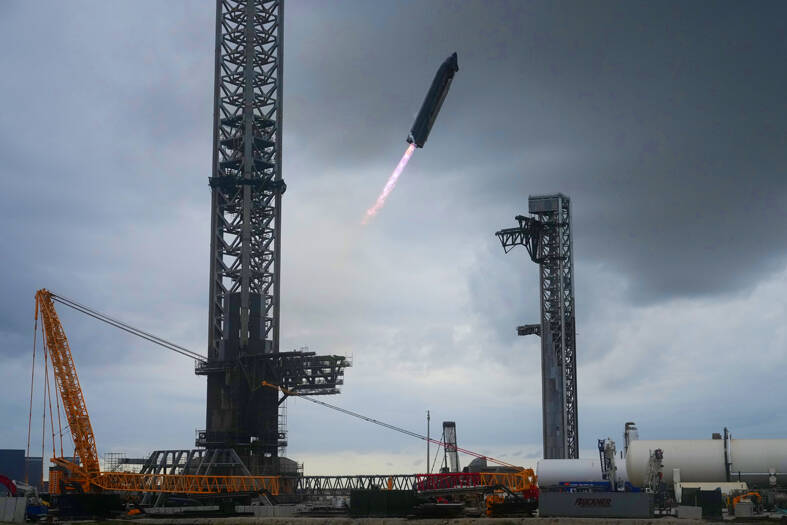
SpaceX’s mega rocket Starship successfully returns to be captured at its launch pad after a test flight from Starbase, Texas on Nov. 14.
Photo: AP
The deal, designed to keep the borrowing off SpaceX’s balance sheet, is part of a more than US$40 billion financing that also includes bank loans.
The cash is to be used to fund the acquisition of Nvidia Corp chips by a special-purpose vehicle known as the Saturn Funding Trust and managed by an Apollo Global Management Inc entity.
Elon Musk’s rocket, satellite and AI company is to lease the equipment for about five years.
Chip-backed debt is on track to become a trillion-dollar market, eclipsing the massive borrowings used to build the data centers housing the semiconductors.
The companies at the forefront of the AI infrastructure buildout have raised hundreds of billions of dollars in the US investment-grade bond market this year. While the borrowing spree is set to continue into next year, a growing share of that financing is likely to shift toward shorter-term chip and data center debt as the market’s capacity to absorb unsecured borrowing from hyperscalers comes under strain, according to Barclays PLC.
“The unsecured market is near the limit of what it can absorb each year,” Barclays analysts including Dominique Toublan said in a recent note.
The SpaceX debt was sold on Thursday in three parts, according to people with knowledge of the matter.
Goldman Sachs Group Inc and Apollo ran the transaction, the people said, asking not to be identified as they were not authorized to speak publicly.
Representatives for the firms and SpaceX did not respond to requests for comment.
The financing included about US$25.2 billion of so-called Class A3 notes that priced at a yield of 8.259 percent, a level far higher than the average US high-grade bond yield of 5.95 percent, Bloomberg index data showed.
KioskNews shows a cleaned-up reading view extracted from the publisher’s page — the original always lives on their site, not ours.