Tom Hanks' Intense 10-Part War Miniseries Has Officially Aged Like Fine Wine

Rotten Tomatoes | Letterboxd | Metacritic
Carolyn Jenkins is a voracious consumer of film and television. She graduated from Long Island University with an MFA in Screenwriting and Producing where she learned the art of character, plot, and structure. The best teacher is absorbing media and she spends her time reading about different worlds from teen angst to the universe of Stephen King.
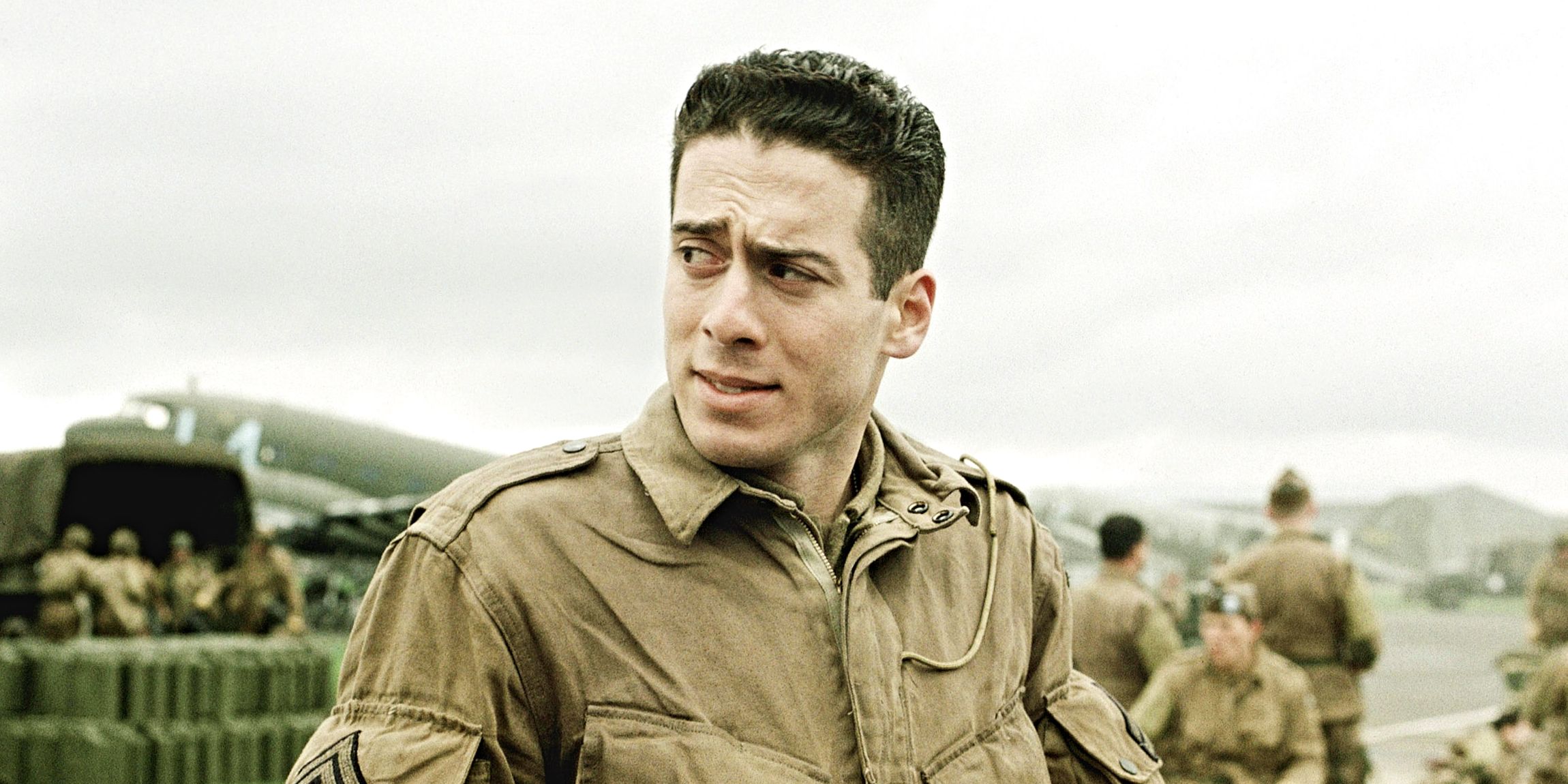
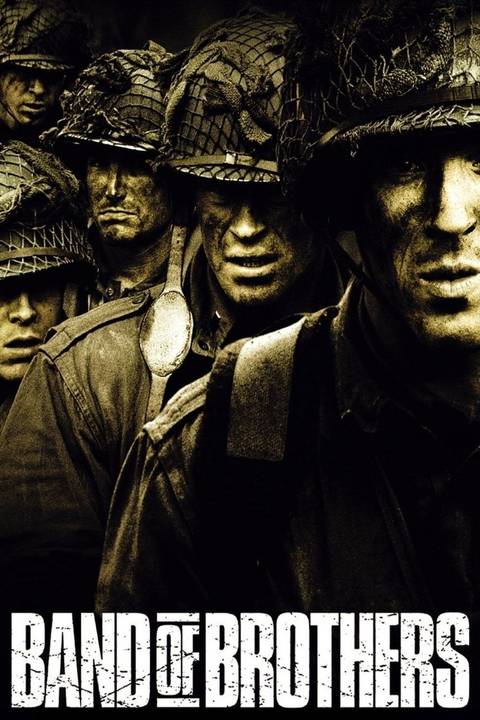
When America needed it most, one television series was the salve to a countrywide wound. The first episode of Band of Brothers premiered on September 9, 2001, just days before the attack that no one will forget. Though HBO initially considered pulling the miniseries for sensitivity reasons, it soon became clear that the story of the 101st Airborne in World War II was exactly what was needed. The Tom Hanks production was based on Stephen E. Ambrose's book about the real Easy Company, the first-ever paratroopers in the American military.
Led by the once-in-a-generation figure, Major Richard Winters (Damian Lewis), the 10-part series detailed almost every major occurrence of World War II. Dick takes command shortly after parachuting into Normandy on D-Day, and his commanders are killed in action. From there, he rises through the ranks alongside his lifelong friend, Lewis Nixon (Ron Livingston). Dick isn’t remembered just for his tactical precision but for being the type of leader that people want to sacrifice their lives for. 25 years after the fact, Band of Brothers still hits home in a country that is more fractured than ever.
‘Band of Brothers’ Remains One of the Most Idealistic Shows on HBO

It is hard to call any war miniseries idealistic, but that just goes to show who the men in Easy Company were. Dick Winters was the type of man that his Airborne unit would walk through fire for, but would be just as quick to die for each other. "Band of Brothers" is the most apt descriptor of what it was like to fight alongside them because of their ideals that seem to be lacking in the present version of America.
In the modern day, the masterful miniseries, Band of Brothers, is more aspirational than it ever was. Easy Company signs up to jump out of planes in perhaps the last righteous war this country has seen. While they are there, they encounter insurmountable horrors, but never lose sight of each other. Even in the freezing temperatures of Bastogne, the men attempt not to lose heart during the Battle of the Bulge.
Episode 6, “Bastogne,” is one of the most heart-wrenching episodes in a miniseries full of emotion. This battle, full of shrapnel and lost limbs, tears Easy apart more than just spiritually. Some of the brothers encounter losing each other for the first time in droves. Even as body parts are being lost, some of the men don’t hesitate to dive into mortar blasts to save those in their company. Many of them are broken but still come back because there is no other choice.
‘Band of Brothers’ Features One of the Saddest Episodes Put to the Screen
Even Dick Winters had doubts when encountering warfare. In Band of Brothers: Legacy, the new documentary about the anniversary of the miniseries, the real Winters describes his inner conflict after so much violence.
“Why am I here?” Winters recalls, wondering, after the terrors in Bastogne and years of tragedy, why he endured. This all changed when he set eyes on the concentration camps, which no one on the Allied side had any concept of. “And after you looked at that, you’d say, ‘I know.’”
This is the foundation for Episode 9, “Why We Fight,” which echoes Winters’ sentiments and shows why this war was so righteous and continues to hit viewers where they live. The episode starts with Lewis Nixon’s own disillusionment with his place in the war. While he was overseas, he loses his wife and even his dog while enduring alcoholism. He is snapped out of his self-pity and understands how important his role is when he and the rest of Easy Company encounter a concentration camp.
As the 101st Airborne open the barbed gates of one of the worst atrocities, they are shocked and disheartened to see the starved and tortured Jewish people at the camp. Band of Brothers doesn’t shy away from the raw emotion of what that would have been like, demonstrating the heartache of Jewish soldiers like Liebgott (Ross McCall).
This is a stark reminder of why America was in the conflict, and two and a half decades later, this episode is still a gut-punch. In some instances, there is a clear right and a clear wrong. Modern sentiments have seemed to forget about caring for each other on such a deep and visceral level. This is why Band of Brothers is aspirational. There is a reality where people can still care about each other, even when the world seems bleakest.
- Release Date
- 2001 - 2001
- Network
- HBO
- Showrunner
- Steven Spielberg, Tom Hanks
- Directors
- David Frankel, David Nutter, Mikael Salomon, Phil Alden Robinson, Richard Loncraine, Tom Hanks
- Writers
- Bruce C. McKenna, Graham Yost, John Orloff
KioskNews shows a cleaned-up reading view extracted from the publisher’s page — the original always lives on their site, not ours.